Treating Brand Voice as a Living Dependency Your AI Agents Subscribe To
Autonomous agents need brand rules as live dependencies, not static documents.
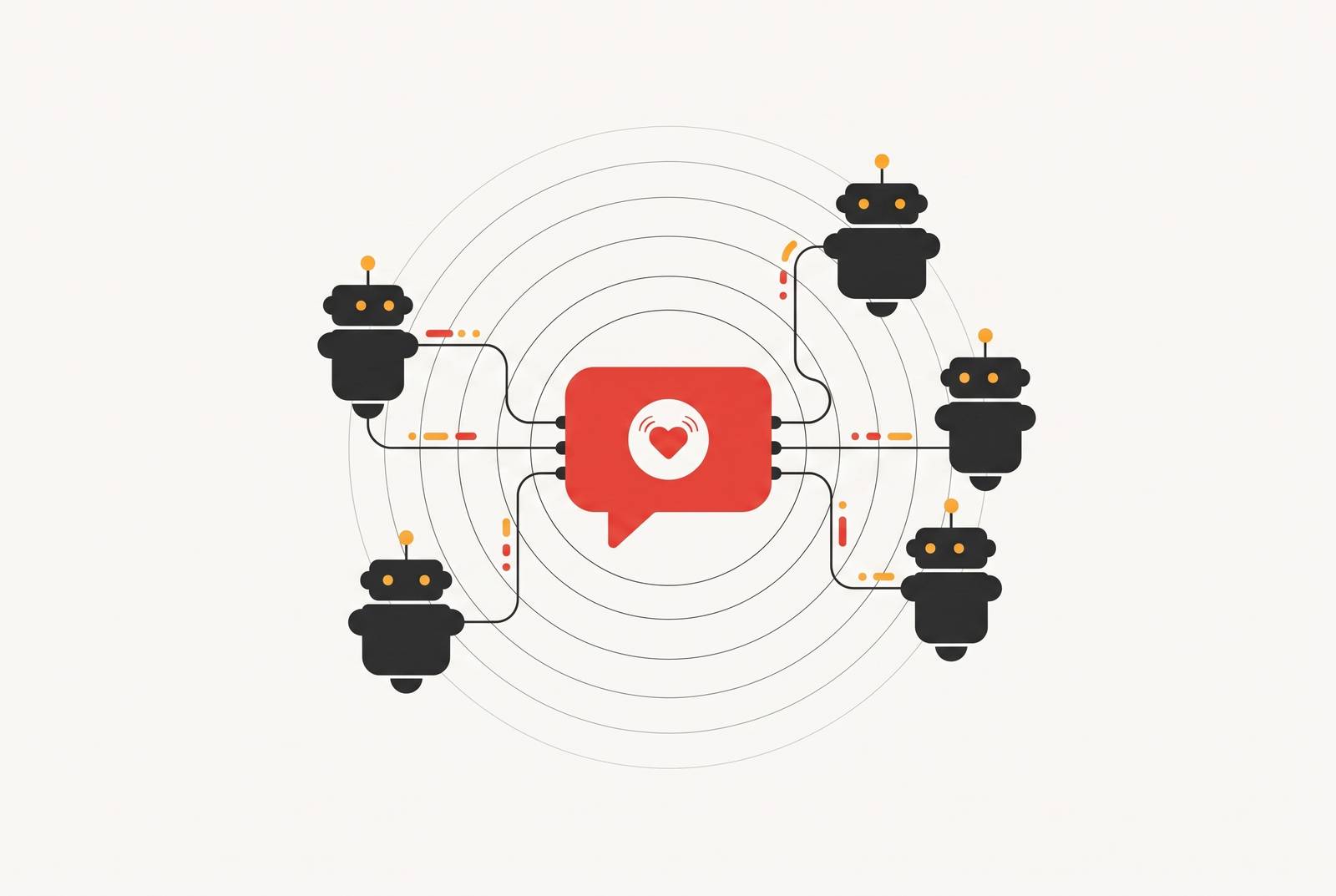
The brand layer for agents is a structured, machine-readable source of voice rules, visual identity, and positioning that agents load before acting. When brand voice is a living dependency, agents get runtime access, built-in review, and automatic updates in place of guidelines attached by hand. This is how multiple agents can work from the same brand identity without constant manual prompting.
Why autonomous agents break the assumption behind static brand voice documents
An autonomous content workflow can detect a trigger, run research, produce a draft, and distribute an asset without a human handing over instructions between steps. Brand context must enter before that work begins. Otherwise, the workflow can proceed from research to distribution without consulting the guidelines that are supposed to govern it.
Reactive AI left room for that human handoff. A person supplied a prompt, attached or pasted brand guidance, and received an output. Agentic AI instead monitors conditions, plans work, and executes across several steps, so the assumption behind a human-readable style guide no longer holds. When brand context is absent, the model draws on its general training. The result can be fluent but generic, indistinguishable from a competitor’s output from the same model.
What "brand voice as a dependency" actually means technically
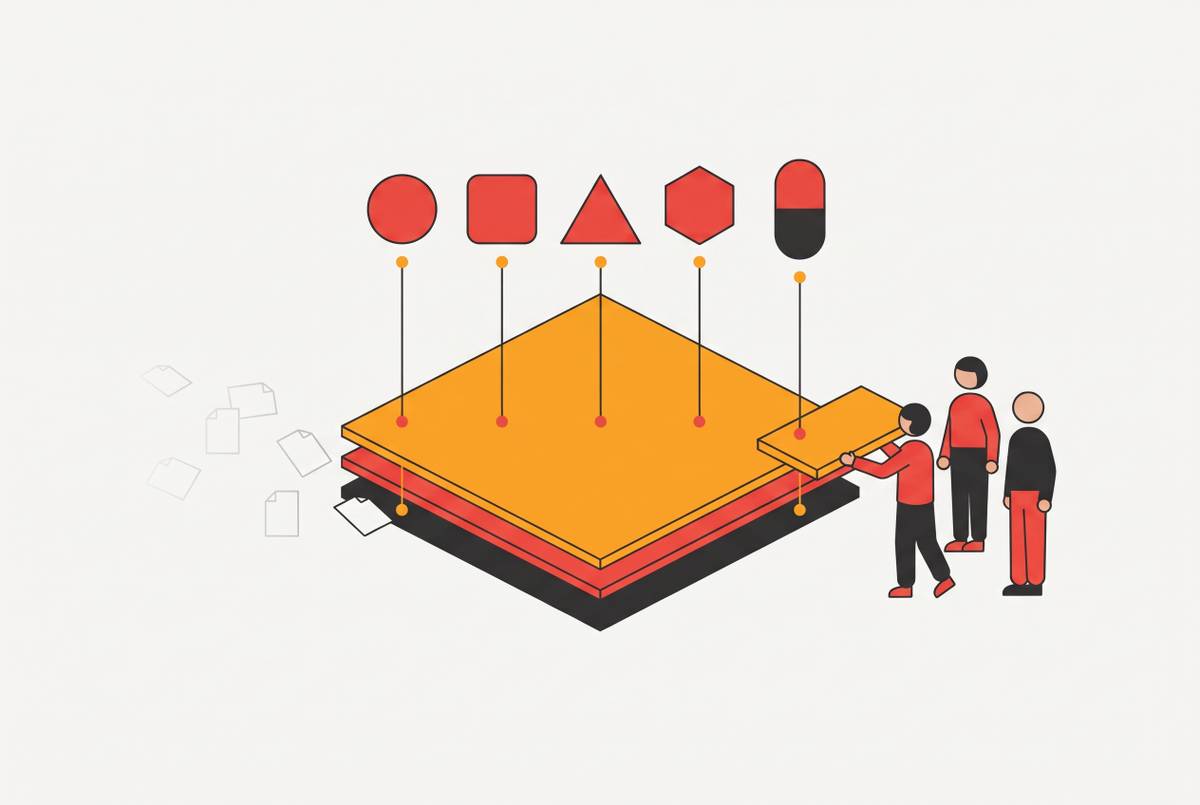
A runtime dependency is a resource an agent queries before it acts. A machine-readable brand stack has three layers, which are design tokens, voice and semantic context, and a delivery mechanism. Each layer serves a different purpose, and none substitutes for the others. Structured rules without delivery remain inaccessible, while delivery without structured rules leaves interpretation unresolved.
Design tokens give technical values semantic names. A name such as color.action.primary A name such as color.action.primary tells an agent the role of a value separately from its hex code. That separation preserves intent when the value changes. When the current tokens are loaded into future work, a brand color can change without requiring every asset-generating prompt to be rewritten. The brand layer therefore defines both the value and its place in the system.
Voice and semantic context provide the corresponding structure for language. A voice profile covers tone, vocabulary, sentence structure, and what to avoid, supported by annotated real examples and explicit rules. These are instructions formatted for machine consumption. They are not prose that a human must interpret and summarize before the agent can use it. The delivery layer then makes both the voice profile and visual tokens queryable at runtime, closing the gap between a defined identity and an agent’s working context.
How MCP turns brand context into something agents can subscribe to
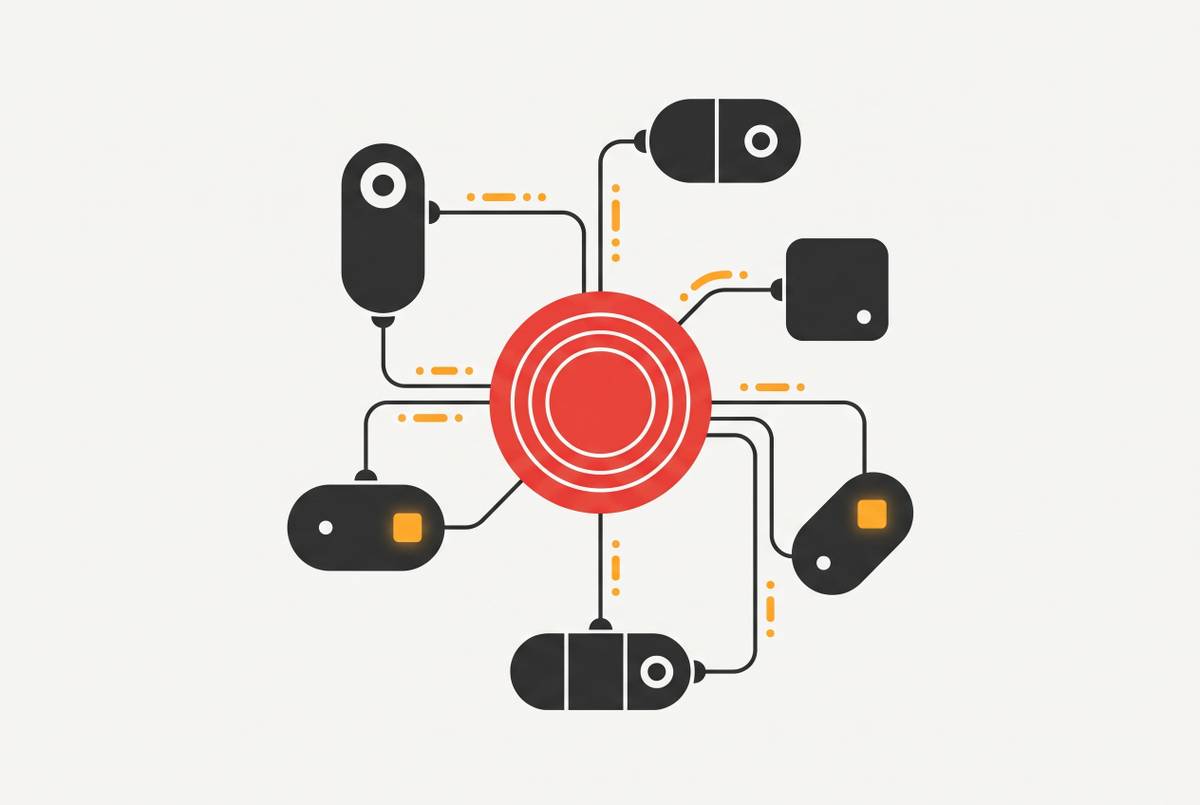
Anthropic open-sourced MCP on November 25, 2024, giving agents a protocol they can use to get context from outside the model. For brand systems, MCP connects the structured resource to the agent that needs it. The agent queries the brand server before generating. Its access no longer depends on which guidelines a person remembered to include in a prompt, or which copy was attached when the workflow was first configured.
In practice, an MCP server can expose voice rules, visual identity, positioning, and specific dos and don’ts as a live resource. An AI tool that implements MCP can query an MCP-enabled source before producing words or pixels. This makes the brand something the agent checks. It does not have to rely on a partial impression drawn from training data or instructions left over from an earlier task. Runtime access supplies the current context at the point of use.
Notion and Google Drive have MCP servers that let agents use existing brand resources in their workflows. An agent can pull an ICP document, voice profile, and content calendar by name in the same workflow thread, without someone copying them between tools. That makes the brand layer composable. However, a protocol supplies only the access component of governance. Subscription in this architecture means connecting agents to a maintained source, with versioning and propagation required to keep that connection useful as the brand changes.
How do multiple AI agents access the same brand identity across brands?
For an agency or multi-brand operator, loading the wrong context is a correctness problem. An agent using the wrong brand’s voice can produce unsuitable work at every downstream step. Fluent writing does not make that output correct. Without a loaded dependency, someone has to find the right profile, swap assets, and check tone again each time the brand changes. That work grows as more agents, workflows, and clients need to be kept in step.
Brands can share the same model and infrastructure while each keeps its own voice configuration, policy rules, and data scope. The boundary must be hard. Each brand’s voice, content history, and agent behavior must stay within its own scope so they do not bleed into another brand’s experience.
This changes what successful coordination looks like. Instead of relying on a person to reconstruct the right context at every handoff, agents access the dependency for the brand whose work they are performing. The shared source reduces the need to distribute copies, while the brand boundary preserves separation. These are different requirements that must work together. Centralization alone cannot correct a workflow that loads the wrong client’s identity.
The failure mode that richer documentation cannot fix
The strongest objection is that better guidance should produce better output. More detailed tone rules, vocabulary constraints, punctuation guidance, and annotated examples all appear to address the reasons an agent goes off-brand. They can improve individual passages. Yet exhaustive guidance can still yield bland output because an agent may imitate surface features while losing the underlying choices that give the voice its character. The document can be thorough and still fail operationally.
The concept of “agentic brand drift” distinguishes three mechanisms behind that failure. Decision diffusion replaces the human choices that gave the brand its identity and character. Temporal collapse removes the historical anchor from which consistency can be rebuilt. Accountability dissolution leaves no one responsible for the cumulative identity pattern, allowing drift to persist.
Dr. Tatyana Mamut, Co-Founder and CEO of Wayfound, describes the consequence for multi-agent work. “If you've got five agents on a team and the second one makes a mistake, the third, fourth, and fifth one are now completely off the rails in their work. The solution is a supervisor that can stop the first one and say 'nope, your output isn't going anywhere' before the next action.”
That objection strengthens the case for infrastructure. A live source alone cannot prevent agents from misapplying its rules or passing a flawed result downstream. It also needs a system that checks work against those rules before the next action proceeds. Preserving brand voice at AI scale is therefore an operationalization problem. Better guidance helps generation, while governance allows work to advance only after it passes checks against the rules.
What brand governance looks like when it is built into the pipeline
Before work begins, the agent loads voice rules, visual tokens, and positioning from a live source. The dependency establishes the task’s brand context. This removes the human attachment step without removing the guidance itself.
During generation, those constraints stay in the agent’s context for the whole task. They are not simply injected at the beginning and then diluted across a long chain. The distinction becomes important as work passes between agents. Access at the first step does not, by itself, establish that later work remains governed by the same constraints.
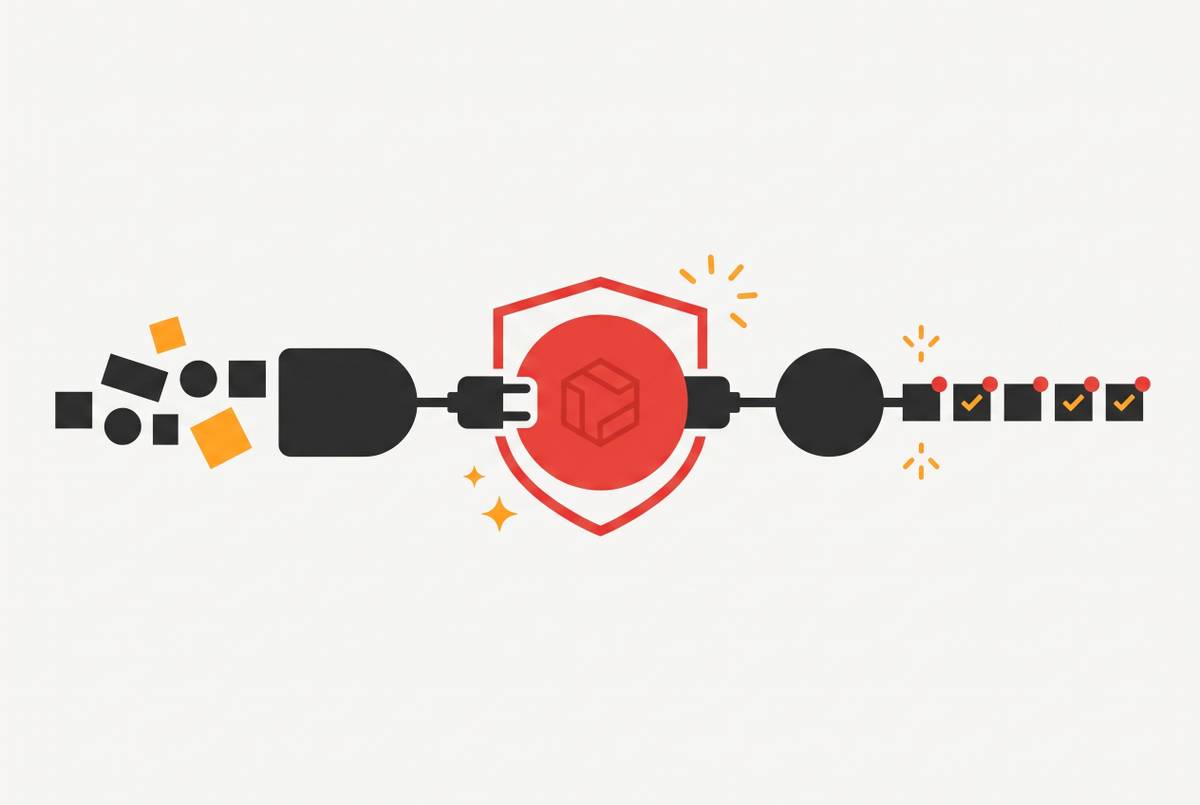
After generation, finished work is compared against the loaded dependency, with evidence for each check. Review becomes a structured comparison rather than someone eyeballing tone. This is the control that addresses downstream error propagation. Version control completes the loop by making changes to templates and brand tokens traceable and allowing rollbacks. It also lets sub-brands and campaign variants stay separate while keeping their ties to the parent system.
What keeps a brand dependency current as the brand itself changes
A brand refresh can leave some agents working from the new identity while others continue using the old one. Without an audit trail, the team cannot tell which version governed a particular output. If updates remain manual and ad hoc, the system is effectively a document with an API. Its structural advantage disappears when access to a resource no longer means access to the current brand.
A living dependency therefore requires automatic propagation to every connected agent and product when the brand changes. The update must reach the system’s consumers. The relevant production requirement is that future work draws from the updated identity without someone finding and replacing every distributed copy. Propagation is what makes a central change operational.
Knak’s official Forbes customer story says that using its no-code landing-page and email builder saved roughly 18,000 hours a year and doubled landing-page conversion rates. The case concerns removing developer dependency from the content and marketing workflow. It does not establish an MCP result. Its relevance is the operational gain from changing the production system, rather than attributing improvement to a single piece of content. The distinction prevents a workflow outcome from being mistaken for evidence about a particular protocol.
For brand dependencies, the corresponding maintenance principle is versioning. Changes must propagate automatically, while an audit trail connects each output to the version that produced it. Rollbacks remain possible because the changes are traceable. A brand can then evolve without leaving agents on untracked interpretations of its identity. That is what separates a maintained dependency from a file that happens to be available through an API.
What to do now: making brand voice a dependency your agents can load
The shift starts with choices about infrastructure before buying a tool. For agencies and multi-brand operators, first establish hard brand boundaries in the dependency layer so context cannot bleed across clients. Then check what agents already produce without loaded brand context. Find where voice drift is happening before designing the replacement. This gives the work a concrete starting point rather than treating every content workflow as an identical problem.
Next, structure the brand layer for machine consumption. Turn the voice profile into clear rules, keep annotated examples, and use semantic design tokens to express the choices behind the visuals. Establish one source of truth that every agent and product queries. Then connect agents through MCP or an equivalent protocol that supports runtime access. The sequence is deliberate, because connecting a poorly structured document does not turn it into an actionable brand layer.
Build review into the pipeline before finished work ships, using the loaded dependency and evidence for each check. Version the brand like code, with automatic propagation and an audit trail showing which version produced each output. Keep constraints present throughout generation. Together, these decisions address access, interpretation, review, and change without relying on constant manual prompting. The goal is not better prompts, but a brand that every agent subscribes to and every update reaches automatically.