MCP-Compatible Tools for Brand Governance in AI Pipelines
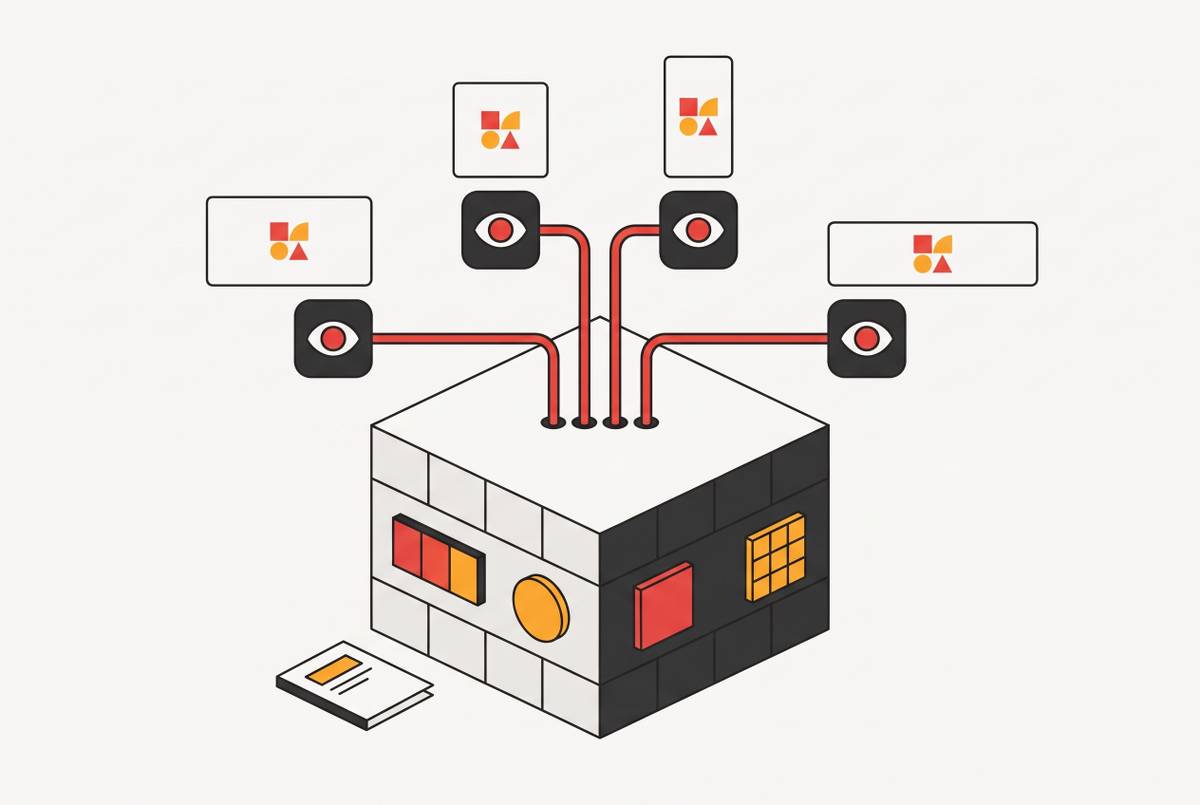
A shared MCP server lets every AI agent query one brand source.
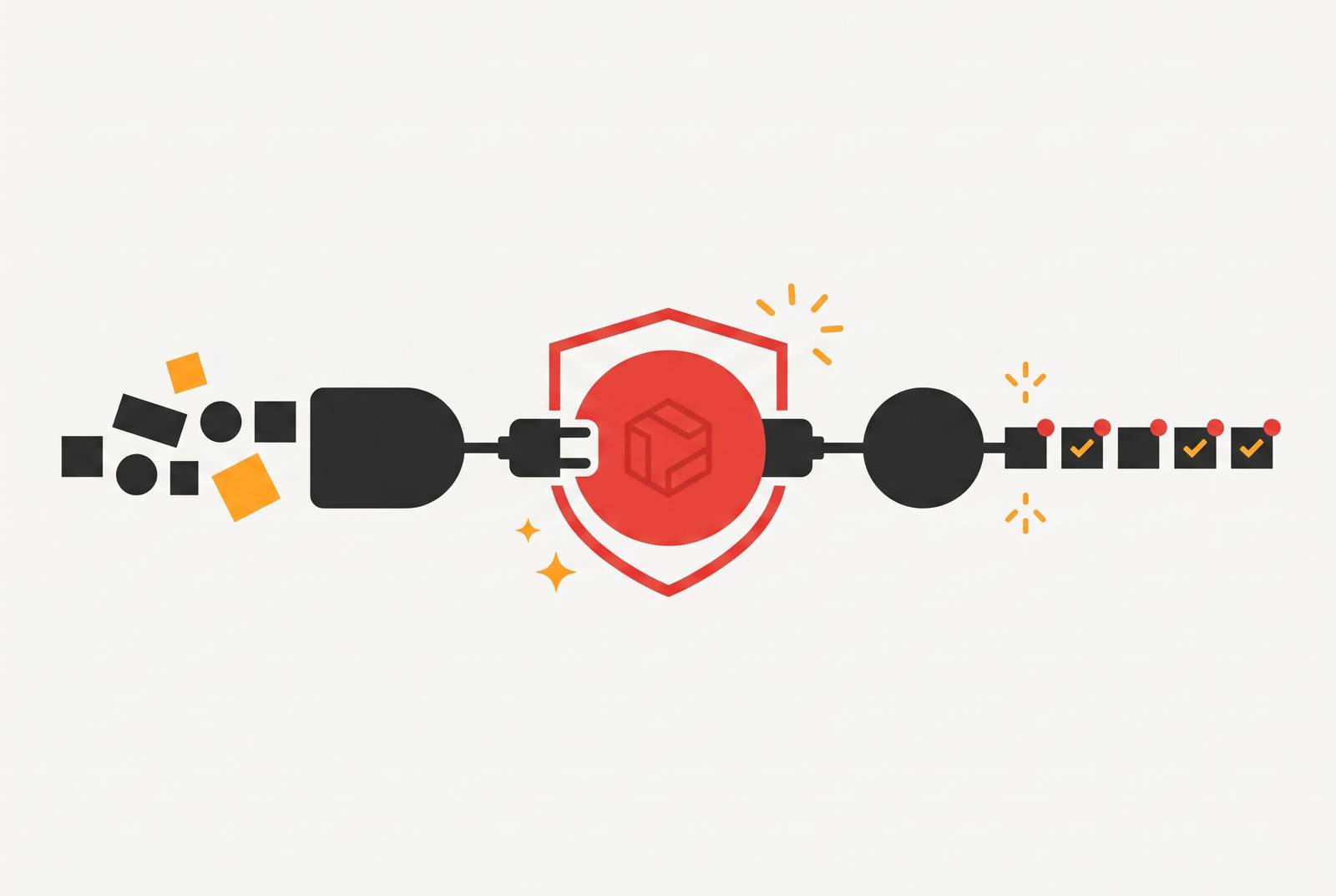
The brand layer for agents is a shared, machine-readable source of brand identity, rules, and review functions that AI tools query when creating work. MCP-compatible tools make that layer available across agents without repeated manual prompting.
Setting up a shared brand rules layer starts with the rules themselves. Put design tokens in one JSON file, rewrite guidance as constraints with triggers, actions, examples, and failure conditions, and add the narrative identity decisions. Then split that content into named Resources (voice rules, color system, ICP) and expose review functions such as contrast checks and vocabulary validation as Tools on a single MCP server. Each compatible agent, whether Claude, ChatGPT, Cursor, Claude Code, or Codex, connects to that server once and queries it at creation time. Version the content from day one so a change is recorded once and the next query reflects it. A locally compiled runtime still needs recompilation when the brand changes.
Why MCP became the connective layer for AI agents, not just a developer convenience
Before the Model Context Protocol, each AI application needed a custom connector for each external system it connected to. With N applications and M external systems, this was the N×M integration problem. MCP reduces the integration work to N+M by giving both sides a common protocol. Each side implements its connection once. That changes the cost of publishing context that many agents need.
Anthropic open-sourced MCP in November 2024 and donated it in December 2025 to the Agentic AI Foundation under the Linux Foundation. Anthropic, Block, and OpenAI co-founded the foundation, with support from Google, Microsoft, AWS, Cloudflare, and Bloomberg. Its governance is now vendor-neutral.
The protocol separates three roles, which are the host, client, and server. The host is the AI application, the client connects it to an MCP server, and the server exposes external context and functions. A brand team can publish one server that compatible agents can query, saving it from having to build a brand integration for each application. The server becomes a common point of access. For governance, that is more consequential than the convenience of connecting another developer tool.
How do AI agents stay on brand without constant manual prompting?
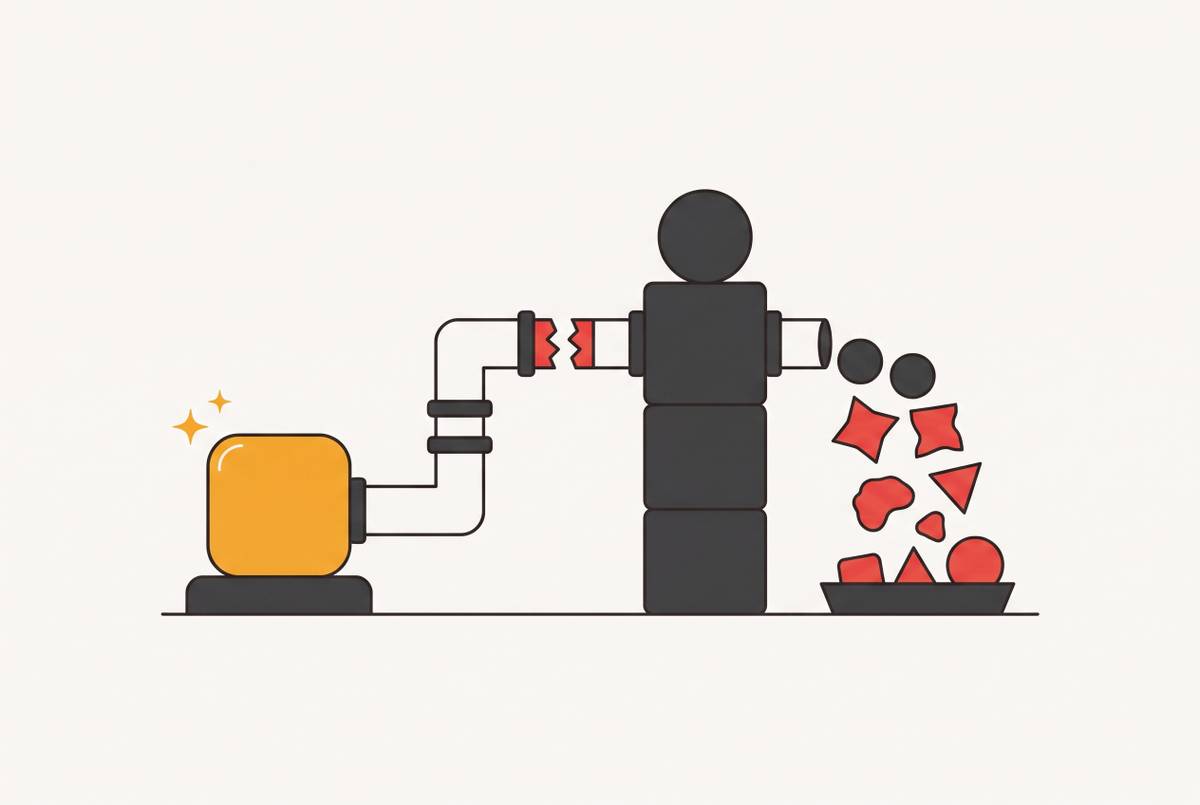
Prompts are temporary and session-specific, which makes them a poor home for rules that must persist across workflows. Brand instructions embedded in one prompt do not automatically transfer to another agent, session, or tool. When the brand changes, each copy needs a manual update. More careful wording can improve one response while leaving the rest of the pipeline governed by different instructions.
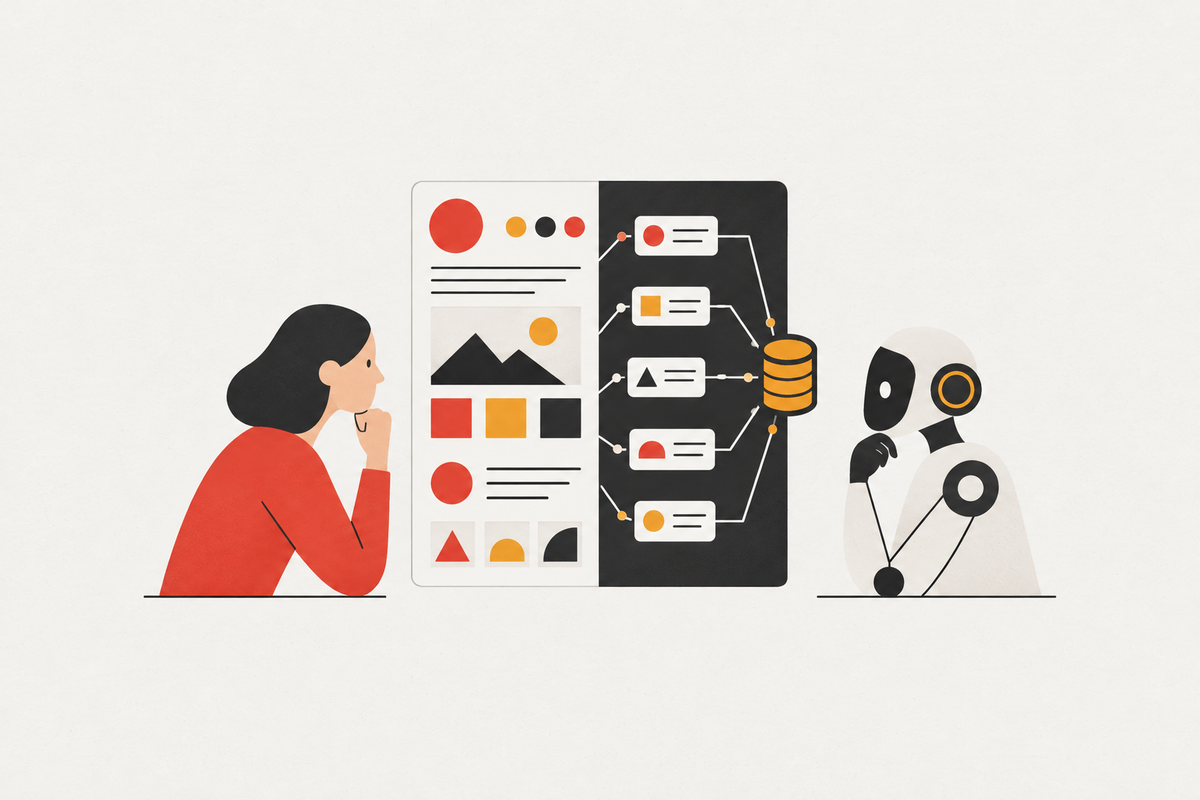
An MCP server instead exposes voice rules, visual identity, positioning, and specific constraints as context an agent queries at creation time. The brand becomes an external authority rather than something the model approximates from training. This shifts governance from maintaining prompt copies to maintaining a shared source and the workflow that consults it.
In a campaign involving a coding agent, an image generator, and a copy tool, each compatible agent can independently query the same server. Parallel work then starts from shared guidance rather than siloed prompt versions. This removes a source of divergence, although access to common context is not proof that every output complies. Generation and review still need explicit rules. Those rules can be maintained centrally.
What a brand context layer served over MCP actually contains
Machine-readable guidelines require rewriting. A PDF converted to JSON can still be a collection of adjectives that offers no test for compliance. “Confident but approachable” leaves the model to decide what those qualities mean. An operational rule instead needs a trigger, an action, a real example, and a condition it can fail. A constraint such as “if channel=LinkedIn, tone=professional” makes a decision explicit, though examples and failure conditions are still needed to make it evaluable.
The rules also need a narrative identity layer. That includes who the brand serves, who it deliberately does not serve, what it refuses to be hired for, what it believes that competitors do not, and language it will never use. Without those distinctions, a model can follow the style rules on the surface and still produce the category average. Specificity takes more space than descriptive shorthand. AI-usable guidelines can therefore be longer than traditional brand books because they express judgments previously left in designers’ heads.
That content becomes useful over MCP when it is divided into named units, each containing one decision. Resources provide data to read, including tokens, voice rules, and imagery guidance. Tools provide functions to call, including contrast checks, logo variant selection, and compliance evaluation. Prompts provide reusable task templates, such as “generate a LinkedIn post in brand voice”. These are complementary interfaces.
Pulumi, a cloud infrastructure vendor, demonstrates the distinction with its own brand MCP server. As of mid-September 2026, it exposed Resources covering brand voice, writing rules, and binding product names, together with callable Tools. An agent could read how to name a product and separately ask whether the brand’s violet was legible on white. The contrast function returns a calculated value.
MCP-compatible tools that serve brand context in production pipelines
The @brandsystem/mcp tool represents a local-first, compiled approach. It turns existing material, including a website, PDF guide, Figma library, or local files, into a portable .brand/ runtime directory. Its outputs include brand-runtime.json for single-file agent context, interaction-policy.json for anti-patterns, voice constraints, and never-say words, and tokens.json for DTCG design tokens. Portability is its central advantage, including offline use. The tradeoff is maintenance, because brand changes require recompilation rather than automatically reaching every connected agent.
Brandfetch represents a different priority, serving hosted brand assets at generation time. This approach is strongest for logo and asset retrieval, with coverage determined by what a brand has published to its index. Asset access is narrower than complete governance. A retrieved logo does not, by itself, provide the positioning decisions or voice constraints needed to govern copy.
Design system MCP servers, including IBM Carbon’s, serve product and engineering workflows where component and token consistency is the main requirement. Design systems are interface kits. Their value is best judged by how well they keep interfaces consistent, without assuming they cover narrative identity.
A shared, versioned brand context layer addresses a broader pipeline requirement. It can turn a task into a Brief containing the applicable logo, type, colors, imagery, and voice rules, then supply the same context for generation and review. For agencies and multi-brand operators, that architecture also needs to distinguish each brand’s context. The unit of governance becomes the whole task. It is no longer just an asset lookup or a single generation instruction.
A documented n8n workflow makes that sequence concrete. A colleague emails a newsletter request, an AI agent retrieves the applicable guidelines from a brand MCP server, and the agent generates and returns a brand-compliant newsletter. No manual prompt engineering occurs between those steps. The workflow demonstrates automatic consultation of a known source, rather than a person supplying brand instructions for each request.
What enterprise-scale MCP deployments reveal about governance requirements
Pinterest’s production MCP ecosystem places domain-specific servers for Presto, Spark, and Airflow behind a central registry. It serves hundreds of active users and saves thousands of hours per month. That deployment shows how MCP works beyond one developer’s setup, with support from governance, security review, and gateway infrastructure. Scale depends on more than protocol compatibility. The organization also needs control over which services agents can reach.
Microsoft’s Copilot Studio approach makes the access distinction explicit. Trusted and verified first-party MCP servers are allowed in developer environments, while riskier integrations require service ownership verification, security and privacy review, responsible AI assessment, and consent gating for high-impact actions. The approval path reflects the integration’s risk.
The 2026 MCP roadmap treats enterprise readiness as a formal priority, including audit trails, SSO integration, and gateway patterns, mostly through lightweight extensions. For brand teams, the lesson is to treat the context server as organizational infrastructure. It should be access-controlled, audited, and version-managed. A service that supplies binding product names, approved positioning, and review rules needs someone to answer for it even after a developer has connected to it from their environment.
How versioning brand context in MCP changes what "keeping the brand current" means
A brand update becomes operational only when the agents producing work use it. If a palette, voice guideline, or positioning statement changes while tools retain local copies, those tools continue working from stale rules. Teams now have to maintain the local copies in each connected tool. A common connection cannot solve it if the workflow still depends on separately maintained snapshots.
Brand identity should therefore be versioned like code, with a change recorded once and made available wherever that context is needed. In a server-backed workflow that queries current context at generation time, the next query reflects the server’s updated content. Propagation happens through retrieval rather than manual prompt replacement. This benefit depends on consulting the source. A locally compiled runtime still needs recompilation when its underlying brand changes.
Version history also has to connect to the work produced. Knowing which context version was active when an asset was created supports compliance, rollback, and investigation of differences before and after an update. For multi-brand operators, the record must distinguish brands as well as versions. Brand-level namespacing lets shared MCP infrastructure separate those contexts without per-brand custom tooling. The record must show whether an agent queried the right brand’s current guidance.
Reviewing AI-generated output against brand context before it ships
Shared context at generation time does not close the governance loop. A headline can use approved vocabulary yet contradict positioning, while an image can use approved colors but the wrong composition pattern. These failures of the finished work can occur even with instructions in place. They require evaluation after generation. The same context that briefs the agent can provide the reference for that evaluation.
MCP’s Tools primitive makes review callable as a function. After creating an asset, an agent can call a review tool that checks it against stored context and returns structured evidence of which rules passed, which failed, and what triggered a failure. Pulumi’s contrast-check tool provides a concrete example. It takes a color pair and returns a calculated legibility value. The result provides repeatable evidence for a specific decision.
The same architecture works for images, video, and audio, with checks that fit each medium. A brand-derived brief guides creation, and a subsequent review examines relevant constraints such as logo placement, color accuracy, typography, or voiceover tone. Those checks need defined criteria and functions. MCP makes them available to the workflow but does not supply brand judgment on its own. The resulting sequence is brief, generate, review, and ship, with a record of what was evaluated and what passed.
How do I set up a shared brand rules layer that multiple AI agents can query automatically?
For teams putting this architecture into practice, the starting point is design tokens. Name every color, type size, and spacing value by function in one JSON file. This is immediately consumable context for agents. Tools such as Style Dictionary can use it to generate CSS, Tailwind config, and component themes, giving those outputs one source.
Next, rewrite descriptive guidance as logical constraints with triggers, actions, examples, and failure conditions. Tone rules can spell out what fits each channel, with professional tone for LinkedIn and conversational tone for a photo-sharing platform. Then add the decisions about narrative identity that define the intended audience, deliberate exclusions, refused work, distinctive beliefs, and prohibited language. Tokens constrain appearance, while this layer constrains meaning.
Once those decisions are explicit, segment them into named Resources so that an agent can fetch the ICP, color system, or voice rules independently. Make review functions available as Tools that agents can call for contrast checks, vocabulary validation, and logo variant selection. Reading and checking are different capabilities. Version management should accompany both from day one, with a change record that connects generated work to the guidance active when it was made.
Only then does connection become the main task. Agents using Claude, ChatGPT, Cursor, Claude Code, or Codex can connect over MCP, while products incorporating brand context into their own workflows can use a REST API drawing from the same source. Connect the structured brand layer once, then let each compatible agent consult it where the work happens.