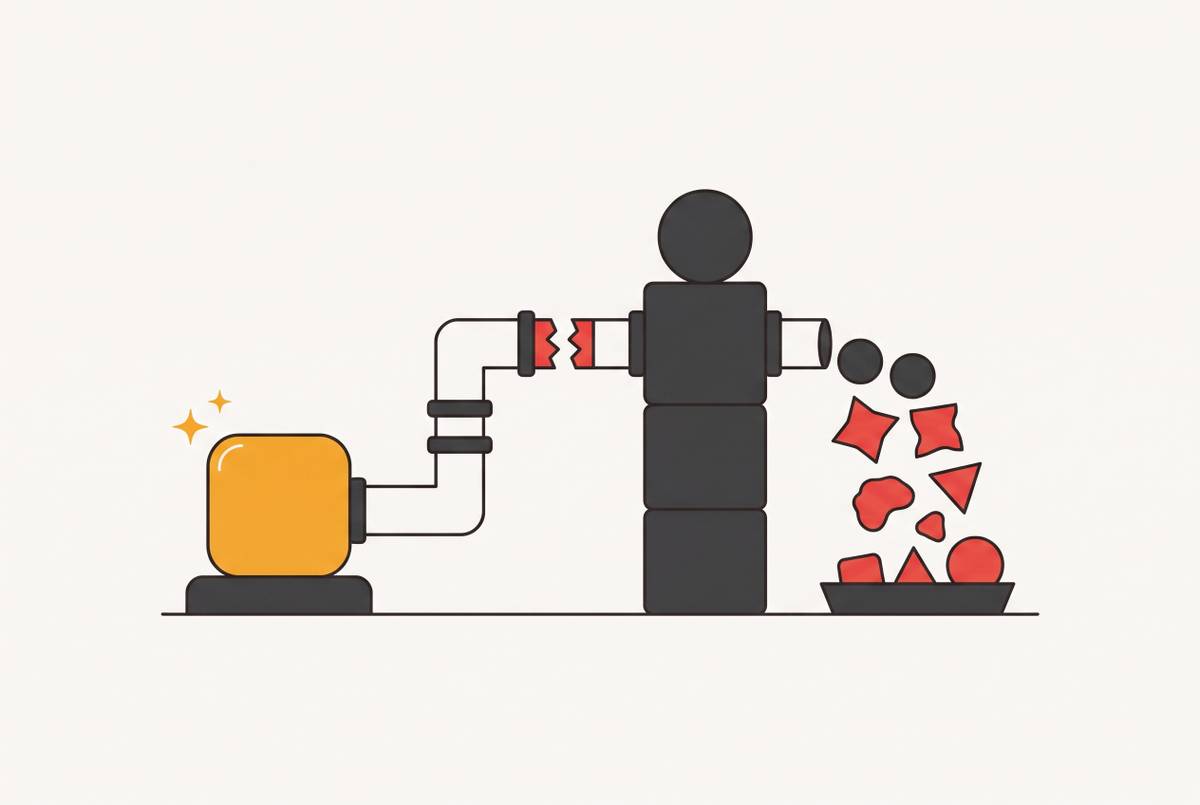
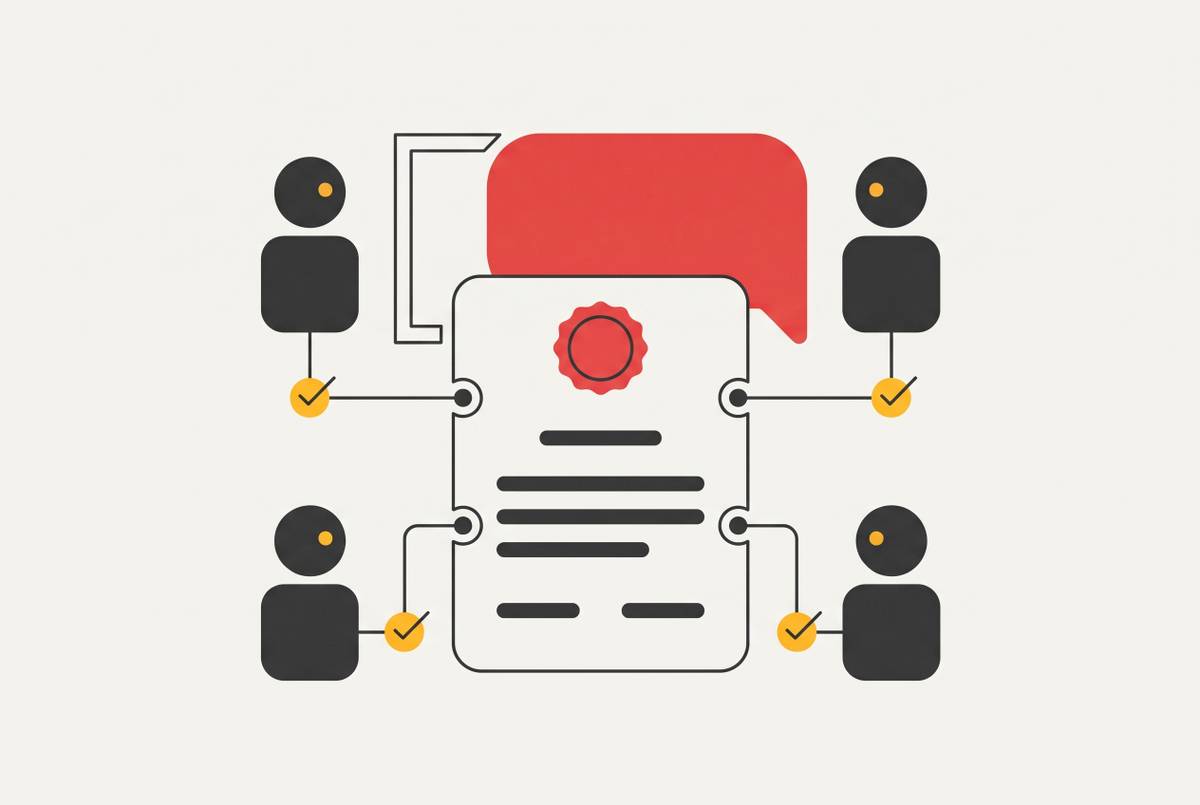
Why Creative Teams Need a Brand Context Registry Not a Brand Guidelines Document
Machines need structured data, not prose guidelines, to stay on-brand.
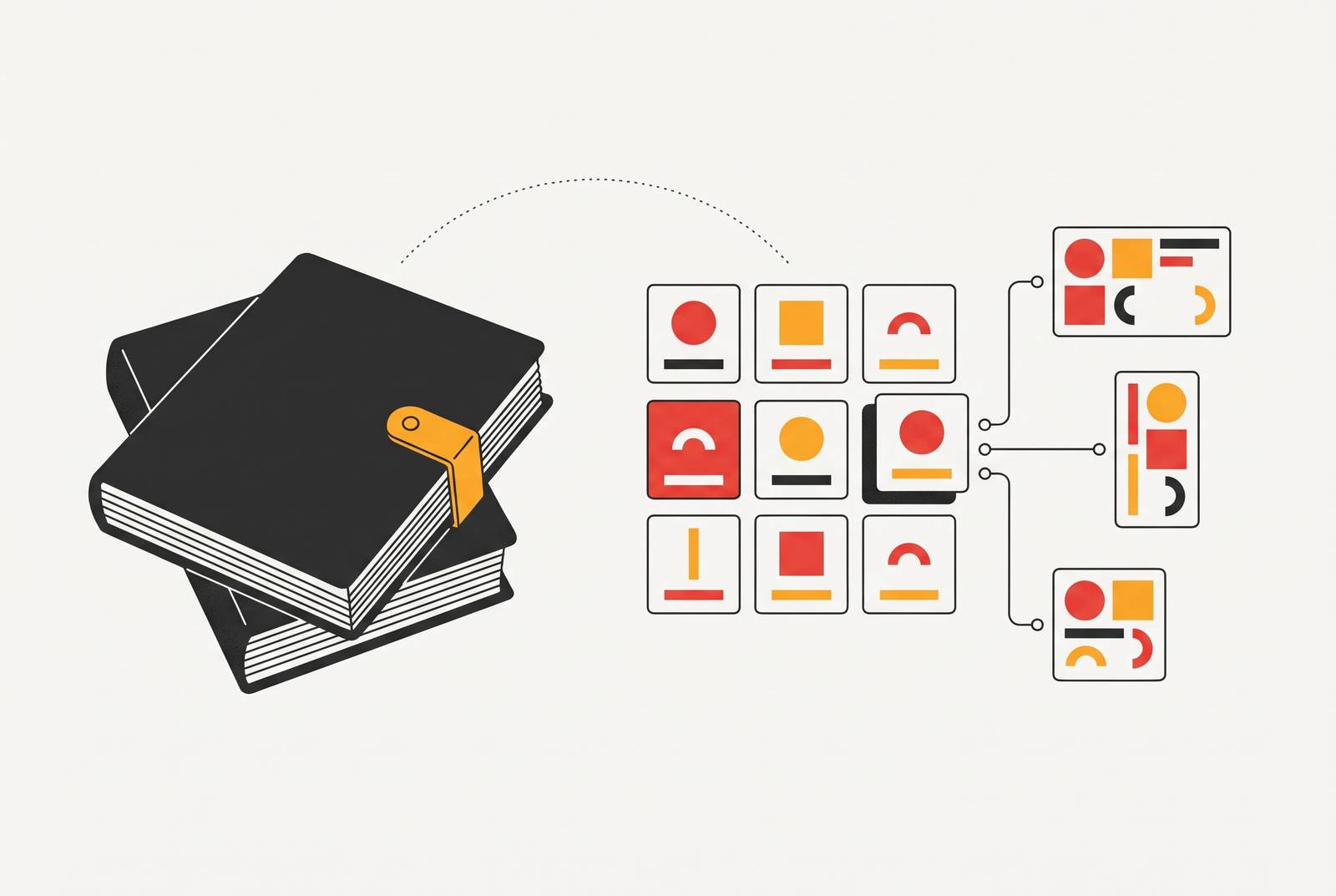
A brand context registry is the brand layer for agents, a structured, versioned source of identity, rules, and positioning that compatible tools can query. Creative teams need this shared infrastructure because a guidelines document leaves each agent to make sense of its own copy. The shift is from repeatedly explaining the brand in prompts to governing the context that shapes every agent’s work.
Why brand guidelines were built for human interpretation, not machine execution
Three people give the same brand guidelines to three AI tools. One uses an image generator, another a copy tool, and another an email platform. Each tool receives the context supplied for that session, so the same document can produce three interpretations.
Traditional guidelines were designed for a different relationship. A human reader draws on institutional memory, cultural context, and judgment to follow instructions that cannot spell out every choice. A description of brand personality can therefore guide a designer or author who already understands the organization. As work passes from the brief through the author, reviewer, and local market, however, each interpretation can also dilute the original intent.
AI accelerates that chain without inheriting its human context. A document in a shared drive is unavailable to an agent unless someone supplies it or gives the tool access. Even when pasted into a prompt, prose remains something to interpret. These constraints are architectural.
How multi-agent workflows turn a single guidelines document into many conflicting versions
A single task can expand into multiple agent calls, each initialized with its own context. When those calls run simultaneously, a static document does not become shared context simply because everyone started with it. Each agent works from its own copy or the parts it was given. Those versions can diverge without any tool malfunctioning. The tools are acting on the information and objectives they received.
Vera V. Vishnyakova’s 2026 context engineering paper examines the Klarna case as an example of a technically capable agent eroding brand equity by optimizing for the wrong objective when corporate intent was not explicit and machine-readable. An agent can perform its assigned task while working against an unstated brand priority. More capable execution does not supply the missing intent.
Fragmentation also exists before agents enter the workflow. Brand knowledge sits across Figma, CMS platforms, decks, PDFs, and the institutional memory of long-tenured staff. Connecting an agent to those sources gives it more to read, but does not tell it which source to trust. If three documents describe a product differently, the agent still needs a rule that determines which description governs. Without one, more connected knowledge can mean more competing instructions.
What governance actually needs to control, inputs rather than outputs
Traditional brand governance follows a sequence of design, document, and build, with a human reviewing finished work against the guidelines. That model places the main control after production. In multi-agent workflows, review can catch a departure from the brand, but it cannot change the context that already produced it. The next agent can encounter the same ambiguity.
Governance therefore shifts from assessing whether content is on-brand to examining which data, rules, and sources determined what the agent produced. Output review remains useful as a check. It is not a substitute for controlling the conditions of creation. Gartner predicts that over 40% of agentic AI projects will be cancelled by 2027 due to insufficient governance, placing this issue beyond the quality of individual creative assets.
Vishnyakova’s paper states the principle directly, “whoever controls the agent's context controls its behavior; whoever controls its intent controls its strategy; whoever controls its specifications controls its scale”. For brand teams, this shifts governance upstream. The scalable control is over the inputs agents draw from before they create, rather than repeated correction of what they produce afterward.
What makes brand standards machine-readable rather than just machine-accessible
Machine-accessible standards are available for an agent to retrieve. Machine-readable standards are structured so the agent can apply them without a human translating the document into instructions each time. Availability alone does not close that gap. A slide deck can show a designer what the brand feels like while leaving a system without explicit rules for choosing language or composing an image.
For voice and tone, structured standards include vocabulary rules, banned phrases, reading-level targets, and sentiment ranges. For visual identity, hex codes, typography, and composition rules can be expressed as JSON or YAML values. The file format is not the central distinction. Examples are shown for interpretation, while values and rules are supplied for execution.
Design tokens provide part of that structure, but they do not define the whole brand. A token can supply a technical value without explaining when or where the associated element belongs. That missing semantic context is what connects an available choice to an appropriate decision. The practical test is whether both humans and agents can understand and consistently apply the standards. Where the answer depends on unwritten knowledge, the system still requires a human interpreter.
The three-layer architecture of a brand context registry
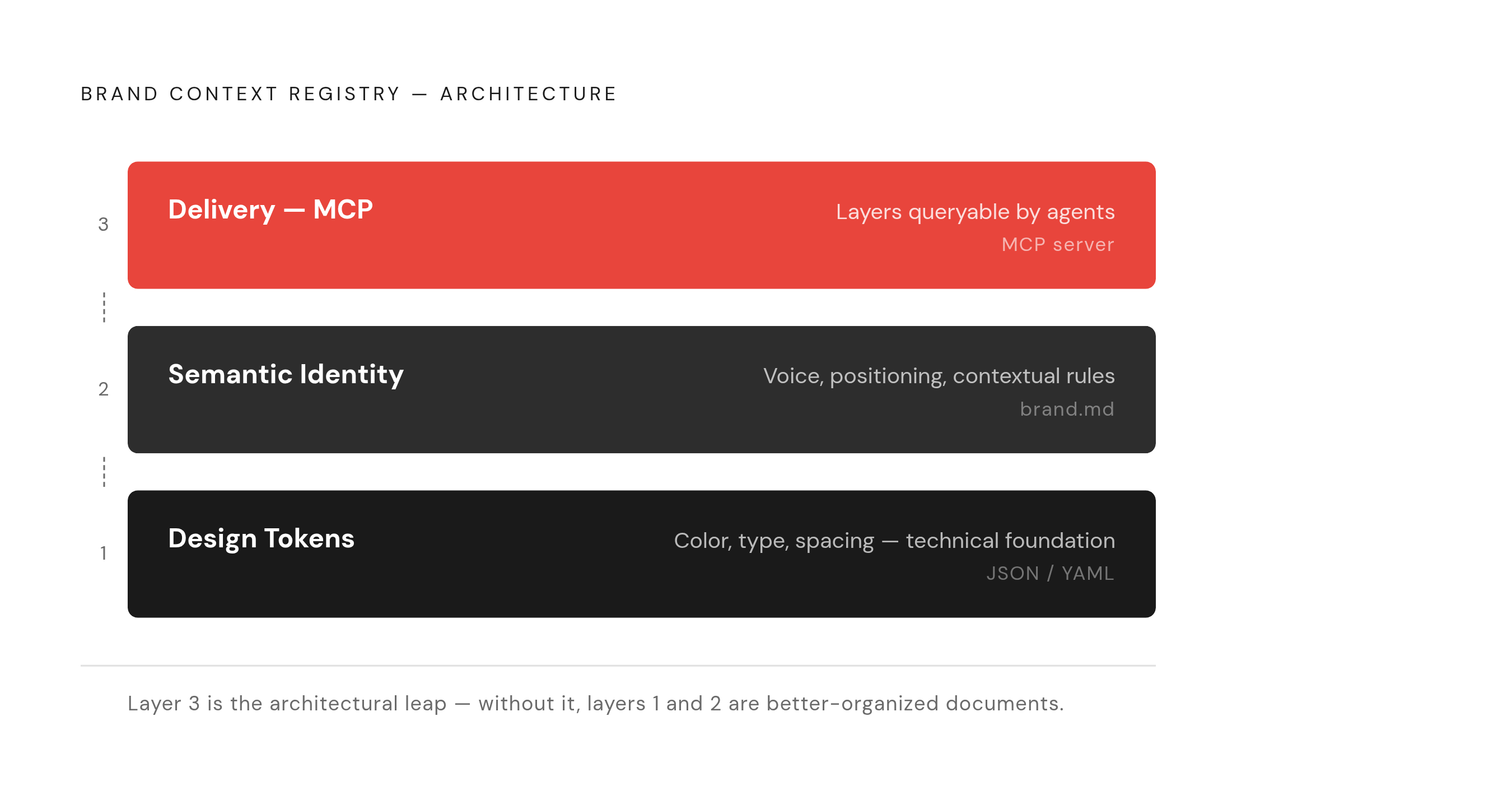
A brand context registry has three layers for technical values, semantic identity, and delivery. Each layer has a distinct job. Keeping them separate helps people avoid mistaking a set of visual settings for a whole brand system, or a well-written identity file for a connection that works. Together, the layers define what the brand permits, what it means, and how agents obtain that context.
Layer one consists of design tokens. These express color, type, and spacing in a format tools can consume directly. They form the technical foundation of visual identity, but their scope is limited to those values. Layer two supplies the semantic identity file, which is the source of truth for brand identity, strategic positioning, voice, and contextual rules. People doing this work have begun calling this file brand.md or using other structured formats that serve the same purpose.
The semantic layer gives agents the context needed to make decisions across brand work. Layer three is the delivery mechanism, which makes both layers queryable by compatible agents when they need them. With it, agents no longer depend on someone pasting the right material into each prompt. The token file should also be version-controlled like code, so agents read the updated standards without someone having to keep separate copies in prompts up to date by hand.
How can multiple AI agents access the same brand identity through MCP?
Instead of relying on a person to reproduce the guidelines correctly in every prompt, a compatible agent can query a shared registry during its work. An MCP server exposes voice rules, visual identity, positioning, and approved and prohibited language for discovery and retrieval. The registry becomes a live source of context. It is no longer merely a file someone may have remembered to attach.
MCP is model-agnostic by design, so the same source can serve compatible tools including Claude and ChatGPT without a custom integration rebuilt for each one. This also lets the team move between tools without having to explain the brand again to each assistant. For those who run more than one brand, tenant-separated contexts let them keep each brand distinct while overseeing them all in one place. Shared delivery need not mean shared identity.
Even with the connection, a tool may generate work without first making a query. The official MCP architecture documentation describes a client discovering what a server offers and a model invoking tools when it determines they are needed. Keeping the brand consistent depends on rules for the connection and how it is used, as well as setting it up.
Why brand context must be versioned, not just stored
A shared registry solves fragmentation only while its contents remain current. Rebrands, updated positioning, new product claims, and retired messaging are governance events because they change which instructions agents should follow. Storage alone cannot manage those transitions. Without controlled updates, a registry can preserve outdated context just as effectively as a document archive.
The operational principle is to store the registry in a version-controlled repository and update it when the brand changes. Connected agents drawing from the current version then receive the revised standards without separate prompt edits. Superseded material must also be actively retired. Leaving old positioning accessible without marking its loss of authority preserves the conflict that the registry was meant to resolve.
Vishnyakova’s framework names provenance as one of its five criteria for judging whether context is good enough for production. Agents need context about the source of an instruction and whether it remains current. To keep that authority, there must be named owners and rules for settling disagreements. Governance must also define who owns the schema, who approves changes, and how regional or product-line variations remain connected to the central source of truth.
The real difficulty is governance ownership, not technical setup
The strongest organizational objection is legitimate. A registry needs someone with the authority to maintain it and resolve disagreements about what the brand means. Connecting existing material does not confer that authority. Design tools already export tokens, and content platforms already support structured metadata, so much of the technology needed is already in place. The harder work is deciding which source governs when the available material disagrees.
Brand knowledge in Figma files, Notion boards, Confluence, decks, and staff memory becomes a registry only when ownership is explicit. Someone must designate authoritative material, approve updates, and settle conflicts. The CMO’s remit naturally extends into this work because brand, messaging, and customer insight already sit within that function. Extending that authority into the AI context layer links agent behavior to existing brand responsibility.
MCP-based delivery also has a real technical cost. Adding connected tools increases token overhead and can reduce reliability, so connectivity is not an unlimited good. The practical response is to be deliberate about what the registry exposes and to include security review in governance from the start. Avoiding those decisions leaves the same conflicts distributed across tools and prompts, where they are harder to govern as a whole.
What a brand context registry makes possible that a guidelines document cannot
A governed registry gives simultaneous agents a common authority, so whether five agents or fifty are working, each can draw from the same identity and rules. Outputs can vary within shared standards for what the brand permits.
Those standards also support validation at creation. Finished work can be checked against the brand automatically, with evidence for each check, before it ships. Review then evaluates work against explicit rules rather than relying entirely on a reviewer to reconstruct intent from a document. The registry supplies the reference for that validation.
Versioning keeps that same control in place as time passes, while shared delivery brings it to different tools. Brand updates can reach connected agents and products without someone revising prompts tool by tool. Agencies and multi-brand teams can use shared infrastructure to keep each identity separate and governed, so managing the brand is part of the workflow itself. A guidelines document can explain the brand to a reader. A registry can make that identity available as an operational constraint wherever agents create work.