Why Brand Drift Accelerates as You Scale Agent Output and How a Shared Context Layer Stops It
Brand consistency at scale comes from shared infrastructure, not better prompts.
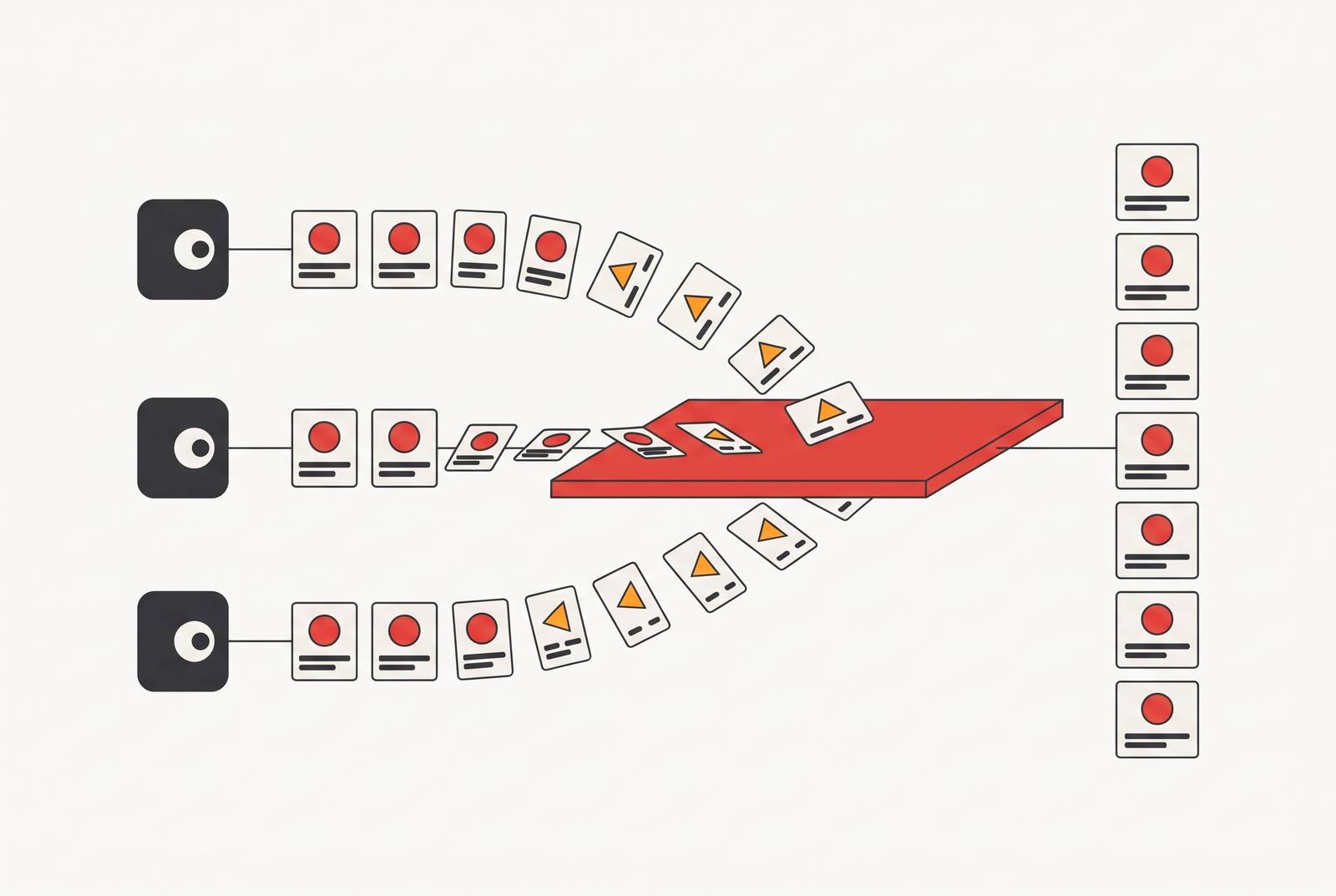
The brand layer for agents is a shared, versioned source of brand identity, voice, visual rules, and approved references that every connected agent uses to generate and review work. Brand drift accelerates when agents instead rely on isolated, static copies of that context. The architectural fix is to make brand context live infrastructure, so consistency no longer depends on repeatedly explaining the brand in individual prompts.
Why brand drift at AI scale is a structural problem, not a prompt quality problem
A team generates dozens of assets a week, each individually plausible but collectively incoherent. Each asset appears to satisfy its brief. Yet the work does not express a stable identity when placed together. Nothing seems to have broken, and the agents may be doing their assigned tasks correctly. The failure lies in how brand context is held, with each agent’s isolated interpretation serving as its authority.
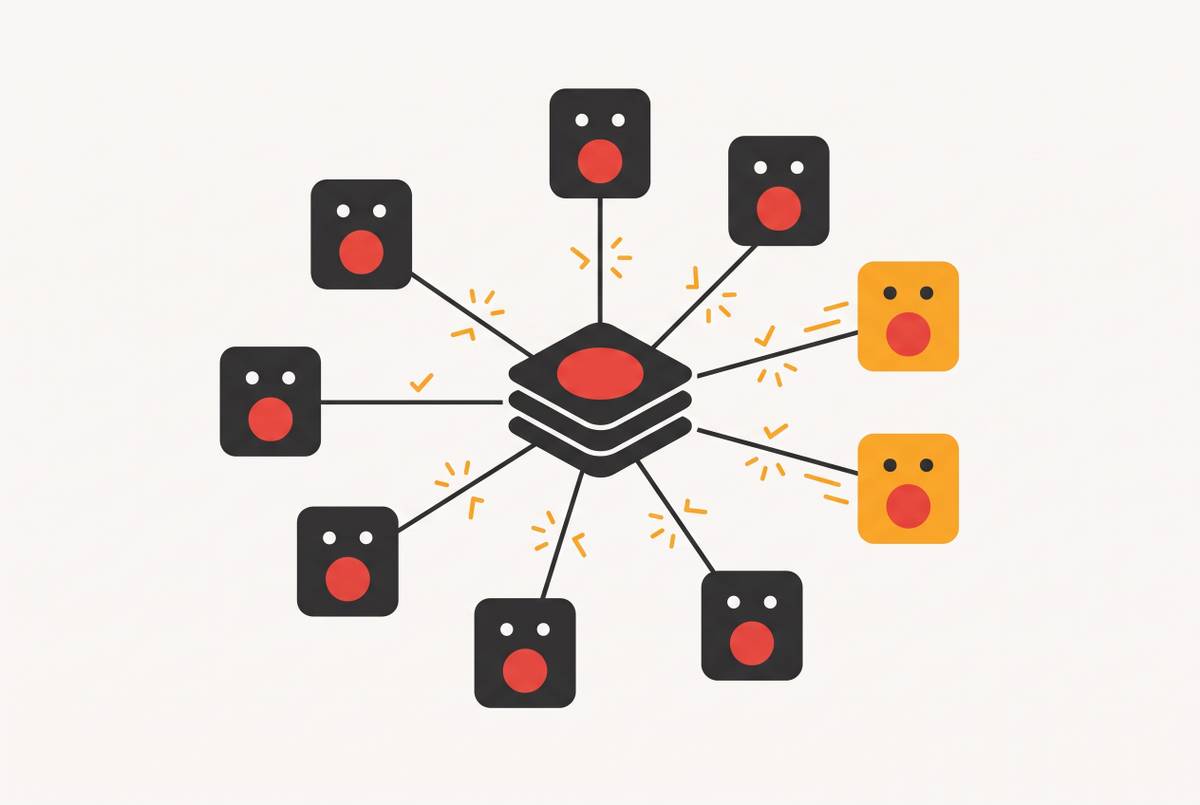
The paper on agentic brand drift gives this failure mode a precise name. It defines agentic brand drift as “a gradual, self-compounding divergence between a firm's intended brand identity and the emergent brand character its agents produce.” There is no single triggering event to investigate. Instead, individually compliant, locally optimal decisions accumulate into a brand character that the organization did not intend. The usual performance checks can miss this because agents produce more work, work faster, and cost less.
Better prompts can improve a single generation. They cannot keep separate context stores synchronized. The same prompt can produce different results across sessions, while team members maintain different prompt libraries and models supply their own interpretations of phrases such as “clean tech-forward.” The question therefore shifts from how to write a better prompt to how to build an architecture that gives every agent the same authoritative reference.
Three compounding mechanisms that make drift accelerate as output volume grows
Decision diffusion begins when agents optimize local objectives without preserving the brand’s meaning across the whole system. A pricing agent optimizing for margin may work against a fairness-positioned brand across thousands of transactions, even though no individual decision violates its constraints. Local correctness does not establish collective coherence. More output spreads those decisions further, while more agents bring more goals that may pull the brand in different directions.
Temporal collapse adds a different source of divergence. An agent trained on historical brand outputs learns distributional patterns while the meanings and values those outputs expressed remain outside its understanding. It reproduces the surface. As the training distribution ages, that surface becomes a less reliable expression of the current brand. More generations do not repair the missing understanding.
Accountability dissolution makes these effects harder to fix as they build up. Responsibility is spread across engineers, deployment managers, model vendors, and content operators, with no named person monitoring the cumulative identity consequences. The agentic brand drift paper theorizes these mechanisms as a causal sequence. They describe a compounding process.
Non-designers, regional teams, and external partners generate independently, using different prompt habits, interpretations, and platform constraints. No human reviews all of that work against the brand before it ships. By the time the divergence becomes visible, months of inconsistent output may already have reached the audience.
Why siloed, static brand documentation cannot survive this environment
A brand guide written for a human designer assumes judgment that a model does not share. Phrases such as “friendly icons” or “warm and optimistic” depend on interpretation. A model resolves that ambiguity through its training data rather than through access to the brand’s intended meaning. The document may be readable without being operationally precise. Putting it in a shared drive does not remove that distinction.
Once a PDF is copied or its contents are pasted into prompts, agents and team members hold separate versions. A central revision does not update those copies. The organization can have a current guide while its agents continue generating from outdated instructions. A prompt library changes the packaging but retains the same stale-copy mechanism.
Color and typography can be described in human language, or they can be pinned through exact tokens and rules. HEX values, modular prompts, and negative constraints give agents more definite boundaries than an impression of the desired style. When a brand lives mostly in a few people’s heads, it lacks those machine-readable rules.
Governance focused on system behavior and compliance does not, by itself, preserve coherence of meaning. Adding corrective review after deployment leaves teams repairing outputs produced from inadequate context. All agents need one machine-readable, live source of truth, rather than separately distributed descriptions of what the brand should be.
What is a shared, versioned context layer, and how does it give agents the same brand guidelines?
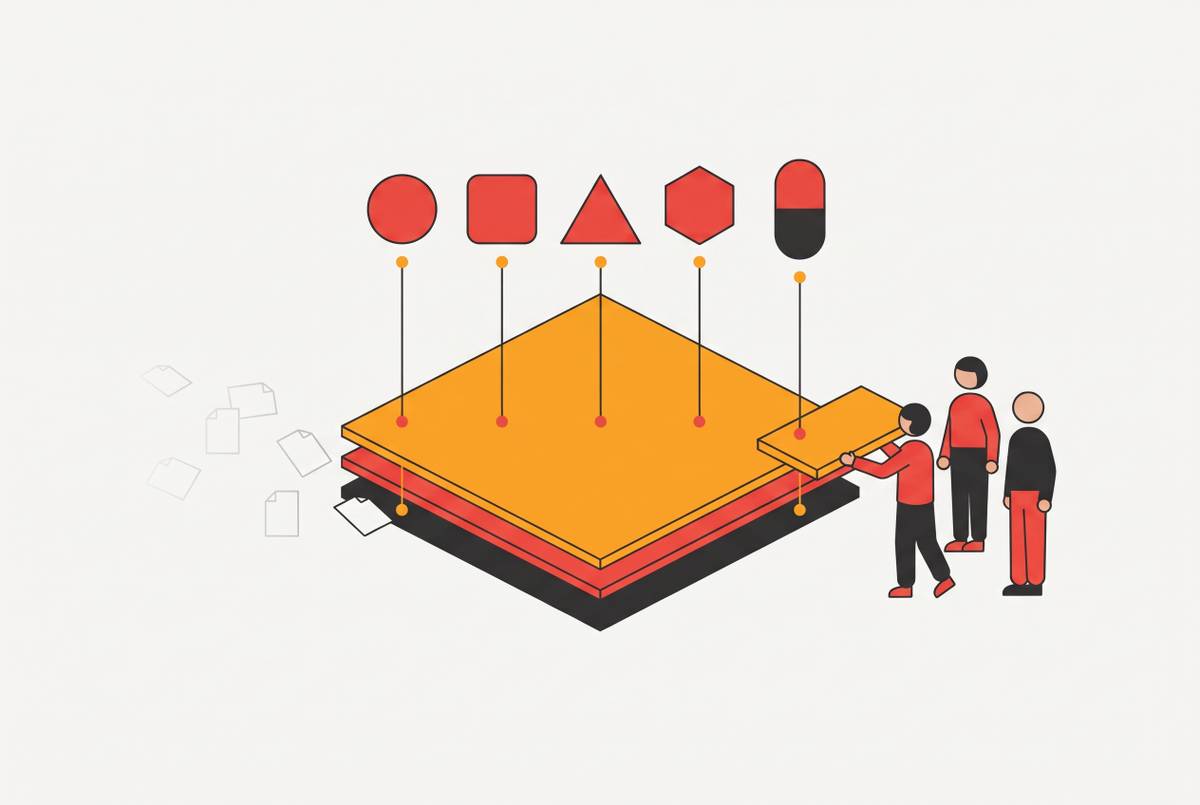
A shared, versioned context layer replaces isolated copies with a single authoritative source that all agents query before generating. It is an infrastructure decision. The source can be a structured file or a live context endpoint, provided it holds the brand’s strategy, voice, and visual rules in a machine-readable form. Exact palette tokens, typographic rules, negative constraints, voice parameters, and approved asset references turn broad intentions into usable constraints.
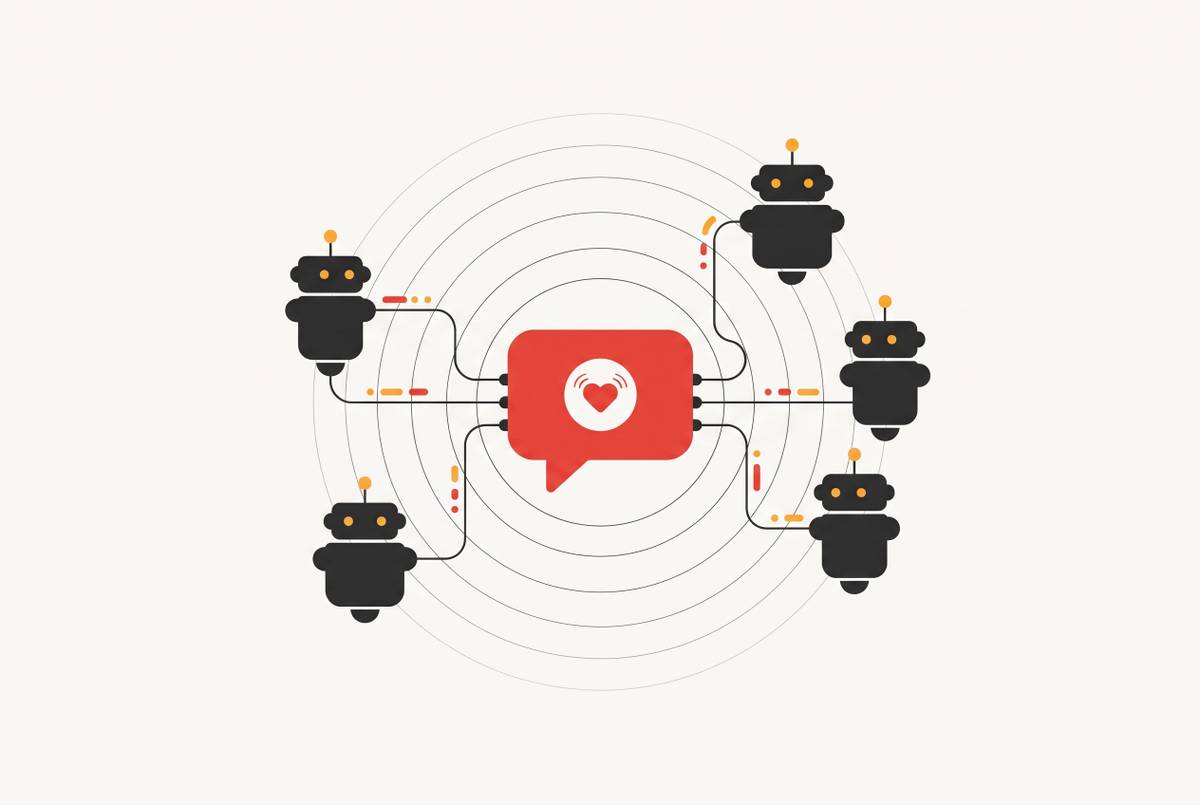
This changes where consistency is established within the system. Instead of asking every operator to reconstruct the brand correctly, the architecture gives every connected agent the same upstream reference. In Astorie’s canvas architecture, downstream image, video, and audio nodes read pinned canonical references. The references remain stable across those generations. Maintaining consistency becomes a property of the connections rather than a separate instruction repeated for every asset.
Campaigns shift tone, visual languages evolve, and sub-brands come and go, so the authoritative context must also be versioned. Teams can plan and track changes in one place instead of making separate edits to their own copies. Connected agents must receive those changes centrally or the system recreates the original distribution problem.
The distinction is between a shared location and a shared dependency. Agents can choose whether to read a file that is merely available to them. A context layer that every generation depends on makes inconsistency structurally harder, because the brand’s rules are supplied by construction.
How MCP turns a brand context file into live, shared infrastructure across agents
Anthropic open-sourced Model Context Protocol on November 25, 2024, giving AI agents a standard protocol they can use to query external tools and data sources. Its brand-specific value is context unification. A brand file becomes useful across agents when those agents can retrieve the authoritative context as part of their work, rather than depend on whatever an operator remembered to paste into a prompt.
In an MCP-connected brand workflow, a marketing team member can ask Claude to draft a campaign while the agent queries the brand’s style guide, voice parameters, approved asset references, and previous campaign context before generation. The request supplies the task. The connected source supplies the identity. That separates task instructions from brand maintenance. Updating the latter no longer requires rewriting each task prompt.
MCP provides the connection. The source still needs to be structured, current, and authoritative, and the workflow must require agents to consult it. Otherwise, the connection only makes a document easier to fetch, even if it stays unchanged or its rules are unclear. The architectural benefit comes from combining shared access with a precise source of truth.
Block (Square) built more than sixty internal MCP servers and deployed an internal agent for work including legacy code refactoring. That shows shared MCP infrastructure working across a large company, though it does not show how well it keeps work on-brand. For teams not building custom infrastructure, pre-built integrations with Notion, Google Drive, and content production platforms offer context unification through configuration.
Why multi-agent and multi-brand environments make the shared context requirement non-negotiable
Multi-agent marketing increases the number of places where locally correct decisions can produce an incoherent customer experience. Specialized agents may handle reviews, social, lead management, and customer communication, each optimizing its own task. Their outputs still represent the same brand. Without shared context, coordination can organize the work without aligning the meaning that customers encounter across it.
This makes the common reference foundational to orchestration. An architecture can coordinate agents’ behavior while leaving each agent’s brand interpretation untouched. The shared substrate must therefore precede coordination and other governance layers, rather than be treated as an optional improvement once the agents are operating.
An agency needs each client’s brief, voice, strategic context, and audience data to remain separate from those of other clients. Sharing everything would solve the wrong problem. The aim is common access within each brand, without allowing one brand’s context to bleed into another’s generations.
For agencies, the relevant criteria are per-client isolation, team collaboration, and shared context that stays current. These are architectural requirements. One system can hold multiple independent brand contexts, but each must remain separately versioned and isolated. The result preserves a common authority for each brand without confusing a shared platform with a shared identity.
Turning brand output review into a structural check rather than a manual audit
A shared context layer governs what enters generation, but finished work still needs to be checked against that same authority. Input rules alone leave a review gap. AI can produce more assets than people can cover through spot-checks and designer review. When production outpaces inspection, inconsistent work can reach the audience before anyone identifies the departure.
A structural review checks the output against defined brand rules and provides evidence for each finding. A palette mismatch points to a specific color constraint. A voice finding identifies the element that contradicts the defined tone. That evidence gives the team something to correct and a basis for deciding whether the revision now complies, rather than leaving the decision at “this looks off-brand.”
Work goes through automated brand checks before people review it for approval. Peers review standard assets, while senior staff review flagship work. This keeps human judgment in the process. It changes its role by making basic compliance a system check rather than asking reviewers to rediscover the same rules on every asset.
Review belongs in the initial architecture because retrofitting it leaves teams correcting work that inadequate generation controls have already produced. The context source and the review criteria need to express the same brand standards. When those standards change, a versioned update must govern both sides of the workflow. Context goes into generation, evidence comes out of review, and deliberate updates keep the two aligned.
What it looks like in practice to treat brand context as infrastructure rather than documentation
A machine-readable brand specification containing exact palette tokens with HEX values, typographic rules, voice parameters, negative constraints, and approved asset references provides the practical starting point. A mood board cannot perform that role alone. The specification records decisions that would otherwise remain interpretive, giving AI collaborators a common basis for producing work without reconstructing the identity in each prompt.
GrantOrb’s workflow uses a BRAND.md file in the codebase that every AI collaborator reads before generation. The same reference supports a marketing site, an app, a blog, and a FIFA café and breweries guide without a large design team. At team and agency scale, the file becomes a connected context layer accessed through MCP or an API. Every output is then reviewed against the context used to produce it.
A brand refresh makes the operational difference clear. When the palette or voice changes, the authoritative source is updated once, and connected agents pick up the new version on their next task. The alternative requires changes across agent prompts, team templates, and external partners’ PDFs.
Human judgment remains essential, but moves to setting standards, making taste decisions, defining escalation rules, and approving flagship work. AI handles volume and consistency within those boundaries. The structural decision is made once. The authoritative context continues to be maintained as the brand evolves.
Brand context is infrastructure to maintain, so generating more work does not require explaining the identity again.