Syncing Brand Context Across a Growing Internal Agent Portfolio Without Per-Agent Rework
Centralized brand context prevents costly inconsistency across multiple AI agents.
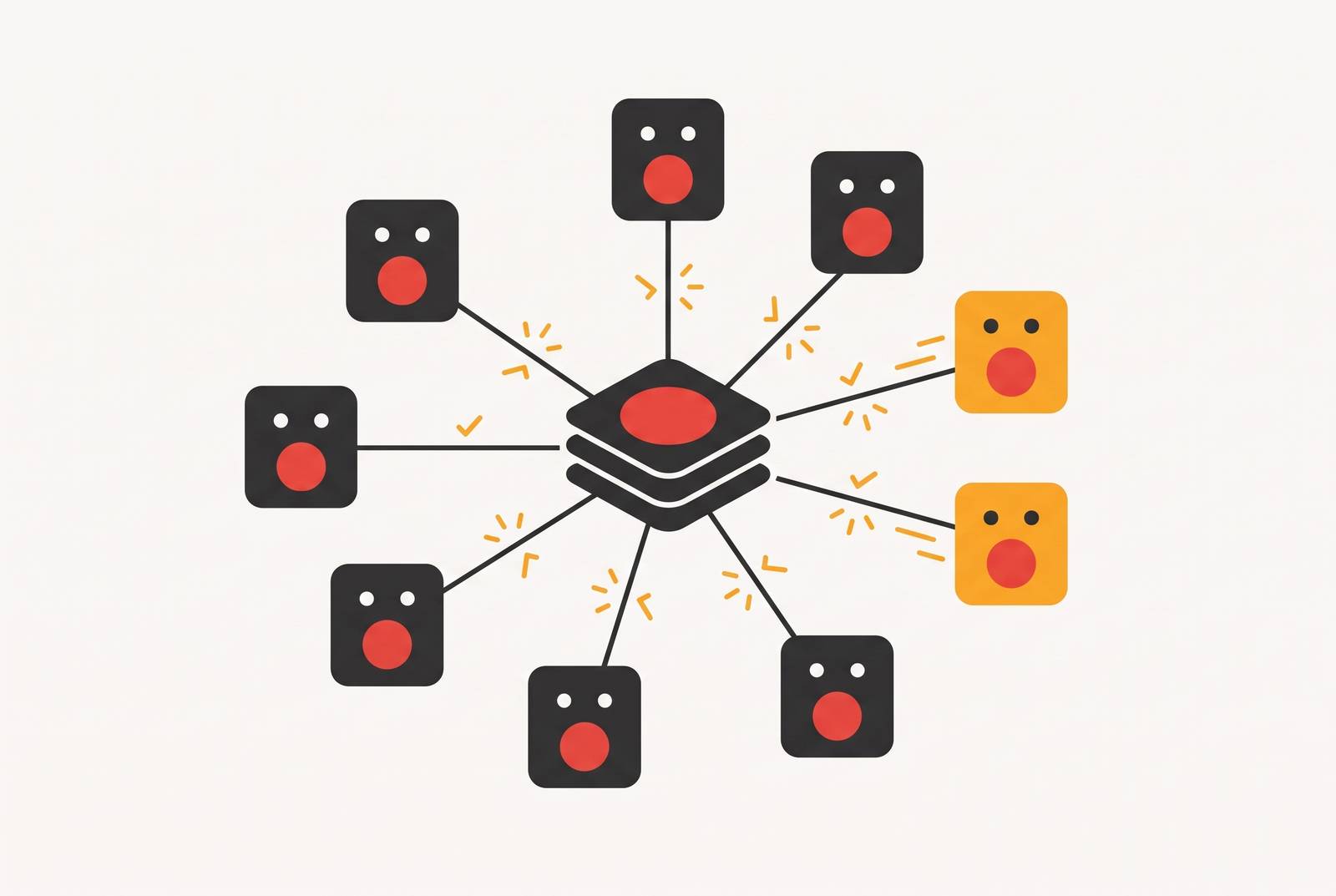
The brand layer for agents is a shared, versioned source of brand identity that every agent queries. Syncing brand context across a growing internal agent portfolio requires treating that layer as infrastructure. Machine-readable rules, shared access through MCP or an API, and review against the same context make consistent output a property of the workflow.
Why per-agent brand context fails as an agent portfolio grows
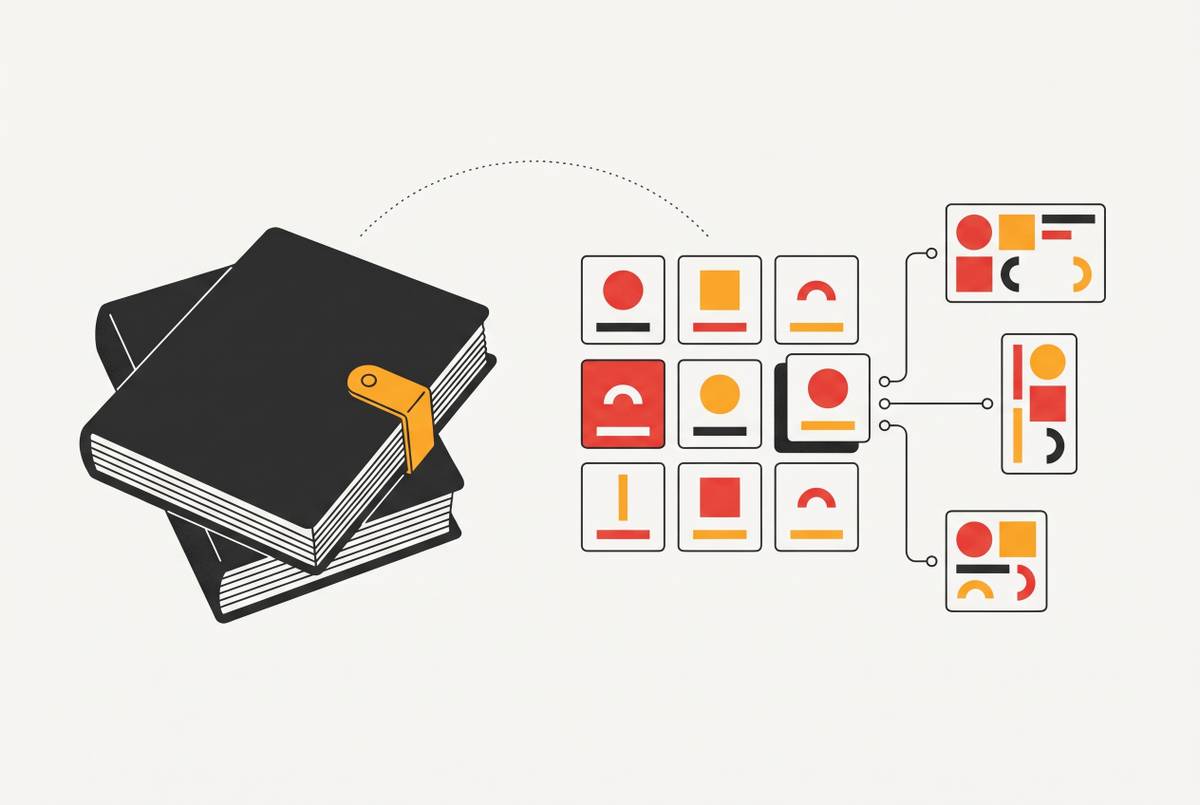
A team adding a second, third, or fifth agent creates another place to maintain brand context if each agent stores its own instructions. Each addition starts the interpretation process again. One agent gets voice guidance, another gets an asset library, and another works from a document written for a different task. Even when those inputs begin in agreement, separate copies can become stale as the brand changes. The failure is architectural.
Business Horizons (2026) theorizes three mechanisms behind “agentic brand drift” that operate as a causal sequence. Decision Diffusion lets agents take over the choices people make that carry the brand’s identity. Temporal Collapse describes agents optimizing without access to historical commitments, while Accountability Dissolution removes the human ownership needed to detect or correct divergence. Task success alone is not evidence of brand continuity.
Prompt-based encoding makes that distinction difficult to preserve. A prompt that specifies acceptable language without the values or commitments behind it gives an agent rules without their rationale, leaving those rules vulnerable to optimization pressure. The surrounding workflow adds further strain when non-designers build assets, external partners use outdated PDFs, or platform constraints force rushed adaptations. These are different routes to the same condition. Brand decisions become local interpretations rather than applications of a shared, governed identity.
What "per-agent rework" actually costs in practice
The approval pipeline is where fragmented context becomes visible as work. Reviewers must check whether an asset follows the brand before they can judge its creative quality. When that decision passes through several people, the queue becomes a bottleneck, and publishing before the cycle finishes leaves the check incomplete. Adding generation capacity creates more finished work for a process still responsible for catching inconsistencies that could have been prevented upstream.
IAB reported that a majority of surveyed US advertising executives had experienced at least one AI-related incident, including hallucinations, bias, or off-brand content. The same report found that a significant share had to pause or pull ads. Those findings cover several incident types. They still show that AI-related failures can stop delivery as well as cause small editing problems. Brand review therefore has an operational role as well as a creative one.
Teams spend labor re-entering guidelines, while multi-agent architectures consume additional tokens when agents reconstruct context at each handoff. Eliminating redundant reconstruction reduces costs and improves quality, although shared access still incurs context-processing costs. Multi-brand operators have more rework because each brand has its own guidelines and teams work across several brands. Each extra copy gives the wrong context another way into the workflow.
What is the best way to give multiple agents the same brand identity?
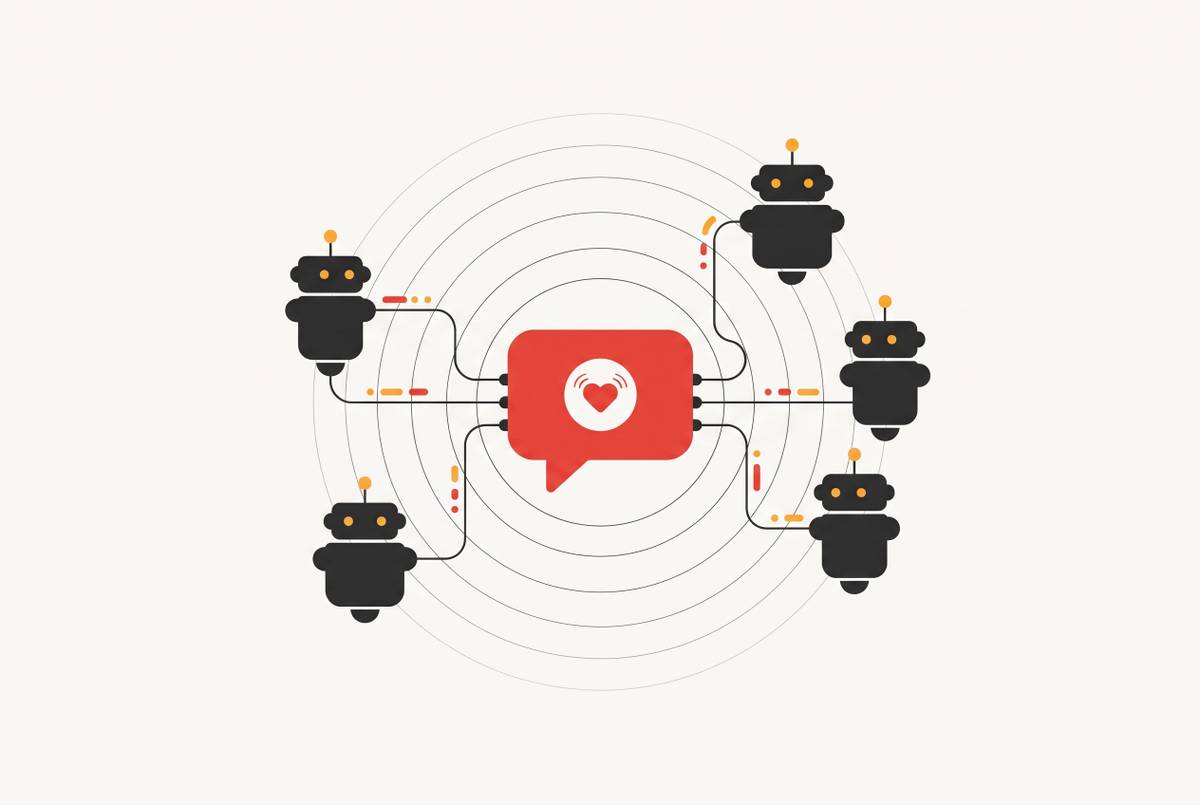
Shared brand context is a governed layer that agents query, rather than a collection of instructions embedded separately inside them. With embedded context, each agent holds a static artifact that can diverge from other copies. With shared context, agents draw from the same current version of the identity. The architecture changes how brand knowledge is maintained.
This layer serves the same role for agents that a design system serves for designers. It supplies a common source for decisions that would otherwise depend on individual interpretation. Its scope includes the brand rules and approved material needed to generate work, with governance over how that material changes. A larger style guide is not enough. If every agent still receives a separate copy, the system retains the original maintenance problem in a more detailed form.
Shared context should be treated as infrastructure from the start. An underbuilt layer leaves agents disagreeing about basic facts and can force teams to rebuild the foundation after workflows already depend on it. Infrastructure requires an authoritative source, controlled revisions, and a reliable way for agents to retrieve the appropriate context. Those criteria distinguish the pattern from a convenient document repository. They also explain why access and governance must be designed together before the portfolio grows.
How to structure brand identity so agents can actually consume it
The first practical step is converting human-readable brand documents into structured information agents can query. A design system that exists only as a Figma file does not directly meet the needs of a coding agent reading a specification and generating consistent UI. JSON tokens, component schemas, and a DESIGN.md give that agent machine-readable material to work from. Format is part of the architecture. A shared source cannot serve its purpose if every consumer must independently reconstruct its rules from documents.
These structures have distinct roles rather than being interchangeable copies of the same guide. JSON tokens express design values as structured data, while component schemas describe the components an agent is expected to use. DESIGN.md gives the agent a specification it can parse, and voice checklists set out verbal guidance as clear rules. Approved assets fill out the context when generation needs brand material that already exists. The aim is to expose usable instructions without discarding the commitments that explain them.
Version control makes those instructions governable as the brand evolves. Templates and brand rules should be versioned like code, with a record of who changed what and the ability to roll back a revision. Sub-brands need their own sets of guidance so that the rules for each are clear. This separation is essential for correct retrieval. A shared layer should make the appropriate identity accessible.
The same discipline applies to voice and visual identity. If visual tokens are current but voice guidance remains in an older document, centralization has not resolved the underlying split. The files and structures should thus make up one governed brand context, even when they set out different kinds of rules. That gives generating agents a coherent reference. It also provides the foundation for a review layer that can evaluate finished work against the same identity.
How MCP connects every agent to the same brand context without per-agent integration work
The Model Context Protocol, or MCP, is an open standard that connects AI applications to the systems where their data lives. Anthropic introduced it to replace fragmented integrations with a common protocol. An MCP server exposes the data, and an MCP-compatible client connects to that server. For brand teams, the distinction is practical. One structured brand source can serve compatible agents without a separate custom data integration for each one.
The AAIF held the MCP Dev Summit North America in New York City in April 2026, drawing a substantial crowd. Salesforce made its hosted MCP servers generally available through its Headless 360 platform that same month, giving agents and developers API-level access to Salesforce data through MCP. The Headless 360 MCP Server itself entered beta in July 2026.
For brand work, the protocol enables retrieval before generation. An agent can check the style guide, reference previous campaigns, and draw from the approved asset library. The server supplies access to the shared context. Ensuring that the context is complete, current, and correctly governed remains a prerequisite for using that access.
Multi-brand operators can use the same protocol with separate brand servers for each client. Routing each agent to the appropriate server preserves the boundary between identities while retaining a common connection pattern. Compatibility removes repeated integration design, while choosing the correct context remains necessary. This distinction keeps the architecture precise. MCP standardizes access, while brand governance determines what the agent is authorized and expected to draw from.
What the review layer does that the context layer cannot
Shared context reduces the likelihood of off-brand work, but it does not establish that a finished asset follows every applicable rule. Generation and evaluation perform different jobs. The context layer gives the agent the identity before work starts, and the review layer checks what the agent made. An automated review pass checks that work before it is published. Without it, the architecture depends on correct inputs producing compliant outputs every time.
An automated brand review pattern anchors this final layer in the same source used for generation. Its checks evaluate finished work against shared brand rules rather than a separate checklist that can age independently. Version alignment is essential here. A reviewer using older guidance could reject work that follows the current brand or approve work that no longer does.
Automated checks first test for brand compliance, file specifications, and accessibility, then peers review standard asset batches and senior reviewers focus on flagship work. This allocation keeps designers from spending their review time checking whether someone used the wrong shade of blue. Each automated check should produce an explained finding. The finding should identify the rule applied and the element that triggered the flag, making it possible to assess whether the output or the brand context needs revision.
That evidence does not replace judgment about distinctiveness. Shared context can create an illusion of control if teams equate rule compliance with preservation of brand character. Human reviewers must still judge the pattern that outputs form over time as well as each rule they break.
Putting the architecture together — one brand layer serving every agent in the portfolio
The complete architecture starts with brand identity structured as machine-readable tokens, voice rules, and versioned assets. Those materials are published to a governed shared context layer, made available to agents through MCP or a REST API, and used again to review each output before it ships. Each component has a defined responsibility.
When the brand changes, the update belongs in that shared source. Connected agents draw the revised context automatically, avoiding per-agent re-entry and divergent versions across the portfolio. The benefit depends on preserving the shared-query model. Copying retrieved guidance into agent configurations that teams maintain on their own would bring back the separate copies the architecture was built to remove. The authoritative version must remain in the brand layer.
Agencies and multi-brand operators use the same pattern for each client brand on its own. Each governed context stays separate, and routing links each task to the right identity so that brands can share infrastructure while keeping their content apart. This makes brand management a first-class workflow. Portfolio growth then adds consumers of the brand layer.