Brand guidelines template for creative teams and AI tools
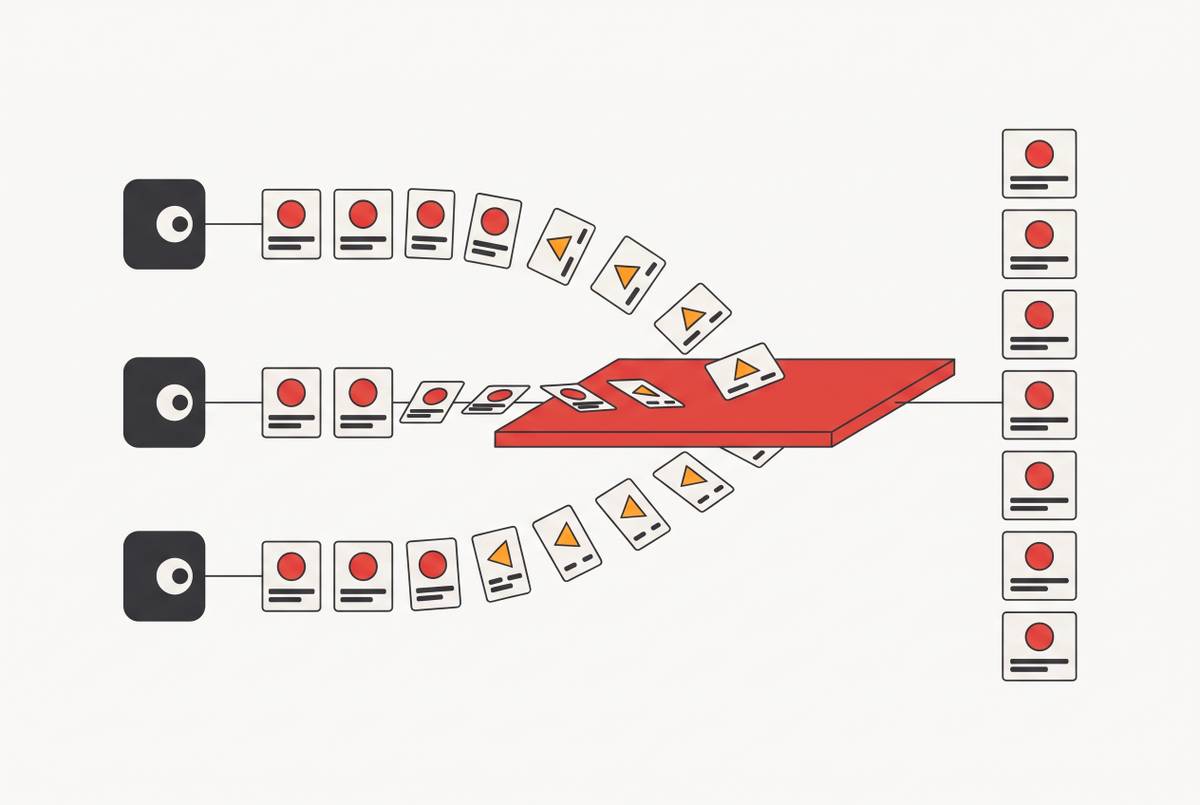
Brand rules written as discrete, checkable fields, so a designer, a UGC creator and an AI generation tool all read the same version and can be held to it.
Brand guidelines are the source of truth for how a brand looks, sounds and what it is allowed to say. Most are written as a designed PDF for people to read once. That works poorly for a team shipping dozens of ad variants a week, and worse when some of them come from AI image, video or copy tools that can only follow what they are given.
The template below keeps the usual parts of a brand guide (positioning, voice, visual identity) but writes every rule as a separate field with one clear value, adds the parts ad production needs (placement rules, claims, rules for AI tools), and ends with who owns the document and how it changes. Fill it in once, keep it in one place, and point every creative brief, prompt and agent at that copy.
The template
Eight parts, from what the brand is to how its rules change. Copy the blank version into your doc, wiki or brand system, then use the guidance and the example line under each field to fill it in.
The examples come from an invented meal-kit subscription brand, made up to show what a filled-in line looks like. Replace every line with your own.
1. Basics
The fields that tell anyone, or any tool, which version they are reading and whether it is still current.
| Field | What to write | Example |
|---|---|---|
| Brand | The brand or sub-brand these rules cover. If you run several, write one set per brand. | Meal-kit brand, consumer product (not the B2B catering line) |
| Version | A version number that changes whenever a rule changes. Briefs and prompts cite it. | v4.2 |
| Owner | The one person who approves changes and answers questions. | Head of brand |
| Last changed | The date of the latest change, with a link to the change log in part 8. | 10 Nov 2026 (change log, link) |
| Source of truth | Where the current version lives. Every other copy should link here rather than repeat it. | Brand wiki / Guidelines / Current |
| Used by | The teams, agencies, creators and tools that read these rules, so you know who to tell when they change. | Paid social, lifecycle email, two agencies, UGC creators, image and copy generation tools |
2. Positioning
What the brand is and who it is for, short enough that a maker can hold it in mind while writing a hook.
| Field | What to write | Example |
|---|---|---|
| One-line description | What the brand does and for whom, in one plain sentence. | Weekly meal kits for busy households who still want to cook |
| Audience | The people the brand speaks to, described by situation as well as demographics. | Working parents who cook most nights and are tired of planning meals |
| What we are not | Positions the brand avoids, so makers don't drift into them. | Not a diet programme, not luxury dining, not a ready-meal service |
| Key messages | The two to four things the brand wants to be known for, in priority order. | 1. Dinner is planned for you · 2. You stay in control · 3. Real cooking, less effort |
3. Voice and tone
Write voice as rules someone could check a line against, not as adjectives. "Warm, not cutesy" can be checked; "warm" on its own can't.
| Field | What to write | Example |
|---|---|---|
| Voice traits | Three or four traits, each written as "this, not that", with one line on what it means in practice. | Practical, not preachy: tell people what happens, don't lecture them about eating well |
| Tone by context | How the voice shifts by placement or moment: ads, creator scripts, support replies, error messages. | Ads: light and direct · Creator scripts: conversational, first person · Support: calm and specific |
| Words we use | Preferred terms, product names and how to write them. | "box", "recipes", "skip a week" |
| Words we avoid | Terms that are off-brand, risky or confusing, with the preferred alternative. | "guilt-free", "cheat meal", "clean eating" · say "easy" instead of "effortless" |
| Mechanics | Spelling variant, capitalisation, numbers, punctuation and emoji rules. | US spelling · sentence case headlines · no exclamation marks in headlines · no emoji in ads |
| On-brand and off-brand lines | A pair of example lines for each trait: one that passes and one that fails, with why. | Pass: "Dinner's planned. You just cook." · Fail: "Revolutionize your kitchen!!" (hype, exclamation marks) |
4. Visual identity
Give exact values and link the files. A colour described as "warm green" will be reproduced a dozen different ways.
| Field | What to write | Example |
|---|---|---|
| Logo | Link to the approved files, then clear space, minimum size and the versions allowed on light and dark backgrounds. | Logo pack (link) · clear space = height of the icon · full-colour on light, white on dark |
| Colour | Each brand colour with its hex value and what it is used for, plus any contrast rule for text. | Primary green (hex, link) for buttons and end cards · cream (hex) for backgrounds |
| Typography | Typefaces and weights for headlines, body and on-screen text, with the fallback when the font isn't available. | Headline: brand display font, bold · On-screen captions: brand sans, medium |
| Photography and imagery | What the images look like: subjects, lighting, setting, framing, and what is never shown. | Real home kitchens, daylight, hands cooking · never studio-white plates or staged families |
| Graphics and layout | Shapes, icons, text overlays and how much of a frame text may cover. | Rounded text boxes in cream · one text overlay per frame |
| Motion and sound | Pacing, transitions, captions and music rules for video. | Cuts, no spinning transitions · burned-in captions always · licensed library music only |
5. Rules for ads
The parts general brand guides leave out and every paid-social team ends up deciding ad by ad. Platform specs and safe zones change, so point to each platform's own spec page rather than writing sizes in here.
| Field | What to write | Example |
|---|---|---|
| Logo and brand in ads | Where and when the logo or brand name must appear, and for how long in video. | Brand name spoken or on screen in the first few seconds · logo on the end card |
| On-screen text | How much text, where, and the rule for keeping it clear of platform interface elements. | Max two lines · keep inside each platform's safe zone (spec pages, link) |
| Offers and prices | How offers and prices are written and where their terms must appear. Link the current offers sheet. | Offer wording copied exactly from the offers sheet (link) · terms on screen |
| Creators and UGC | What outside creators may and may not do, and what they must disclose. | Own words, not a script · must show the product being used · paid partnership label on |
| Competitors | Whether ads may name or show competitors, and who approves it. | Never named or shown |
6. Claims and legal
Makers, human or AI, should never add a factual claim that isn't on this list.
| Field | What to write | Example |
|---|---|---|
| Approved claims | Each claim the brand may make, worded as approved, with its source or substantiation. | "Skip or pause any week" (terms page, link) |
| Banned claims | Claims that must never appear, including ones that seem harmless. | Health or weight-loss claims · "cheapest" · "best" |
| Required disclaimers | Wording that must accompany certain claims or offers, and where it goes. | New-customer offer terms, as worded in the offers sheet |
| Category and platform rules | Rules your category or the ad platforms impose. Link the policy rather than summarising it. | Each platform's ad policy for food and subscriptions (links) |
7. Rules for AI tools
How generation tools and agents get these rules and what they may produce. Write hard rules as must or never, so a reviewer, or a check, can pass or fail an output against them.
| Field | What to write | Example |
|---|---|---|
| Where tools read from | How each tool gets the current rules: a connected brand system, a shared template, or a file it loads. Never a copy pasted into one prompt. | Image and copy tools read v4.2 from the brand system; no rules pasted into prompts |
| Hard rules | The rules every output must pass, each one checkable. | Never show a logo other than ours · never invent a price or offer · captions in the brand sans |
| When rules conflict | The order rules win in, so a tool doesn't have to guess. | Legal and claims > platform policy > visual identity > voice > the brief |
| Generated imagery | What may be generated and what must be real: products, people, food, packaging. | Backgrounds and props may be generated · product and packaging shots must be real photos |
| Human review | Which outputs a person checks before they go live, and against which parts of this document. | Every ad checked against parts 5 and 6 before upload |
| Version used | How a tool records which version of the rules it used, so an off-brand output can be traced. | Version number written into the asset name or metadata |
8. Governance
| Field | What to write | Example |
|---|---|---|
| Approvers | Who signs off changes to each part. | Head of brand (all) · legal (part 6) · performance lead (part 5) |
| Requesting a change | How anyone proposes a change, and how quickly they hear back. | Request form (link), answered at the weekly brand review |
| Change log | Each change with its date, version, what changed and why. | v4.2 · 10 Nov · "effortless" moved to words we avoid · it read as hype in tests |
| Review cadence | How often the whole document is checked against what the team is actually shipping. | Quarterly, using a sample of live ads |
| Exceptions | Who can approve a one-off break from a rule, and where it is recorded. | Head of brand only, noted in the change log |
How to use the template
- Start with parts 3, 5 and 6. Voice, ad rules and claims are where ad creative goes wrong most often. Logo and colour rules usually exist already; link them.
- One rule per field. If a field needs a paragraph, split it. Short, separate rules are easier for people to check and for tools to follow.
- Show, then tell. Every voice trait and imagery rule is clearer with a passing and a failing example beside it.
- Keep one copy. Briefs, prompts and agency decks should link to the source of truth and cite the version, not paste rules in. Our ad creative brief template has a brand context section built for exactly that.
- Change it on purpose. Bump the version and log every change, then tell the people and tools in "Used by" in part 1.
Making brand guidelines usable by AI tools
A brand guide written for people relies on judgement: the reader fills gaps from experience and asks when unsure. A generation tool fills gaps by guessing. Three things in this template close that gap.
First, rules are discrete values rather than prose, so a tool can be given exactly the ones that apply to its task. Second, part 7 states an order of priority, so conflicting rules have a defined winner. Third, the document is versioned and lives in one place, so every tool works from the same rules and an update reaches all of them at once instead of aging in a dozen pasted prompts.
We go further into the difference in what makes a brand system queryable by an agent, and into why a single maintained source beats a document in why creative teams need a brand context registry.
Common mistakes
- Adjectives instead of rules. "Bold, friendly, human" describes most brands and constrains none of them.
- No ad rules. Without part 5, each ad decides logo timing, text load and offer wording for itself, and the account ends up inconsistent.
- Claims left to the maker. If there is no approved list, every creator and every tool will write its own.
- Copies everywhere. A rule pasted into a prompt, an agency deck and a brief is three rules that will drift apart.
- Specs written in. Platform sizes and safe zones change; link the platform's own spec page instead.
- No owner or change log. Nobody knows which version is current, so nobody can be held to it.
Questions
What should brand guidelines include?
At minimum: what the brand is and who it is for, its voice and tone, its visual identity (logo, colour, type, imagery), and who owns the rules. Teams producing ads also need rules for ad formats, an approved claims list and, if they use AI tools, rules for what those tools may generate and how their output is reviewed.
What is the difference between brand guidelines, a style guide and a brand book?
The terms overlap and are often used for the same thing. Brand guidelines usually means the full set of rules. A style guide often means the visual or editorial rules alone. A brand book often means a designed, narrative document about the brand's story and values. This template is the rules part, written to be used day to day.
How long should brand guidelines be?
As long as the rules need and no longer. Separate, short fields make a long document easy to use, because a maker looks up the part they need rather than reading it front to back.
Who should own brand guidelines?
One named person, usually the head of brand or brand lead, with legal owning the claims section. Anyone should be able to propose a change, but one person decides, so there is always a single current version.
Do AI tools need a separate version of the guidelines?
No. A separate version drifts from the original. Write one set of rules clear enough for both, connect tools to that source, and use part 7 for the rules that apply only to generation.