Treating Your Existing Brand System as Infrastructure Rather Than Documentation in a Multi-Agent Creative Stack
How to make brand rules queryable, versioned, and enforceable for agents.

Making existing brand guidelines and systems usable by AI agents requires treating them as infrastructure. The transition is to structure existing brand knowledge into machine-readable rules, serve it through a queryable layer such as MCP, version changes, and check generated work against the same source. In a multi-agent creative stack, consistency depends on shared, current context.
Why brand systems built for human readers break when AI agents are the primary users
A designer and an AI agent can read the same brand guide and receive very different instructions. The designer interprets narrative, visual hierarchy, and examples as a connected expression of brand intent. An agent must turn those elements into rules before it can use them. That translation introduces decisions the guide may never have settled explicitly, including whether an example is mandatory, illustrative, or an exception. The content can be sound while the artifact is unsuitable.
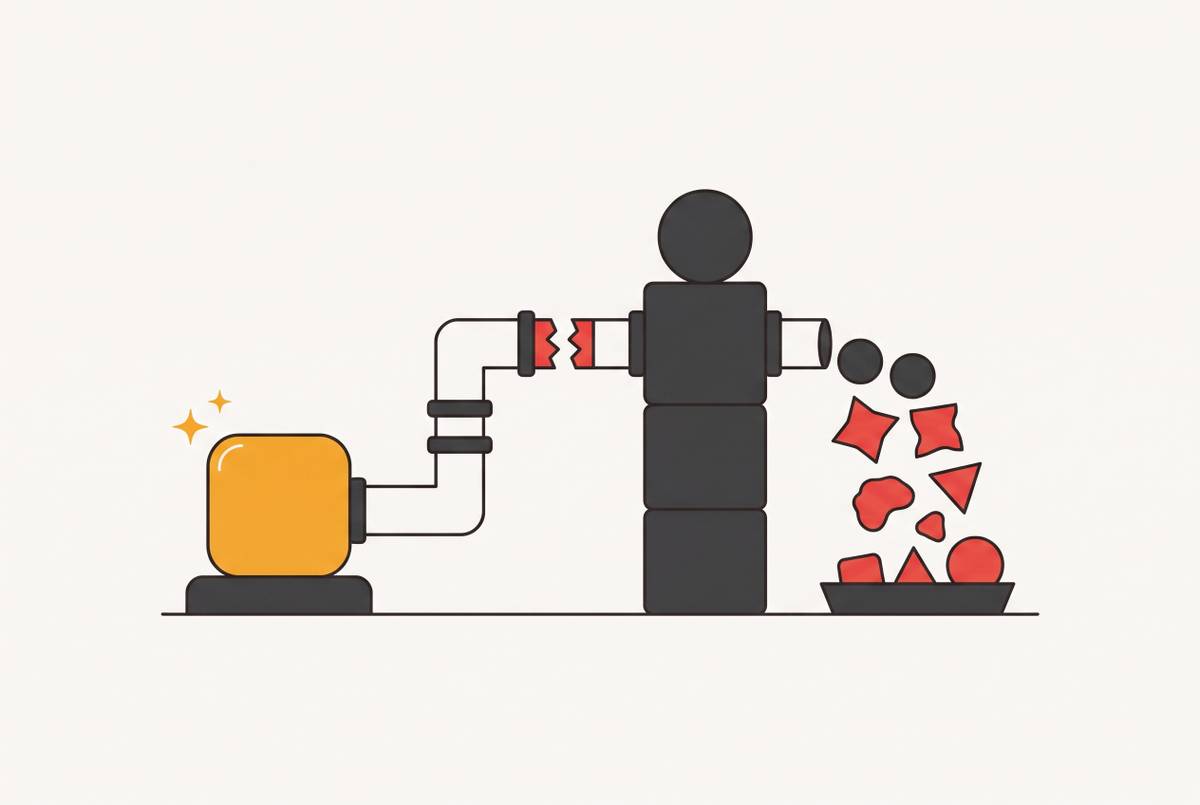
A document built for human interpretation does not expose its contents as rules an agent can query, validate, and apply programmatically. When context is ambiguous or absent, the model fills the gap with statistical defaults. Frontify describes drift as “the AI making a decision where you left a void.” Because models have different visual and verbal biases, the same omission can produce different results depending on which model encounters it.
What happens inside a multi-agent stack when every agent reads brand context differently
Each agent working from partial or stale brand context can diverge both from the guidelines and from the other agents. A copywriting assistant and an image generator may therefore produce work that appears reasonable on its own but does not express the same brand. The problem compounds when each session reconstructs context independently. A customer-facing agent can also sound confident while delivering guidance based on superseded rules.
Darkroom organizes its work around a shared context layer. Client knowledge, strategy, and channel data stay with the account rather than being reconstructed per session or trapped in individual chat histories. Agents perform their work on top of that layer. The account retains the context the work depends on.
That distinction changes the role of prompting. A prompt requires someone to remember the right instructions in every tool, every time, whereas a shared source makes the context available beyond any individual session. Across a multi-agent stack, reliance on repeated prompting multiplies the opportunities for omission. The architecture must therefore let all agents consult the same current brief.
The three-layer gap — where most brand investment lands versus where agents actually need it
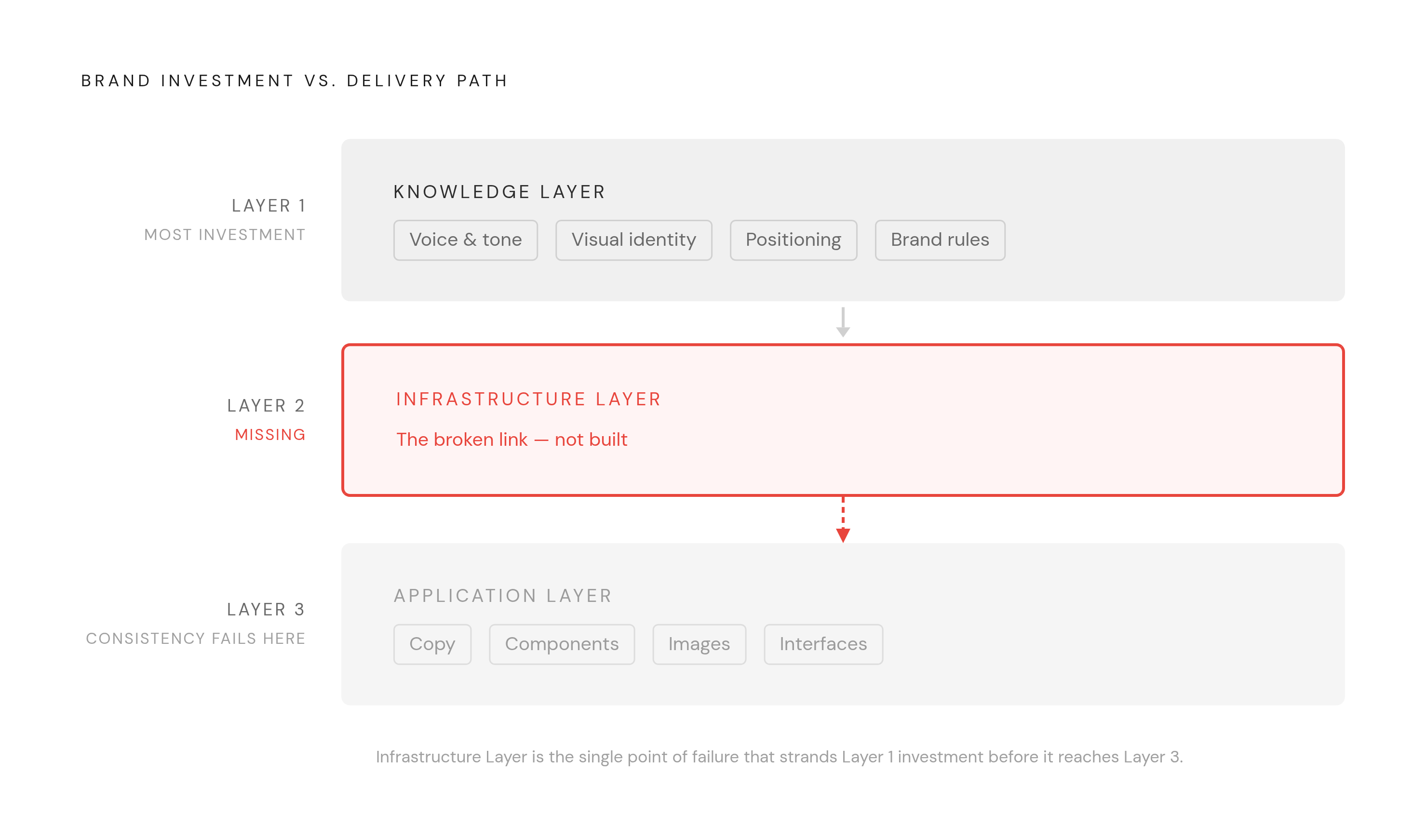
Sameness frames this problem through three layers. The Knowledge Layer sets out the brand’s voice, visual identity, positioning, and rules. The Infrastructure Layer connects that knowledge to every system that needs it. The Application Layer is where consistency appears in copy, components, images, and interfaces. Most brand investment concentrates in the first layer, while the missing connection prevents that investment from reaching the third reliably.
Guidelines may be complete, tokens defined, and voice documented, yet agents still lack a dependable way to retrieve and apply them. Brand kits and slide decks serve designers. Design tokens, component libraries, and explicit constraints give agents material they can use programmatically. The gap is architectural rather than a verdict on the quality of the brand work.
Emerging formats show how the underlying artifacts are changing. The MIT-licensed open standard brand.md uses Markdown with YAML frontmatter for voice, strategy, and core identity primitives, leaving full typography hierarchies to a companion DESIGN.md. The MRBS specification’s brand.manifest.json covers colors with usage rules, typography hierarchies, voice guidelines, and constraints in JSON/YAML files. These early approaches to machine-readable identity require a connective layer that delivers it.
How MCP turns a brand system from a document agents ignore into a source they query in real time
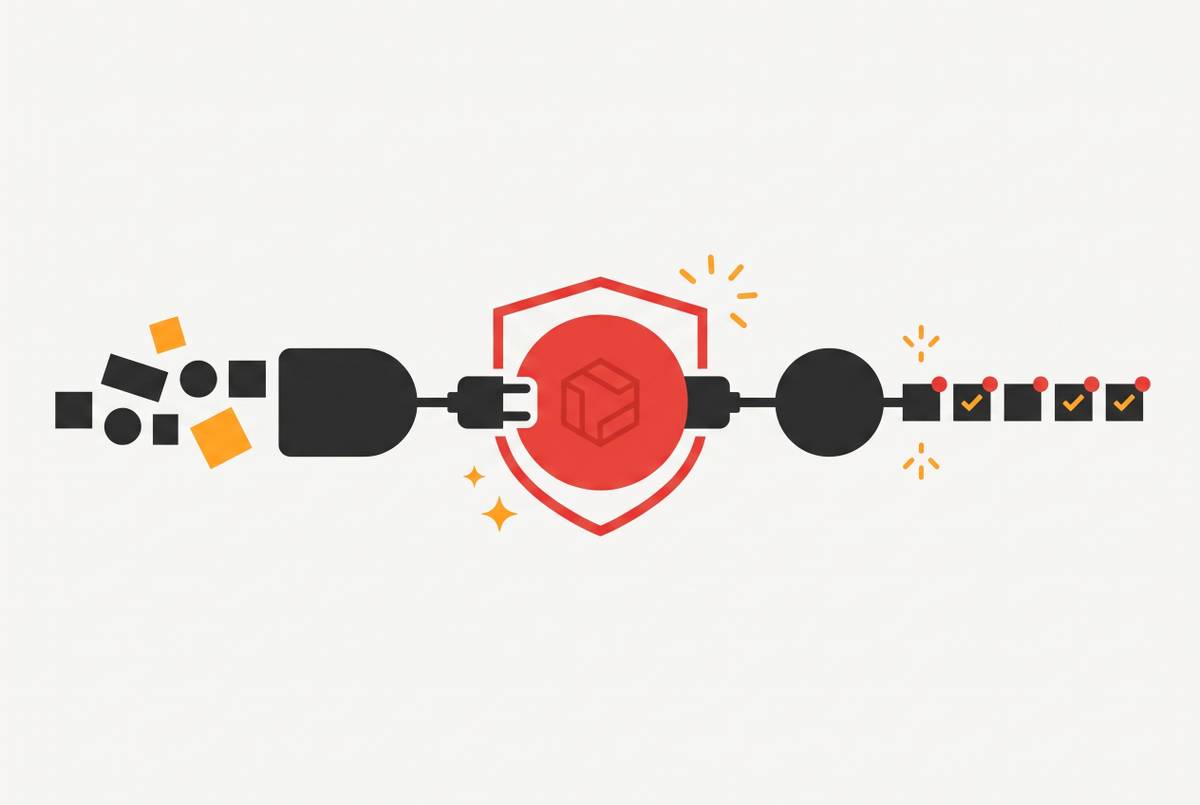
The Model Context Protocol, or MCP, provides that connective mechanism. Anthropic introduced it as an open standard in late 2024, and governance now sits with the Agentic AI Foundation under the Linux Foundation. An MCP server can expose voice rules, visual identity, positioning, and specific prohibitions as structured context that compatible agents query before generating work. The brand becomes a source the agent consults, rather than information it must reconstruct from training or a pasted document.
The USB-C analogy captures how this makes tools easier to connect. Without a shared protocol, each model–data source pairing needs custom integration code. MCP allows a brand to expose one server to compatible tools instead of rebuilding that connection for every pairing. Support from OpenAI and Google reinforces its role as a model-agnostic connection.
For brand teams, that separation reduces dependence on a particular creative tool. A copywriting assistant, image generator, and autonomous marketing agent can access the same context through a common interface. But shared access does not make unstructured guidance clear or ensure that every agent reads it the same way. The source still needs rules that agents can apply.
How do you make AI agents use an existing brand system correctly?
The brand system itself needs to be restructured before serving it through MCP can help agents read it correctly. Moving existing files to a new location changes access and leaves usability unchanged. Machine consumption requires a canonical brand description repeated consistently across surfaces and explicit category-plus-audience framing, such as “X is a Y for Z.” Organization schema with sameAs links and external anchors such as Wikidata support entity resolution. Together, these signals give agents an unambiguous identity to associate with the rules.
The rules need equal precision. Design tokens and component libraries express decisions that visual examples leave a reader to infer, while explicit voice and tone constraints define what sample copy can only illustrate. Examples can help explain a requirement, but it also needs to be stated in words. The distinction is between showing an agent something plausible and specifying what it must preserve.
Jasper IQ illustrates this structure at team level by storing brand voice, style guides, audience profiles, and product knowledge once, with multiple voices available for sub-brands or regions. Jasper’s MCP server makes that context accessible to other AI tools. Adobe Brand Intelligence does the same across its platform with a persistent brand ontology that holds voice, visual identity, standards, and audience insight. Webflow does this for a site through Agent Instructions that cover the brand, design system, and CMS conventions. These implementations differ in scope, but each places reusable context outside the individual prompt.
Why versioning brand context is not optional when agents act on it autonomously
If an update does not propagate immediately, some agents use the new rules while others continue using the old ones. Prompt discipline cannot close that interval. An updated PDF on a server neither notifies agents that consulted last month’s copy nor establishes which version informed their work.
This is where the code-versioning analogy becomes operational. Brand context treated as infrastructure needs identifiable versions and a publishing mechanism through which connected agents and products pick up changes without manual re-uploads. Versioning alone does not distribute an update. The serving layer must make the published change available. Together, these properties distinguish a living brand system from a file that happens to have been revised.
For agencies, the same requirement applies separately to every client brand. Each brand changes on its own schedule, so agents need a reliable basis for distinguishing both the identity and the version of the rules they use. The marketbirds and Advercy agency cases show how teams use shared brand context in one workspace that holds separate brand kits, voice profiles, and competitor sets for each client. Teams can switch brands without switching tools or re-uploading assets, allowing creative volume to scale without proportional headcount.
The over-specification trap — how encoding brand rules tightly enough for agents can make the brand too rigid to evolve
Precise rules introduce a genuine creative risk. Frontify’s senior creative director warns that agent guidance pulls teams toward “never, always, must, mustn't” language that can “straitjacket the brand over time.” The exercise can become akin to “writing legislation.” A specification that removes ambiguity for machines can also remove room for human experimentation, adaptation, and judgment. Consistency becomes counterproductive if it prevents the brand from evolving.
The answer requires governance as well as versioning. Updatable infrastructure allows a revised rule to reach connected agents, but it does not decide who may revise that rule, under what process, or with what review. Access and authority are separate design problems. A technically queryable brand layer can still be governed too rigidly, just as an editable file can be governed too loosely. Designing for change therefore means establishing both a way to publish new context and a legitimate process for changing it.
What reviewing AI-generated output against brand context adds — and what it closes
Serving precise, current context reduces drift but cannot eliminate it. Finished work still needs review against the same source, with evidence for each check. Otherwise, the system establishes what an agent should use without establishing whether the result follows it. The infrastructure loop closes only when the brand layer informs both creation and acceptance.
Adobe Firefly’s Custom Models illustrate how approved brand assets can shape generation. Brands train models on approved assets and visual IP so content aligns closely with brand guidelines and campaign standards. Those assets also provide a basis for assessing the result, although generation informed by approved material is not itself proof of compliance. Adobe Brand Visibility, launched in June 2026, extends the scope outward by combining Semrush’s AI visibility intelligence with Adobe’s agentic content optimization capabilities, grounded in business and brand context. Brand checks thus cover how a brand appears in AI-generated responses as well as work made inside the company.
The Amazon Ads MCP server illustrates the connection through execution. Launched in open beta on February 2, 2026, it had early adopters report 67% faster campaign launches during beta testing. That execution benefit does not replace a brand check before release. For brand teams, the operational requirement is that every piece of AI-made work is reviewed against the same source that informed its creation.
Making the transition — how to audit an existing brand system for infrastructure readiness
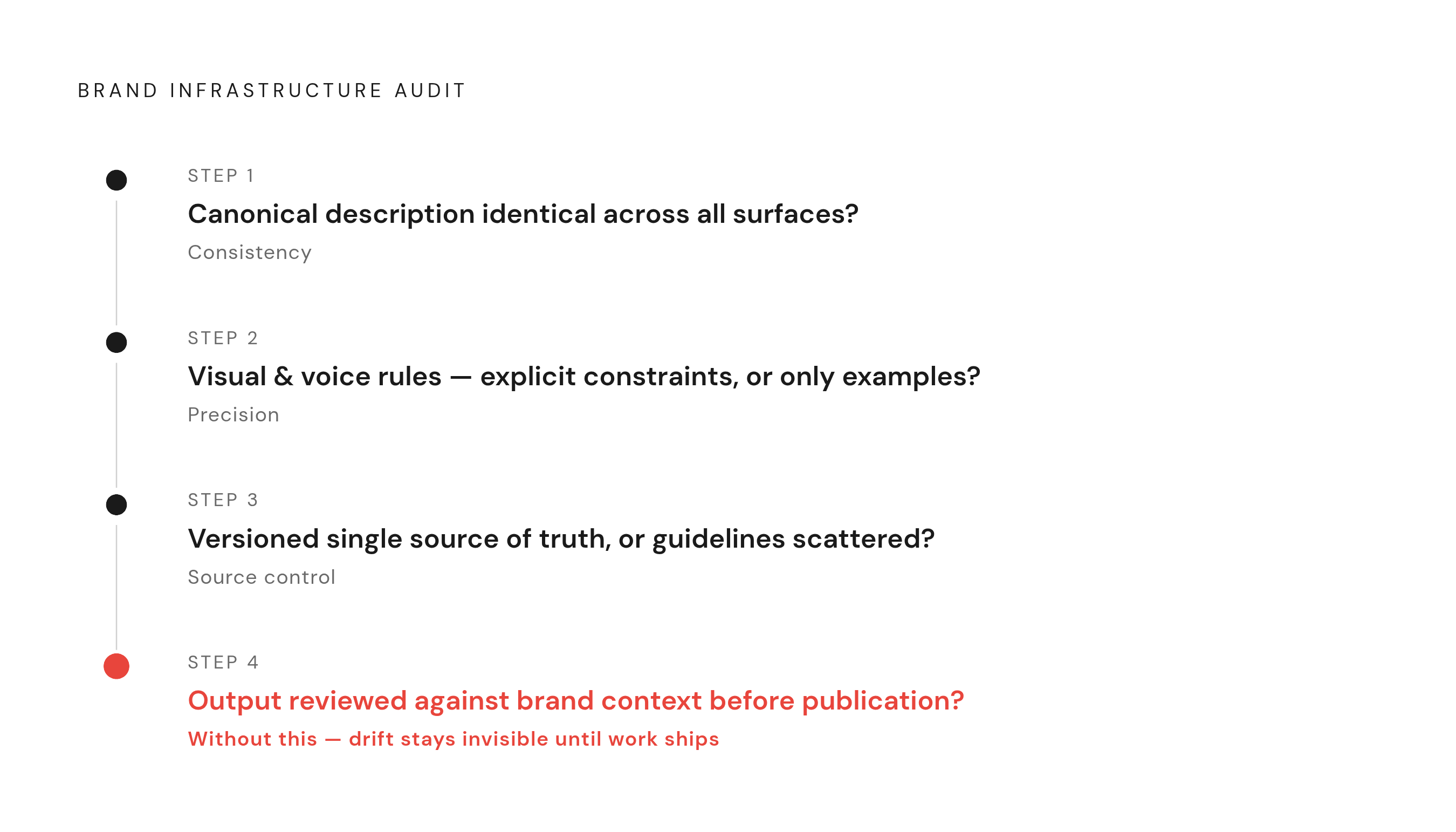
For teams with an existing brand system, the starting point is an audit. The test for each asset and guideline is whether an agent can consume it without human interpretation. The audit follows four questions in sequence. Each exposes a different break between documented intent and dependable application.
Is the canonical brand description the same across surfaces? Differences that read naturally to a person can leave agents without a stable identity anchor. The audit should distinguish an identical core description from the surrounding copy that varies by context. This establishes which identity the rest of the system describes.
Are visual and voice rules explicit constraints, or only examples? Tokens, component libraries, and statements of permitted and prohibited behavior can be validated. Mood boards and annotated mockups still require interpretation. The audit should identify where an agent must infer a rule that the brand team believes it has already stated.
Is there a versioned single source of truth, or are guidelines distributed across tools, inboxes, and drives? Distributed copies provide no guarantee that agents consult current rules. Is there also a review mechanism that checks generated output against brand context before publication? Without that final check, divergence can remain invisible until the work ships.
The transition can begin with what already exists. Its order is to structure the brand knowledge, serve it through a queryable layer, version it as it changes, and check output against it. That moves the operational burden away from remembering instructions in every session and into a maintained system on which the creative stack can depend.