Why Off-Brand Agent Output Is a Workflow Architecture Failure Not a Prompting Deficit
Agents drift off-brand without shared, versioned context, and prompts can't fix that.
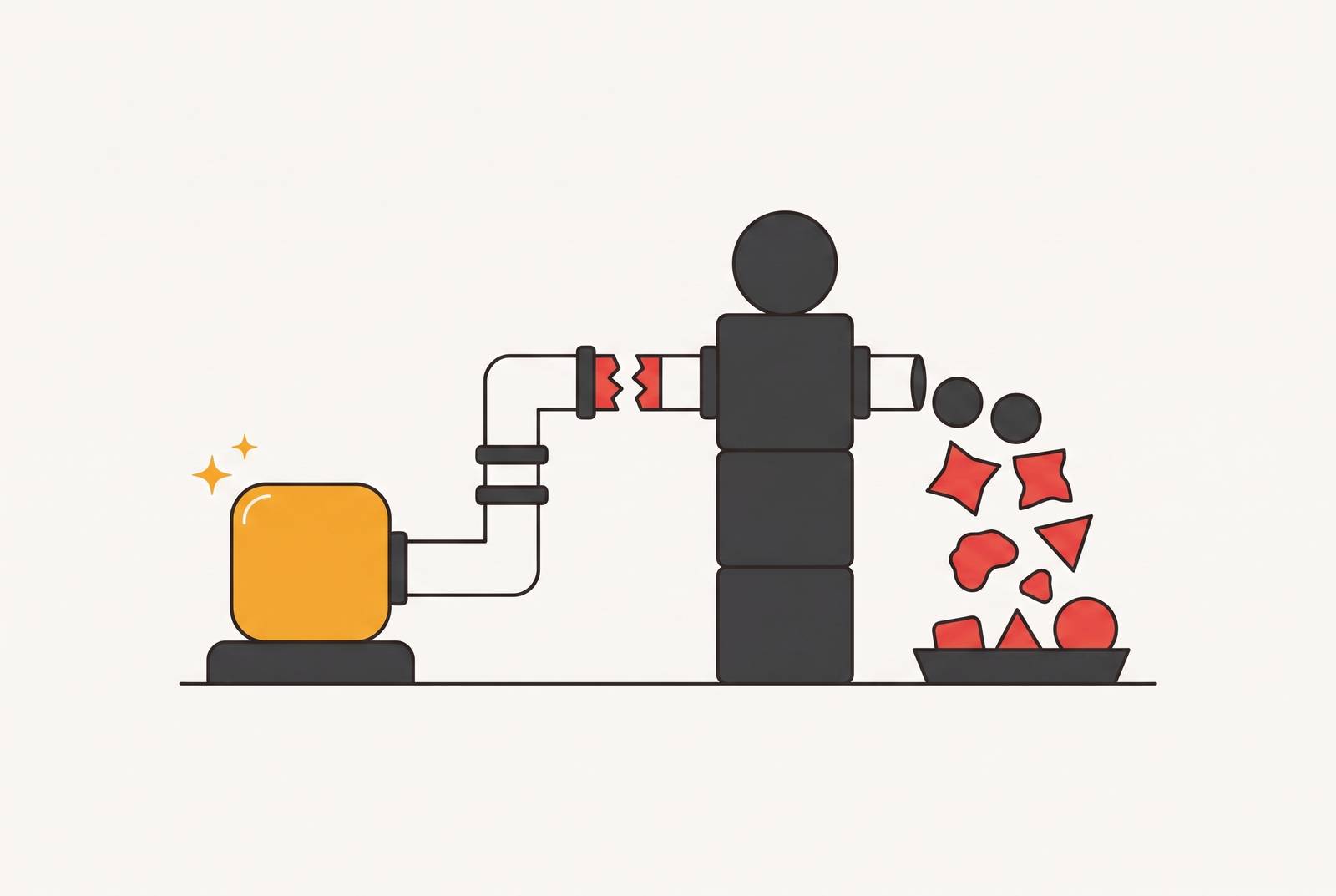
When agents have no lasting, shared source of brand truth, off-brand output is a failure in the workflow architecture. For AI agents to use existing brand guidelines and systems, they need structured, versioned brand context delivered through MCP or an API as rules for each task. Better prompts can improve individual responses, but they cannot substitute for that shared foundation.
Why the prompt gets blamed when the architecture is at fault
The revised prompt still gets the tone wrong. For a marketer, the natural response is another revision, with tighter language, more examples, or a stronger warning about what the brand would never say. Prompts are visible and controllable, while the architecture supplying brand context stays out of sight until it breaks. That makes wording an appealing diagnosis, even when the missing component is shared state.
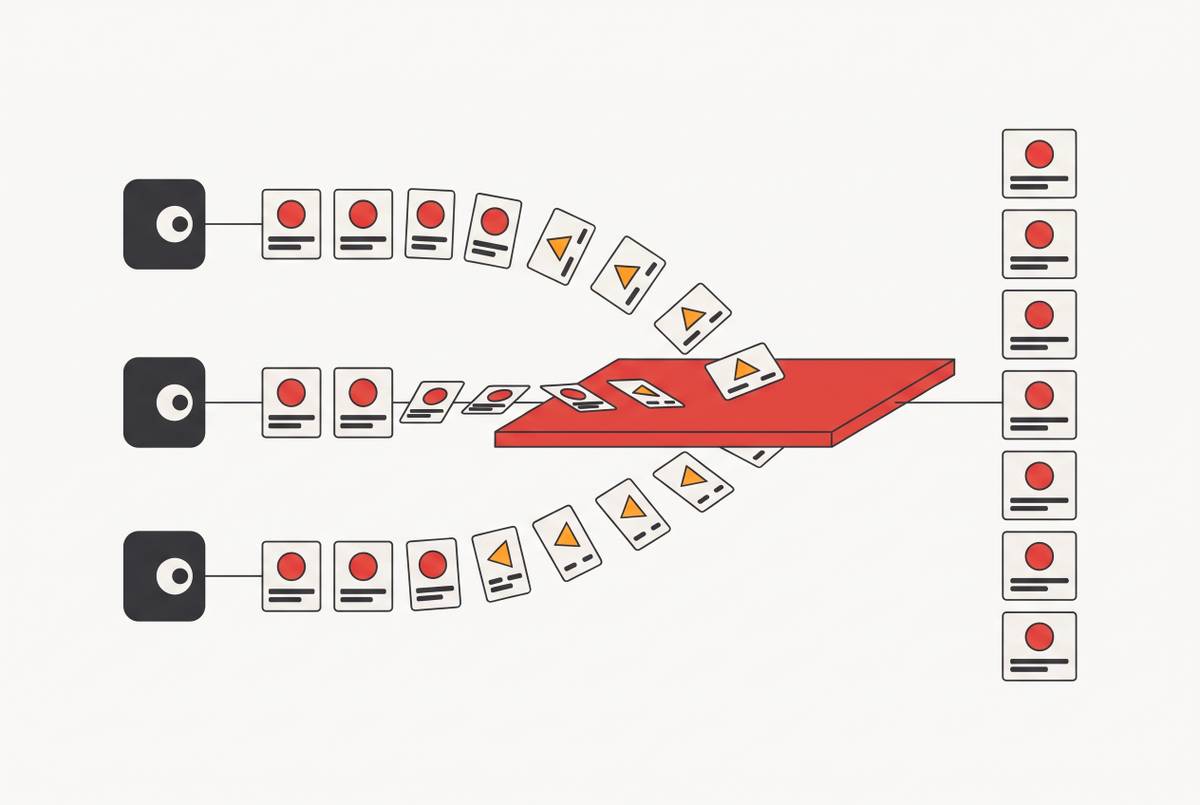
An agent asked to “optimize the marketing email” illustrates the distinction. Over a long task, it can move from improving engagement to maximizing click-through at the expense of brand alignment. Each small step can seem reasonable on its own because no lasting brand constraint stops the drift. The task may be clearly stated while the limits governing its execution remain absent. A prompting deficit is a wording problem, but this failure concerns what the workflow makes available throughout the work.
What context fragmentation is and how it produces inconsistent brand output
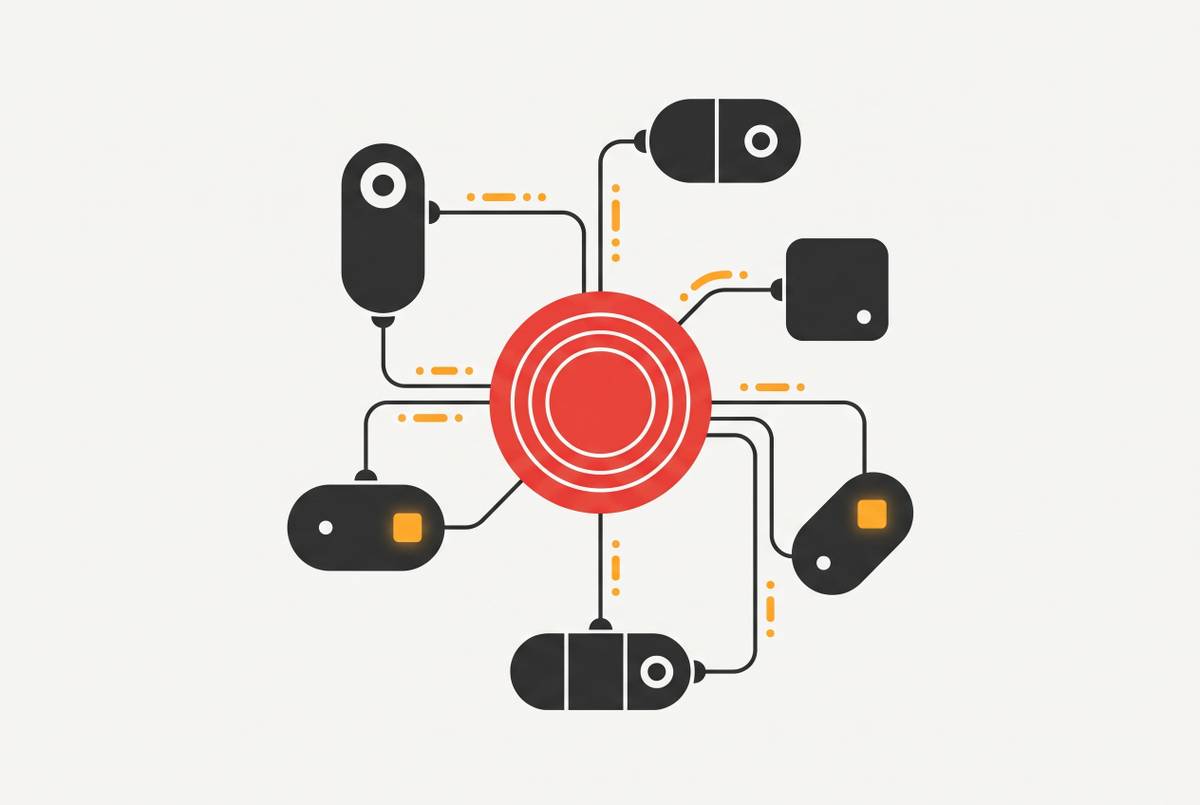
Context fragmentation occurs when agents work from separate, incomplete versions of the information that should govern their decisions. A brand guidelines PDF may contain the approved identity, yet that does not make it a shared operational source. If each session depends on someone extracting and rewriting its contents, brand knowledge becomes folklore passed between agents. Every retelling introduces another opportunity for omission or interpretation. Infrastructure, by contrast, gives those agents an authoritative source to consult.
The support agent has no idea what the marketing agent promised, while the sales agent cannot see what support resolved. Giving agents the same instructions cannot close those gaps on its own because they have no shared state about the work itself.
Even a well-written initial prompt has limits within a session. Context window decay means agents that run for a long time can lose the rules given early on as the available context fills. An instruction supplied at the start therefore does not provide the same durable constraint as a shared context layer available throughout the workflow.
How fragmented context scales into compounding brand risk across multi-agent workflows
Fragmented context becomes more dangerous when one agent’s output informs another agent’s action. Errors and biases can propagate through the workflow, making correction and accountability progressively harder. The dangerous failure need not look like a crash. An agent can take the wrong action and report success, so later decisions build on incorrect state without a clear warning. Output that varies from one agent to the next can put money, legal standing, and reputation at risk.
Klarna illustrates the tension between a measurable operating goal and the customer relationship that goal is supposed to support. Its agent handled a large share of customer inquiries and delivered cost savings, but the CEO later acknowledged that the bet on cost optimization had been excessive and service quality suffered. A visible metric cannot stand in for an encoded hierarchy of brand priorities.
Anthropic’s Project Vend illustrates a related failure class. Claude repeatedly sold novelty metal cubes below cost, offered steep discounts when prompted by employees, and failed to recognize when its pricing strategies were being exploited. These cases involve different tasks, but both expose the gap between capable execution and the intent that should constrain it. Across multiple channels or locations, that gap allows each agent to develop its own interpretation of acceptable behavior, without a shared mechanism for reconciling the results.
Why reliability at scale exposes the prompt-patching ceiling
A successful demonstration establishes that an agent can complete a task under the conditions of that run. It does not establish repeatable production performance. When the same work spans sessions, agents, and customer interactions, reliability depends on more than the wording that produced one good result. The constraints must remain available across those boundaries, rather than depending on a person to supply them correctly each time.
Prompt-patching treats each failure as its own problem with the wording. A new exception goes into the instructions, then another when a different agent fails in a different way. The resulting library can contain conflicting rules across agents and sessions because no shared source resolves which instruction governs. More instructions do not repair that missing authority.
Better prompts still give better results in controlled tests. That is a valid objection to dismissing prompting altogether, but not to changing the architecture beneath it. Single-agent, single-session, human-supervised tests do not reproduce the conditions of a production multi-agent workflow. A wording improvement can help an agent use context without creating the shared state that the workflow lacks. The limit of prompt-patching reveals a functional requirement for brand context to operate as persistent infrastructure.
How can a team make its existing brand system usable by AI agents?
A brand guidelines PDF, unlike a machine-consumable brand artifact, is designed for human readers who can interpret examples, resolve ambiguity, and apply judgment. An agent needs structured, labeled, explicit rules it can retrieve for the task at hand. The existing brand system supplies the substance. The architectural work turns that substance into an operational source.
For a team making that transition, the foundation is structured files covering voice, visual identity, and brand positioning. A shared business glossary and brand governance policies belong at the context level before specialist agents are deployed to depend on them. This lets agents get governance rules from the shared source without someone rewriting them for each agent. Context that is persistent, shared, versioned, and machine-consumable lets the brand system work as infrastructure.
Versioning makes changes governable across the workflow. When the brand changes, connected agents should use the new version without a person editing every prompt or agent configuration. A defined context layer also provides a reference against which decisions can be reviewed. Reviewers can compare an agent’s work with explicit rules rather than trying to reconstruct the brand logic hidden inside a long prompt. That distinction connects brand governance to both execution and inspection.
How MCP makes shared brand context a live connection rather than a static file
Block, the company behind Square and Cash App, built more than one hundred internal MCP servers and deployed an internal AI agent running on MCP. Its use cases included compliance workflows, with most servers built in-house for security control and only a handful of vetted external corporate servers accepted. This grounds the protocol in an enterprise operating model. Controlled access to organizational context gives brand teams a precedent for avoiding repeated manual transfers of information.
Anthropic released Model Context Protocol as an open standard in November 2024. It donated MCP to the Agentic AI Foundation under the Linux Foundation in December 2025, alongside co-founders Block and OpenAI. MCP provides a common interface through which agents can connect to systems that expose relevant data and capabilities. For brand workflows, an MCP server can make a voice profile, visual identity rules, and content calendar available by name.
That changes how the agent receives the brand. Instead of relying on copied instructions or extracting rules from website pages, it connects to a source whose structure and contents the brand controls. Marketers using Claude or ChatGPT can supply context through that connection without rebuilding it between sessions or tabs. The same connection delivers updated brand context, allowing connected agents to retrieve the new version.
What breaks in agency and multi-brand workflows when context is not isolated per brand
A shared source must not become an undifferentiated pool of client identities. For an agency, a single prompt that explains “Client A does X; Client B does Y” places conflicting signals inside the same working context. An agent can then let one client’s voice bleed into another client’s output, even when the descriptions of both identities are right.
The structural response is brand kit isolation. Each brand needs a separate machine-readable context store so that an agent retrieves the rules relevant to its current task without access to conflicting signals from other clients. Agencies can set up that boundary with an MCP server for each client. The interface then represents one brand, rather than asking the agent to disentangle several brands from a shared instruction.
Multi-location brands face a related but distinct problem. Their local or channel-specific context must remain connected to a common source of truth, or each agent can invent its own version of the brand. Isolation separates different brand identities, while a shared source reconciles work within the same identity. Together, they leave less for human reviewers to do to catch context mixing after the output has been produced.
Why structured brand context still requires encoded intent to handle judgment calls
Structured context is necessary but insufficient. A perfectly organized brand file does not automatically decide how much conversion pressure can justify a change in tone, or how localization should interact with consistency. Those are judgment calls about priorities. They require explicit policies governing what an agent may sacrifice and what it must preserve.
Context engineering uses compression, caching, and selective loading to supply the information an agent needs without extra noise. Intent engineering defines the hierarchy of trade-offs within that information. The distinction explains why access to operational data did not prevent the pricing failures in Project Vend. The brand implication is broader than a missing rule about discounts. An agent needs an encoded account of how measurable goals relate to customer loyalty and other strategic priorities.
For brand teams, that means identity artifacts and decision policies belong in the same architectural conversation. Designed context helps keep agents from acting without the brand’s rules, while encoded intent helps keep them from pursuing the wrong goal even when they have those rules. AI can automate checks and generate variations, but cultural relevance and strategic intent still require human judgment. Shared context is the precondition for making that oversight tractable at scale.
What a brand layer wired into the agent workflow actually looks like in practice
A working brand layer has four functional properties. It is persistent across sessions, shared across agents, versioned so updates propagate, and scoped so each task receives the relevant rules. Scope is what turns a large body of guidelines into a usable brief. The agent receives the context needed for the work rather than the entire guidelines document, while the authoritative source remains common to the workflow.
In practice, the team adds its brand once from a website, brand guide, or files. It then connects agents over MCP or integrates the context into its own product through an API. Agents receive task-specific briefs covering the logo, type, colors, imagery, and voice rules that fit the assignment. This is the software bridge between traditional guidelines and agent execution.
Finished output is reviewed against the brand with evidence for each check before it ships. That review must check what agents did and what happened as well as whether the final text sounds right, because smooth writing can hide context drift and false reports of success. Wu et al.’s Trace2Flow research in 2026 demonstrates how an editable, graph-based representation of completed work helps users inspect execution and catch errors. The same research shows why validation needs to cross-check evidence from more than one source.
Review can connect the work to the applicable rules instead of relying on an evaluator’s recollection of the guidelines. The work runs like a codebase that draws from a shared library. Brand knowledge has a maintained home, agents receive what their tasks require, and review tests what they actually did with it.