How Scaled Creative Teams Govern Brand Coherence Across a Sprawling Agent Fleet Without Centralizing Every Decision
A single authoritative brand source lets agents work without constant review.
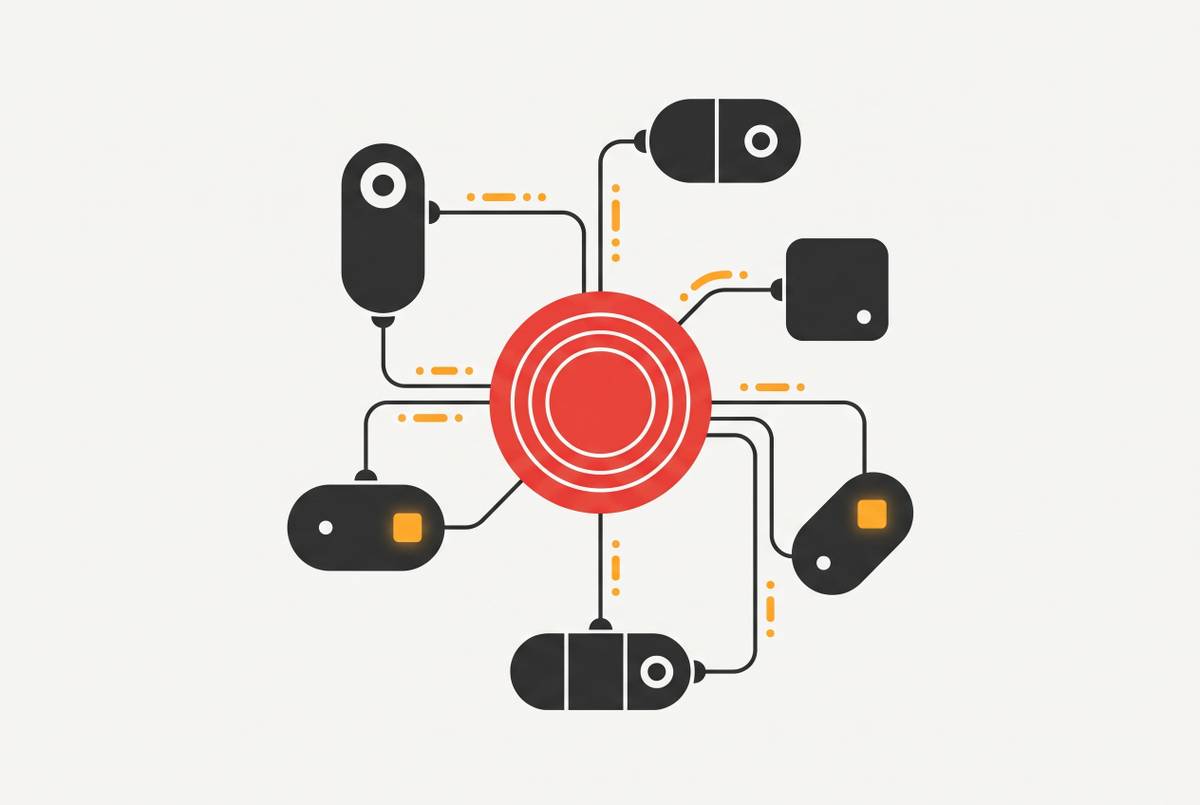
The brand layer for agents is shared infrastructure that gives every connected agent access to the same approved brand identity, assets, and rules. Scaled creative teams use it to keep autonomous work on brand without constant manual prompting or central approval of every output. The governing principle is to centralize authoritative context while distributing execution, with humans defining standards and resolving exceptions.
Why approval-based governance breaks at agent scale
A regional manager generates a product launch email in Copilot, a sales team builds one-pagers in ChatGPT, and an agency partner creates campaign visuals in Canva. None checks with the brand team, which has no visibility into the work. The review queue never receives these assets. Content creation has moved outside the process that was supposed to govern it.
Restricting tools does not readily reverse that shift, because the productivity gains make withdrawal impractical. Meanwhile, controls lag adoption. EY’s Responsible AI Pulse survey found that only a third of companies have responsible controls in place for AI use, despite nearly three-quarters using AI in their organization. With so few controls in place, voice drift, outdated palettes, incorrect logo versions, and IP risk can spread across markets.
How the shape of creative teams has changed in response to that volume
As execution moves into AI workflows, creative teams are changing shape. Work that once justified a bench of junior designers can run through a handful of workflows, while strategy, direction, and governance demand more attention. The same headcount can serve a different function. Brand governance, previously distributed among senior creatives reviewing work, is increasingly becoming a dedicated role or an expanded responsibility for brand operations leads. It functions as risk management for creative output.
The distinction between tools and agents makes this reorganization necessary. A tool requires a human to drive each interaction. An agent takes a goal, breaks it into steps, executes, monitors for problems, and surfaces decisions that require human input. People can no longer be counted on to check every step of production. Consequently, governance cannot depend on a person supplying the right instructions whenever work begins or inspecting everything when it ends. The governing context has to precede autonomous execution.
How do multiple AI agents access the same brand identity and guidelines?
Shared brand context infrastructure encodes approved identity and guidelines in a form that agents can retrieve and apply. It differs from a style guide written for people, because human readers can interpret aesthetic intent while automated systems need explicit parameters. JSON schemas and design tokens can express exact hex values, contrast requirements, approved background combinations, usage rules, and element-type assignments. “Navy Blue” becomes a defined set of permissible choices.
Voice rules need to be as exact as rules for visual identity. Linguistic constraints, prohibited phrases, required tone qualifiers, and sentence structure guidelines give agents rules they can apply instead of narrative descriptions they must interpret afresh. This moves governance into the moment of creation. Approved assets, current guidelines, and defined rules become inputs to the work rather than references consulted only after a problem appears. However, encoding those rules is only part of the architecture. The shared layer works across a fleet only if agents can reach its current contents when they need them.
How MCP makes shared brand context reachable by any agent in the fleet
An MCP server can give compatible agents access to voice rules, visual identity, positioning, and specific uses that are allowed or banned before they generate work. The fleet can then draw on authoritative context without each model having to rely on training or prompts put together by hand. Access becomes part of the creative workflow. Notion and Google Drive MCP servers, for example, let an agent retrieve an ICP document, brand voice profile, or content calendar by name. An agent can then call a generation tool over MCP with the prompt, brand context, and asset in the same thread.
Anthropic open-sourced MCP on November 25, 2024. Its ecosystem includes Claude, ChatGPT, Cursor, Visual Studio Code, and agent frameworks, allowing a shared context source to serve compatible agents across different working environments. In December 2025, Anthropic donated MCP to the Agentic AI Foundation, a directed fund under the Linux Foundation co-founded by Anthropic, Block, and OpenAI. That institutional structure supports a cross-industry protocol.
Teams do not need to rebuild the brand’s context manually inside every compatible tool. MCP also provides infrastructure for routing otherwise fragmented AI use through a sanctioned, monitored context layer. It does not, by itself, establish which rules are authoritative. A common access mechanism can connect agents to conflicting instructions just as readily as to a coherent standard.
What breaks when brand context is fragmented across competing rule sources
Adobe MAX 2026, held November 10–12, 2026, exposed this distinction between access and authority. Adobe added Creative Agent assistants, always-on Firefly agents, Capsules, and local MCP integrations that let third-party agents edit native Photoshop, Illustrator, Premiere, and After Effects files. Agent access expanded across the creative environment. Yet brand rules were in Creative Agent settings, Brand Intelligence, and individual Capsules, and Adobe had not said which source wins when instructions conflict. Sophisticated tooling did not remove the need for a hierarchy.
That ambiguity becomes consequential when a third-party agent applies one source’s instructions while another source contains contradictory rules. Adobe’s MCP private beta, scheduled for early 2027, makes the question operational. Adobe’s workflow example has an agent retrieve a brief from Google Docs, work with Adobe’s tools, and share the result in Slack. No step in that example checks brand standards. This shows why governed execution requires evidence of controls beyond connected execution.
The practical response is to map every agent route into brand assets, name its owner, and decide in writing which rules apply before the private beta opens. Drift can otherwise accumulate across refresh cycles before comparison with original brand parameters reveals it. Individual assets may conceal the cumulative departure. The solution therefore requires more than shared access to several repositories. It requires one declared authoritative source.
How federated governance actually works — one source, distributed execution
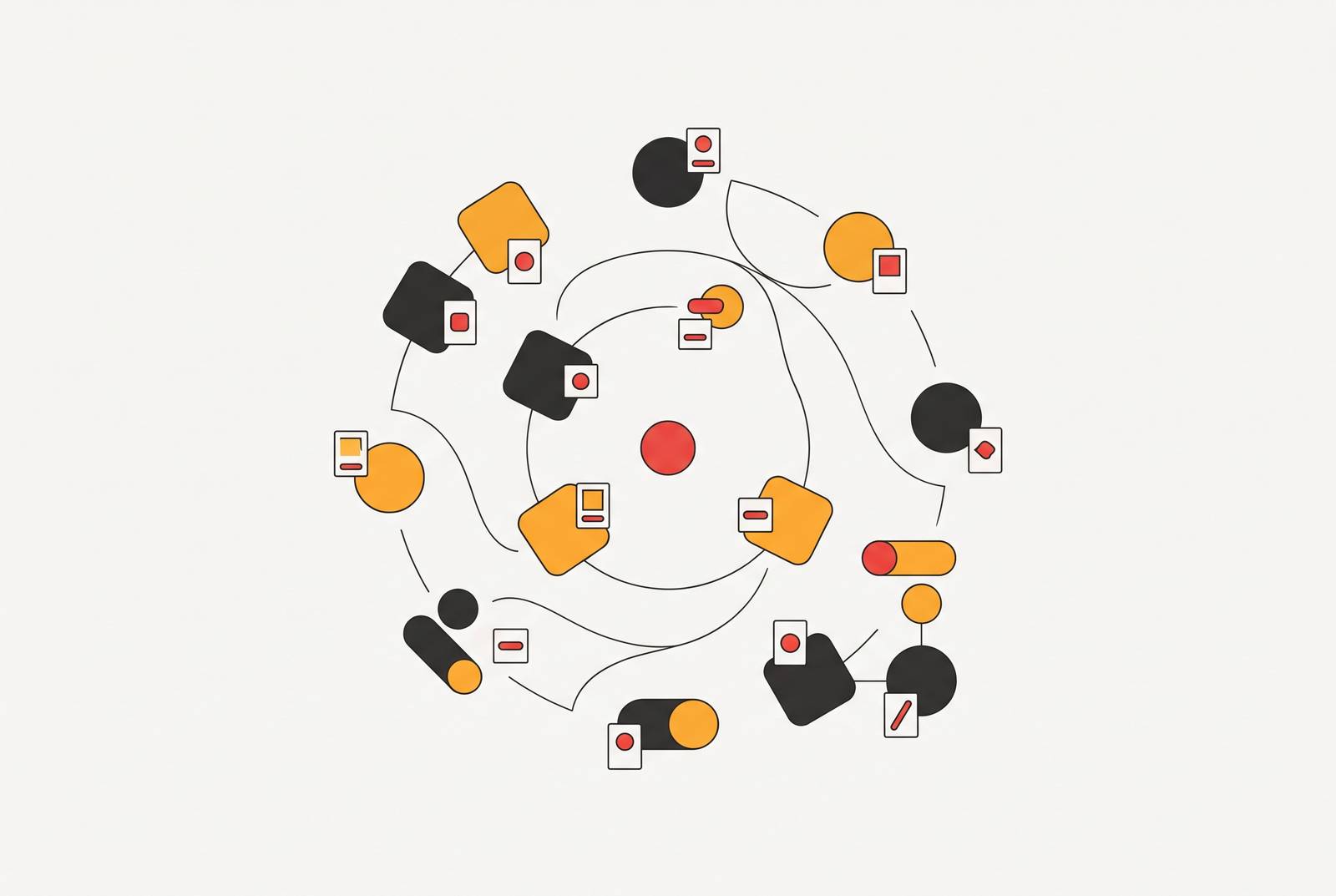
In federated governance, agents work on their own while drawing brand context from one authoritative source. A team adopting this model should connect approved assets, guidelines, and rules to the tools where creation happens. One brand profile should automatically pull in the palette, font family, tone guidance, and AI-ready context that belong to it. A tool that requires people to reconstruct those associations is not performing the work of a governance layer.
That profile also needs version control and currency. When identity changes, connected agents should work from the new version. Review then needs evidence against those rules. Finished work needs a check that can be traced for each requirement that applies, beyond a visual scan to see if it feels off-brand. These requirements distinguish shared infrastructure from a collection of documents that happens to be accessible to AI.
Brand strategists set standards, define escalation rules, and have the final say on edge cases without having to make every production decision. Teams should write down which types of output need approval before they are published and which role is responsible at each stage. Those types include claims, pricing, regulated disclosures, and creative that loses a legally required notice when it is resized.
Compliance requirements also belong in the architecture. EU AI Act Article 50, which applied from August 2, 2026, includes transparency obligations for machine-readable marking of AI-generated or manipulated content, disclosure for deepfakes, and disclosure for certain AI-generated public-interest text published without human review. Federated governance needs to account for the applicable obligation while preserving clear responsibility for exceptions.
What multi-brand and agency operators need that single-brand teams don't
Multi-brand operators must keep brands distinct while keeping the work for each brand consistent. The same agent infrastructure may serve several clients, but its shared availability cannot mean interchangeable identity rules. Each brand needs its own authoritative profile. That profile must automatically associate the correct palette, font family, tone guidance, and AI-ready context with the work. Without those links for each client, the same weakness in governance affects work across accounts.
This changes the criteria for evaluating a brand layer. Access to guidelines is insufficient if the system still depends on someone manually assembling the correct client context for every project. The unit of governance is the individual brand. Distributed execution must preserve that boundary even when the people, tools, and workflows are shared.
Superside’s Brand Brain illustrates a learning-based approach to this requirement. It captures guidelines, tone, messaging, past creative decisions, and feedback, with custom-trained AI image models for each visual style and automation workflows for asset resizing and campaign visuals. Each project adds context to the system. Its approach is to build alignment from accumulated decisions rather than require reorientation at the start of every project. For agency partners accessing Adobe assets through MCP, the same authority principle extends across the organizational boundary, with a named owner for each route and a written decision about which rules apply.
Where human judgment remains irreplaceable in an agent-governed creative system
Encoding rules relocates people’s judgment to the design of the rules, the definition of escalation triggers, and the standards used to evaluate finished work. Infrastructure can apply a constraint without deciding whether it is the right choice for the brand. Humans retain responsibility for that choice and for changing it when the context demands something different.
The architecture should route weak, off-brand, or ambiguous outputs to a named human role. It should also send regulated content for approval when the rules call for human review, including claims, pricing, and disclosures covered by those rules. Gartner’s consumer research suggests that half of US consumers prefer to give their business to brands that do not use generative AI in consumer-facing messages. A technically compliant asset can therefore still raise a question about whether AI is appropriate for the audience and purpose.
Adobe Brand Intelligence points toward an evolving context layer. Its continuously learning engine draws on review feedback, annotations, rejections, and approvals. The layer’s value is that it can incorporate the judgments through which a brand develops.
Lumen provides a concrete example of connected governance. Using Adobe GenStudio for Performance Marketing, it centralized brand standards and performance insights, with approvals routed through Adobe Workfront in a single connected workflow that reduced friction and sped campaign activation. The practical goal is to make brand governance legible to every agent, while reserving human attention for standards, strategy, and decisions that rules alone cannot settle.