Feeding Creative Performance Data Back Into AI Production Templates
Closing the feedback loop turns creative insights into production changes.
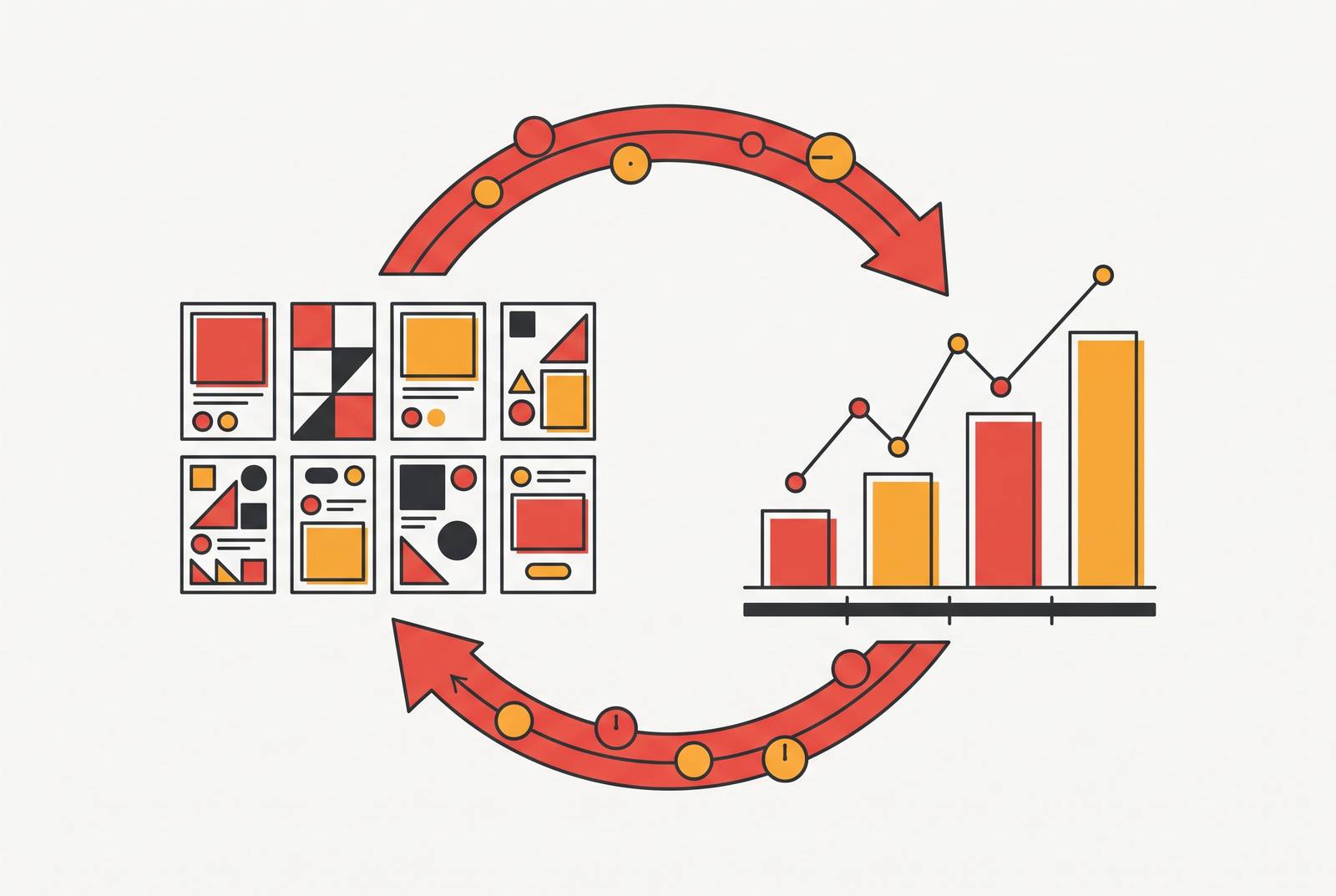
When creative performance data feeds back into AI production templates, the system learns from the ads it generates. The decisive step is not reporting what worked, but changing what gets generated next. For that to work, brand context and performance signals need a shared, structured home where they can guide more than one-off prompt edits.
Why ad generation without a feedback loop is just expensive guessing
A team can identify a winning pattern, discuss it, and still generate the next round without it. In that case, analysis has produced information but has not changed production. AI performance creative is a discipline with a feedback loop.
This distinction matters because the cost of production has fallen sharply while people have no more attention to give. When every team can ship lots of creative, making more of it no longer gives a team a lasting edge. The constraint becomes how much evidence a team can interpret and apply before the next generation cycle begins. An insight that never reaches the next brief is trivia, however persuasive its presentation. The system learns only when that insight changes its next output.
What the feedback loop actually consists of, step by step
The mktg.ai framework describes six steps, beginning with spotting a signal. That signal might be spend with low return, creative fatigue, an ad gaining velocity, or a CTA outperforming its peers. The output is one sentence naming what moved and where. The second step is to confirm the evidence by opening the detail, distinguishing a trend from a one-day blip, and checking the spend behind it. The decision is binary, namely whether the signal is real and large enough to act on.
The third step is to find the creative reason by narrowing the analysis to the channel or campaign and comparing top and bottom performers. The finding must withstand scrutiny over how many ads support it, whether it holds on one platform, and whether another obvious cause explains it. The fourth step is to make a decision, which can be to pause, scale, refresh, brief new, or fix the goal. That decision is written in one line, assigned to an owner, and recorded on the asset.
The fifth step is to act. Budget changes go to the ad platform, while creative changes enter a brief with reference files and specific DNA details to keep or change. Ownership and reasoning remain attached to the asset. The sixth step is to check whether the action worked and, if it did, promote the finding into the brief template. This last step closes the loop, and it is the step most teams skip.
Why most teams skip the step that actually closes the loop
The failure occurs at codification. Teams make a sound decision once but fail to encode it where the person preparing the next brief will find it. Sometimes the insight arrives after the next brief has gone out, making latency the immediate problem. Sometimes a decision made in a meeting has no owner because no one was assigned on the asset. In other cases, the finding has no durable home beyond a slide or chat message.
A finding left in a deck can be rediscovered six months later as though it were new. The brief template prevents that reset by turning a confirmed finding into a standing instruction. It keeps the lesson in place when people leave, sprints end, or tools change.
The strongest objection is that codifying findings too aggressively narrows creative range. Agentic tools can also dilute emotional tone, cultural nuance, and strategic intent, which no template can replicate. Teams can encode the strategic pattern while leaving execution open. Remarkable Agency's 2026 playbook places the brief upstream of every generation step and leaves the angle and emotional beat with the human. The agent drafts variants, with the template providing a baseline and room to build on it.
How production volume makes the loop problem worse before it gets better
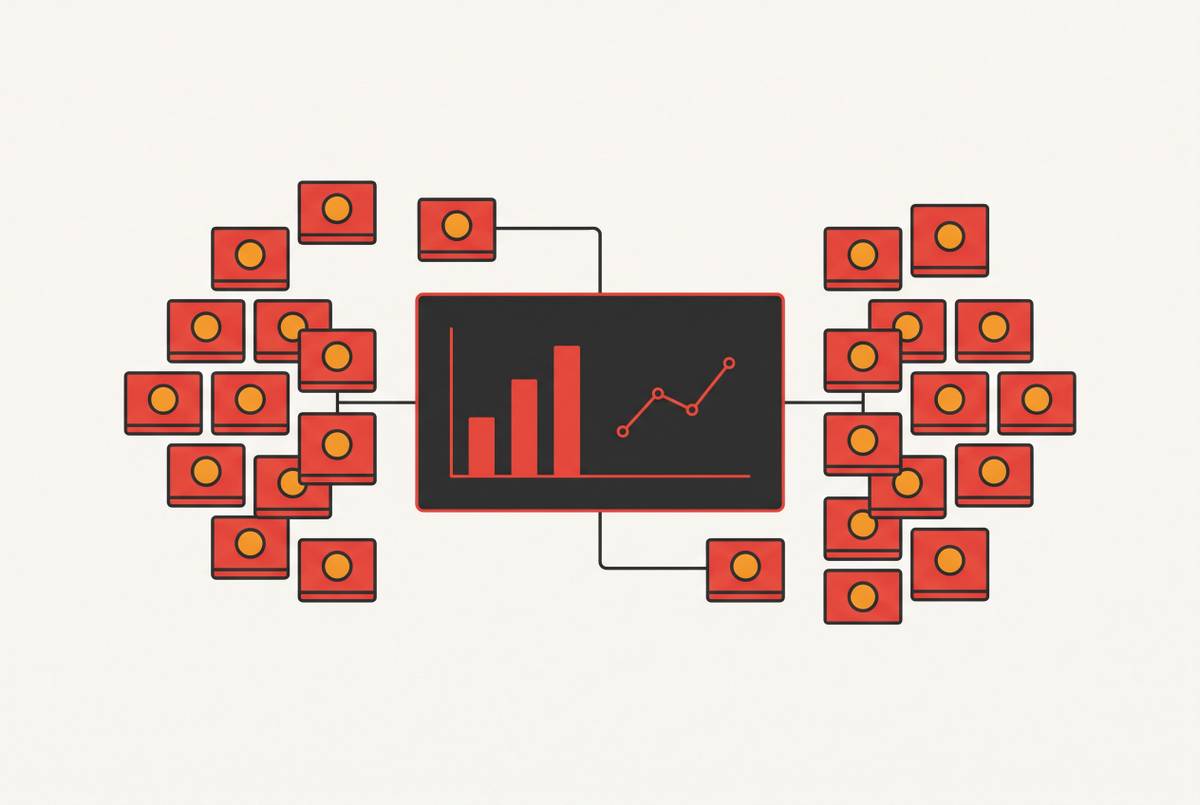
At low volume, manual work can hold the loop together. At higher volume, generation accelerates faster than review and learning. Most teams sit at Tier 2 or Tier 3, where AI assists or leads asset generation but briefs, reviews, and launches remain manual. At Tier 4, an agent reads brand context, generates from a brief, ships to platform specifications, and feeds performance into the next round.
That acceleration makes weak structure more costly. Each generation can stray a little further from the palette and voice until the full feed looks like several different brands. Individual assets may pass review because the fragmentation appears only across the collection. The constraint is therefore throughput discipline, meaning how many tests the team can read, learn from, and carry into the next brief.
What it means to treat brand context and performance signals as shared infrastructure
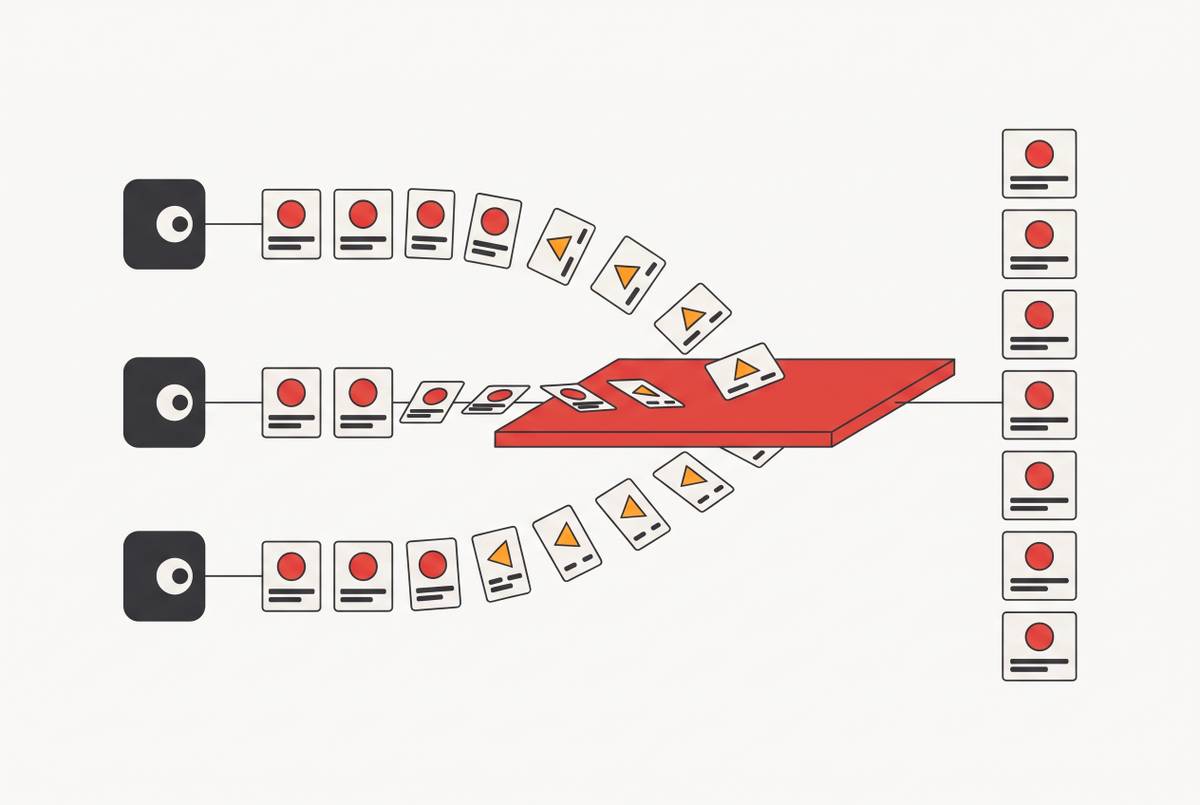
Brand context and performance signals live in silos that generation steps cannot reliably query, so each brief starts from scratch. A machine-readable brand addresses one side of that divide. It represents strategy, voice, and visual rules as structured data, with confidence scores, provenance, and field-level evaluation. It is not a chatbot trained on guidelines.
Performance learning needs the same structure. A winning pattern stored in a slide remains a report, while a pattern encoded in a versioned brief template becomes an input to production. The prompt library brings these two forms of context together in named templates for character archetypes, lighting setups, emotional beats, and hook patterns. Keeping that library under version control lets a confirmed finding change an instruction everyone shares, so no one has to rely on a person's memory.
The inputs extend beyond tone to design systems, typography standards, historical campaign assets, product messaging frameworks, approved colour palettes, and legal compliance rules. Leading teams in 2026 provide these as structured inputs that agents consume at generation time. Versioning makes changes manageable for the downstream systems that depend on them. Rainbrand puts shared context into practice with canonical brand context that connected agents and products draw from. Updating that context propagates the change downstream, removing the need for separate edits in each tool.
How MCP creates the connective tissue between performance data and generation
Shared context also needs a connection to the environments where agents work. MCP, or Model Context Protocol, is an open standard for connecting AI applications to external tools and data sources. Applied to advertising, it can let performance data flow from ad platforms into AI-native environments where agents build and iterate. Agents can then query the evidence during production without having to wait for the next report.
The technical objection is substantial. Scalekit's benchmark shows MCP-based task completion consuming significantly more tokens than CLI equivalents and delivering lower reliability. Token overhead compounds as more tool schemas enter the context window. MCP is therefore not a universal answer to every automation task.
Its proper role here is connecting external evidence and tools to the agent's working environment. An MCP-based architecture can connect performance with planning, finance, and creative tools, allowing an agent to analyze results, explain drivers, recommend actions, execute changes, and learn from outcomes in the same environment. Rainbrand's canonical brand context gives this broader infrastructure model the shared inputs it needs, while the protocol's scaling concerns remain unresolved.
Governance is part of that connection. Webflow launched MCP 2.0 on July 21, 2026, adding governance, brand control, and analytics for AI agent-driven website management. The example shows MCP being applied to the controls that keep agent output within approved parameters as well as to production itself.
What a functioning brief-to-performance loop looks like as a running workflow
In practice, the loop runs as a weekly sprint cadence with defined inputs, outputs, and owners. Remarkable Agency's workflow starts the post-launch review by reading performance signals against the brief's test hypothesis. Confirmed findings update the brief template, and the next sprint begins from that updated template. The creative lead is not reconstructing the last sprint's reasoning from meeting notes. The relevant learning is already in the production input.
The mktg.ai decision framework gives that review a concrete outcome. Weak creative with real spend and no recovery signal calls for pause, while strong creative with headroom calls for scale. Good creative that has fatigued calls for refresh. A winning pattern missing from current ads calls for brief new, while a score based on the wrong KPI calls for fix the goal. Each decision connects the evidence to a specific kind of action.
The prompt library changes when a confirmed finding warrants it. The human owns the brief, reads the signal, finds the creative reason, and makes the decision, while the agent handles the execution that follows. With stable context underneath, drafting a post, grounding it in brand voice, generating a visual, scheduling it, and publishing across channels becomes one command per step. The marketer no longer has to re-enter brand context into each tool.
Why agencies and multi-brand operators feel this problem most acutely
Agencies face the same failure multiplied across client accounts. Each brand has its own context, and each campaign produces its own signals. Without a shared structure, what a team learns stays inside the account, and each onboarding starts with building context from scratch. A reusable pipeline changes that operating model because the brand inputs can be swapped while the workflow remains intact. That repeatability depends on structured context, brand kits, locked templates, and reusable pipelines.
Kimberly-Clark illustrates the infrastructure principle at enterprise scale. It replaced fragmented DAM and PIM tools and email- and spreadsheet-based workflows with a unified content operations hub powered by Aprimo. The hub centralized planning, creation, review, governance, and publication. Structured metadata and AI-supported automation enabled consistent asset management and streamlined approval across brands and regions.
Woods MarCom, supporting multiple brands and campaigns, implemented Stockpress to consolidate its growing creative asset library. Before adoption, assets were distributed across multiple systems, causing inconsistent tagging, duplication, and time-consuming searches. A single hub with a clear structure and AI-enhanced search helped teams find assets faster and keep them in line with the brand.
Rainbrand's multi-brand workspace applies that principle to agencies managing multiple brands in one workspace. Every connected agent or product draws from the same canonical context for a brand, so updates propagate without manual changes across each account's tools. As teams make more AI content, it becomes more important to automate governance and compliance across the asset lifecycle. Shared structure makes repeatability possible without treating different brands as interchangeable.
What changes when the loop is closed and the system compounds
A closed loop changes the starting point of each sprint. Briefs become sharper because they contain patterns supported by performance. Agents also move faster because the context already exists instead of being reconstructed from prompt to prompt. The system retains what the team has learned.
That makes creative direction the scarce resource. The differentiator is the person who can read a signal, identify the creative reason, make the decision, and write the brief that carries it forward. Teams should measure what they test. Every test needs to produce a decision, and confirmed findings need to change the brief.
The end state is not a fully autonomous creative system. Humans still set goals, write briefs, check that the work fits the brand, and decide which patterns to scale. Creative leads have the final say on narrative and emotional tone, while autonomous execution needs a clear owner so the system can be audited. Automation compresses the distance between those decisions.
Teams that build this system in 2026 gain a structural advantage that becomes harder to replicate as it grows. Their confirmed creative patterns accumulate, their versioned brand context reaches every connected agent, and their sprint cadence starts from a stronger base each time. The advantage comes not from generating more ads, but from infrastructure that makes each round of production better informed than the last.