AI Image Generation for Paid Ad Creative
Brand consistency becomes the competitive advantage when AI scales ad creative production.
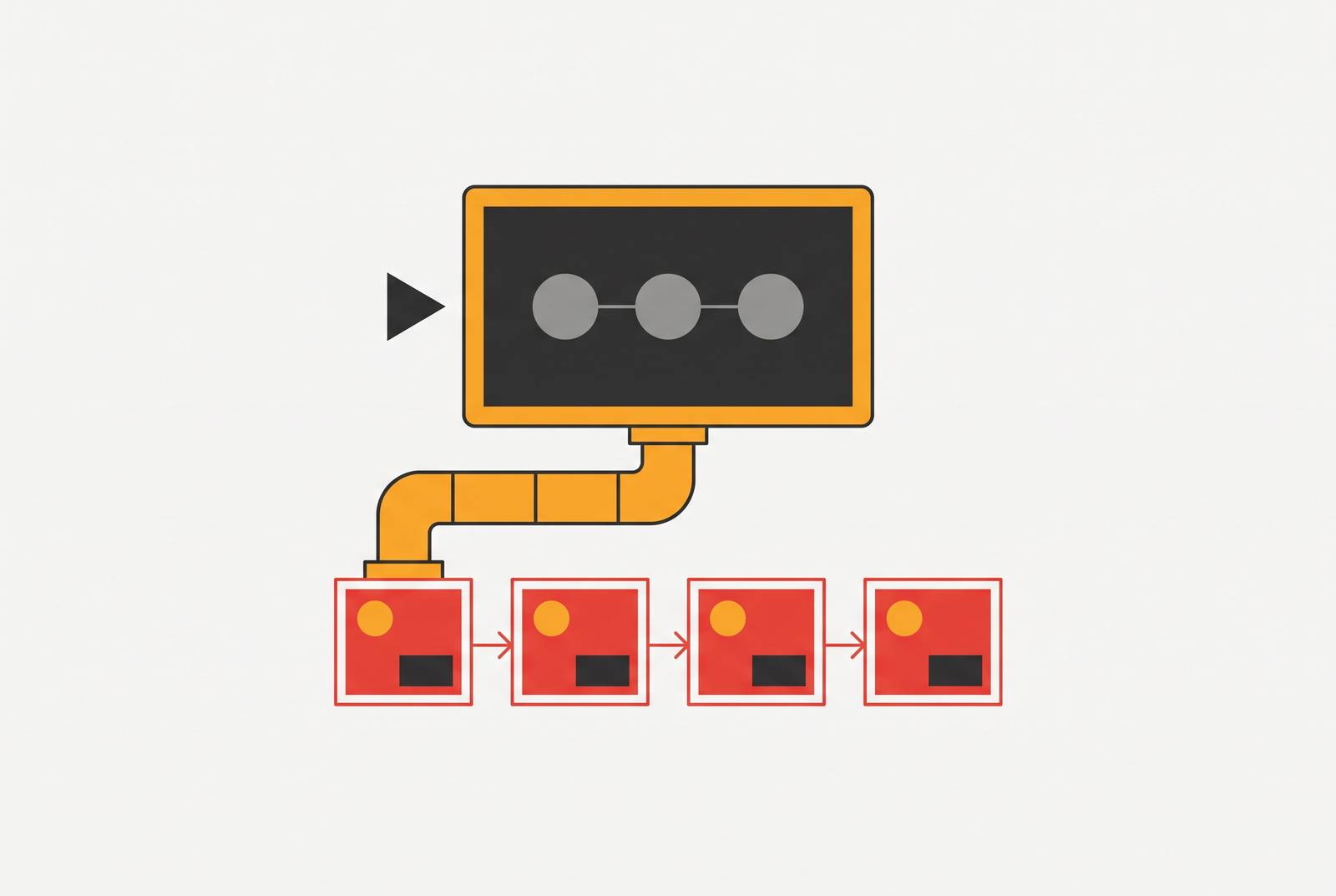
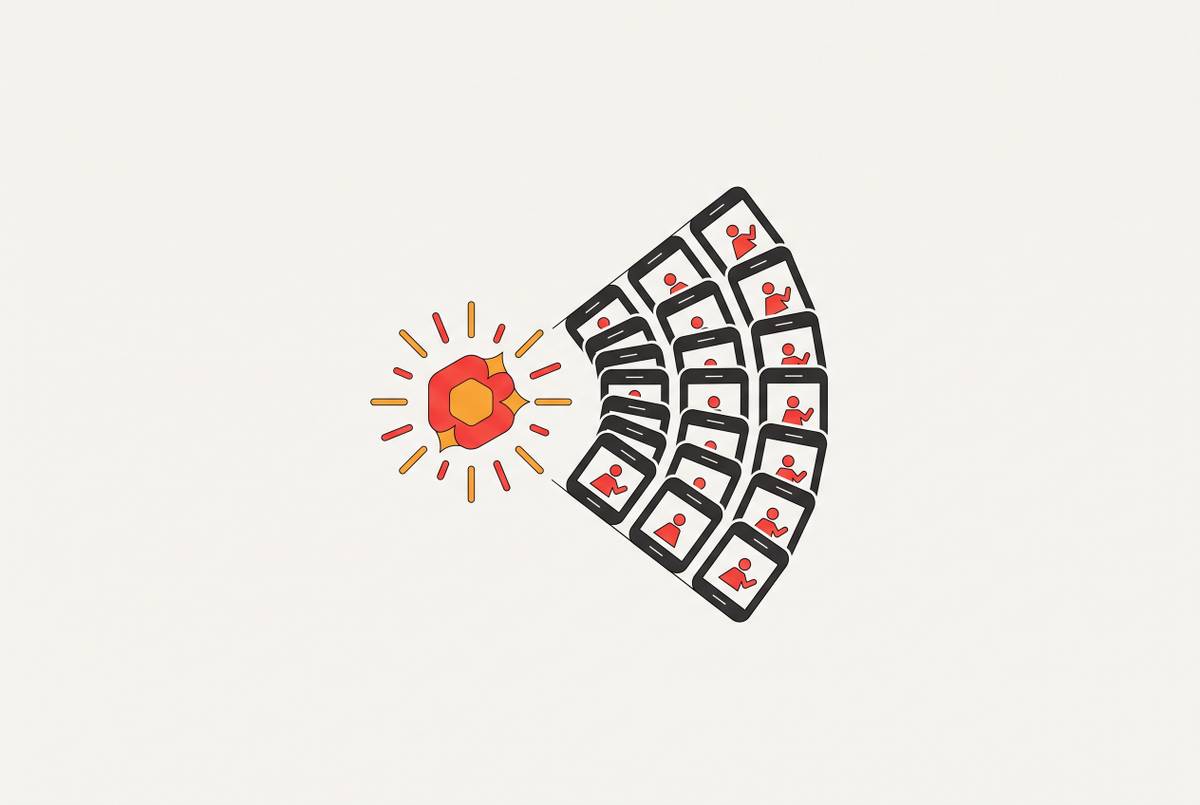
Paid advertising has stopped being limited by how much creative a team can produce. AI image generation has made output nearly unlimited, and that shift is happening whether or not individual brands have opted into it. More than 60% of Google Ads spend now flows through Performance Max, a campaign type that embeds AI-generated creative by default. Meta announced in July 2026 that Muse Image was coming to advertisers through Advantage+ creative, so the same logic now extends to its own ad stack. Advertisers have spent decades managing the cost and time of producing enough creative to test, and that constraint has largely dissolved. What remains is a different constraint: fifty AI-generated variants only function as a competitive advantage if they share the same visual language, voice, and identity rules. If you produce volume without shared brand context, the output scales inconsistency rather than advantage, and that is the problem the rest of this piece works through.
Where AI-generated ad creative performs
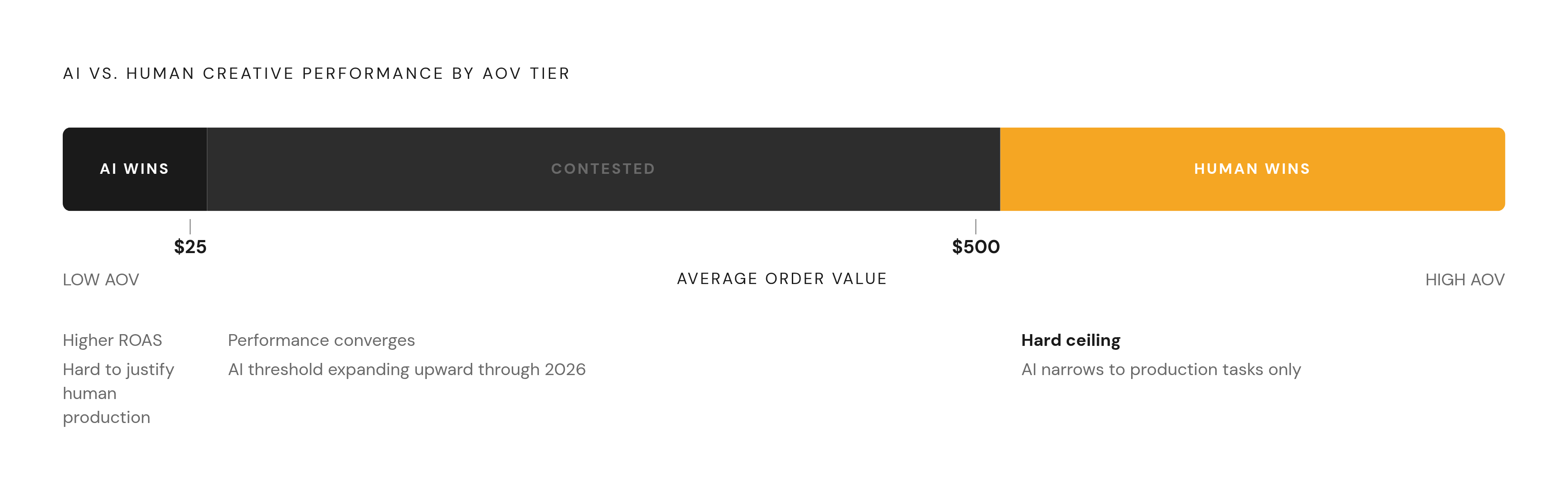
The performance data on AI-generated ad creative is specific enough that you can build a production strategy around it, and it does not support a blanket verdict either way. Average order value turns out to be the cleanest variable for deciding how to produce creative for a given product.
Benchmarks from AI Video Bootcamp and Digital Applied for 2026 break the relationship down by AOV tier. Below $25 AOV, AI wins on ROAS outright, and it is hard to justify human production at that price point. Above $500 AOV, human creative dominates the results, and AI's role narrows further to production tasks.
That threshold is also moving. In early 2025, AI matched human performance only for products under $25 AOV. Even inside the tiers where AI wins outright, the fifty variants it produces only hold their ROAS advantage if they read as coming from one brand. A tier that favors AI on cost and speed still depends on brand consistency to convert that speed into a durable result, not just a cheaper one.
Why brand consistency breaks at generation scale
Inconsistency does not originate in the generation tools themselves; it originates in where brand knowledge lives. Most brand knowledge is stored in formats no machine can read: a static brand book, a professionally designed PDF, a slide deck sitting in a shared drive. Those formats cannot be ingested by an AI system as a constraint on what it produces, so every single generation starts from zero.
That absence has a direct mechanical consequence. Fifty variants generated this way are fifty separate guesses, made without reference to each other, about what the brand's visual language is supposed to be.
There is also a floor effect working against brand distinctiveness across the industry. General-purpose image generators default to a narrow aesthetic range: soft gradients, generic sans-serif layouts, the same "friendly startup" illustration style that has become recognizable across unrelated categories. That default flattens brand identity precisely at the moment brands are trying to differentiate, and it is producing a measurable fatigue among consumers who can now spot generic AI output on sight.
For organizations running multiple brands, the problem compounds. None of this is a tooling failure that a better prompt or a different model fixes. Brand knowledge gets stored one way, but generation systems consume information another way, so you have to build infrastructure, not just refine technique, to close that gap.
What a machine-readable brand system looks like
To close that gap, you have to restructure brand knowledge into formats a machine can actually use. The work breaks into three components: a Voice Profile, a Body of Work, and a set of Design Tokens, each feeding a different layer of the generation process.
The Voice Profile encodes how the brand writes and talks, structured so that a language model applies it as a constraint. Design Tokens formalize the visual rules, color values, typography, spacing, logo usage, into structured data that a generation tool can read as a constraint.
Rainbrand's Brand Skill is one operationalized version of this architecture. It ingests a brand's existing assets, guidelines, files, websites, design systems, and converts them into structured, versioned brand context that any connected AI agent or product can retrieve through an API or through MCP. The effect is that every generation pulls from the same source rather than reconstructing brand rules from scratch each time a new prompt gets written. That consistency is the direct answer to the structural failure described above: sharing context behind generation produces it, while improvising generation produces guesswork.
What separates the generation tools for ad work
You should not choose among image generation tools for ad work on visual quality alone. The relevant questions are narrower and more operational: does the tool handle legible in-image text, does it carry commercial IP protection, does it hold brand consistency across a batch of outputs, and does it comply with platform format requirements without manual correction at every step.
Ideogram is the strongest performer on in-image text legibility in controlled testing, which makes it the practical choice whenever an ad concept needs readable on-image copy, a headline, a price callout, a call-to-action layered into the visual itself. As of June 2026, paid plans start at $15 a month billed annually, and a free tier is available that runs slower generations.
GPT Image 2, used through ChatGPT, is strong on prompt accuracy and on iterative editing inside a conversational interface. Its brand consistency depends entirely on how precisely each prompt re-specifies visual details, since nothing persists automatically between generations. It carries a standard license and gives you limited free access inside ChatGPT, but as of June 2026, ChatGPT Plus runs $20 a month.
Pricing is credit-based and free to start, as of June 2026.
Rainbrand sits at a different layer than any of these tools. Rainbrand works alongside these generators rather than competing with them, and it is compatible with Claude, ChatGPT, Cursor, and any MCP-compatible environment.
Platform-specific generation: how Meta and Google handle AI creative natively
Image generation tools are only half of where AI creative now enters the paid ad pipeline. Meta's Advantage+ creative and Google's Performance Max both automate variation directly at the placement level, and both operate strictly on whatever input they are given. If that input doesn't encode brand context, the platform's automation amplifies the inconsistency.
Advantage+ creative finishes and varies what you give it; it doesn't generate from a blank page. The practical consequence for brand consistency is direct: the quality of every variation Advantage+ produces is set by the quality and specificity of the base creative fed into it. A generic input produces generic variations, just more of them.
Review discipline becomes the operational safeguard here. Meta has required a "Made with AI" disclosure on photorealistic imagery since March 2026, which adds a compliance step to that same review pass.
Google's Performance Max works on a similar principle but with less visibility into the process: AI-generated image and headline assets are embedded by default, and more than 60% of Google Ads spend now runs through this campaign type. Google has required an "AI Generated" label on primary AI-created elements since March 5, 2026. In both systems, the platform is only as brand-consistent as the material it starts from, which puts the burden on the advertiser to control the input.
Compliance rules every team running AI ad creative must track
Inconsistent brand output is not the only risk of ungoverned AI generation. Disclosure failure carries a direct, penalized cost, and that obligation differs by platform and by jurisdiction, so a single rule applied uniformly across a brand's ad accounts will leave gaps.
State law adds a separate layer. New York S.8420-A took effect June 9, 2026, and it requires you to disclose conspicuously whenever an ad contains AI-generated human figures. The law applies to any ad reaching a New York audience regardless of where the advertiser is based, and it carries a $1,000 penalty for a first violation and $5,000 for each one after that.
Copyright exposure runs on a separate track from disclosure. Adobe Firefly is currently the one tool on the market offering formal IP indemnification on its paid plans. The other general-purpose generators discussed earlier carry standard licenses, so the advertiser, not the tool provider, holds the copyright liability. Managing all of this across a high-volume AI generation pipeline is not something a team can do through manual review of every asset. It requires the same kind of systematic tracking that brand consistency requires, built into the workflow.
MCP delivers brand context to agents across the ad production workflow
The technical mechanism that makes shared brand context possible at scale is the Model Context Protocol, or MCP. MCP lets a single agent conversation pull brand context, audience data, creative assets, and ad platform controls without custom integration code connecting each system individually, which is what makes it the right interface for carrying structured brand context through an AI-native ad workflow.
Anthropic open-sourced MCP in November 2024, and the ecosystem built on it now spans Claude, ChatGPT, Cursor, Visual Studio Code, and thousands of MCP servers, including ones for Notion, Google Drive, and Higgsfield for image and video generation. Ad platforms have moved onto this protocol at a fast clip through 2026. Amazon's official Ads MCP server entered open beta on February 2, 2026, and it can create, update, and delete campaigns, run reports, manage account settings, and access billing and financial data. Microsoft Advertising announced its own MCP server as an open pilot on June 17, 2026, offering read-only access to campaigns, ad groups, ads, keywords, and performance metrics, with support for Microsoft 365 Copilot, Claude, and ChatGPT in the current pilot. Pinterest and Snapchat both announced MCP servers in June 2026, following TikTok, which announced its server earlier, in May 2026 at TikTok World.
For ad creative specifically, Claude can call Higgsfield's MCP server to generate on-brand images up to 4K resolution and video clips up to 15 seconds long, with the prompt, the brand context, and the resulting asset all sitting in the same chat thread. That collapses what used to be a multi-tool workflow into one conversation: a single MCP-connected session can pull audience insights from a CDP, check creative assets against brand guidelines, build the campaign inside the ad platform, and send a team notification, without tab-switching or copying data between separate systems.
Brand rules no longer need to be re-pasted into every prompt or rebuilt from scratch by each tool somewhere in the chain.
Agentic ad creative workflows with properly shared brand context
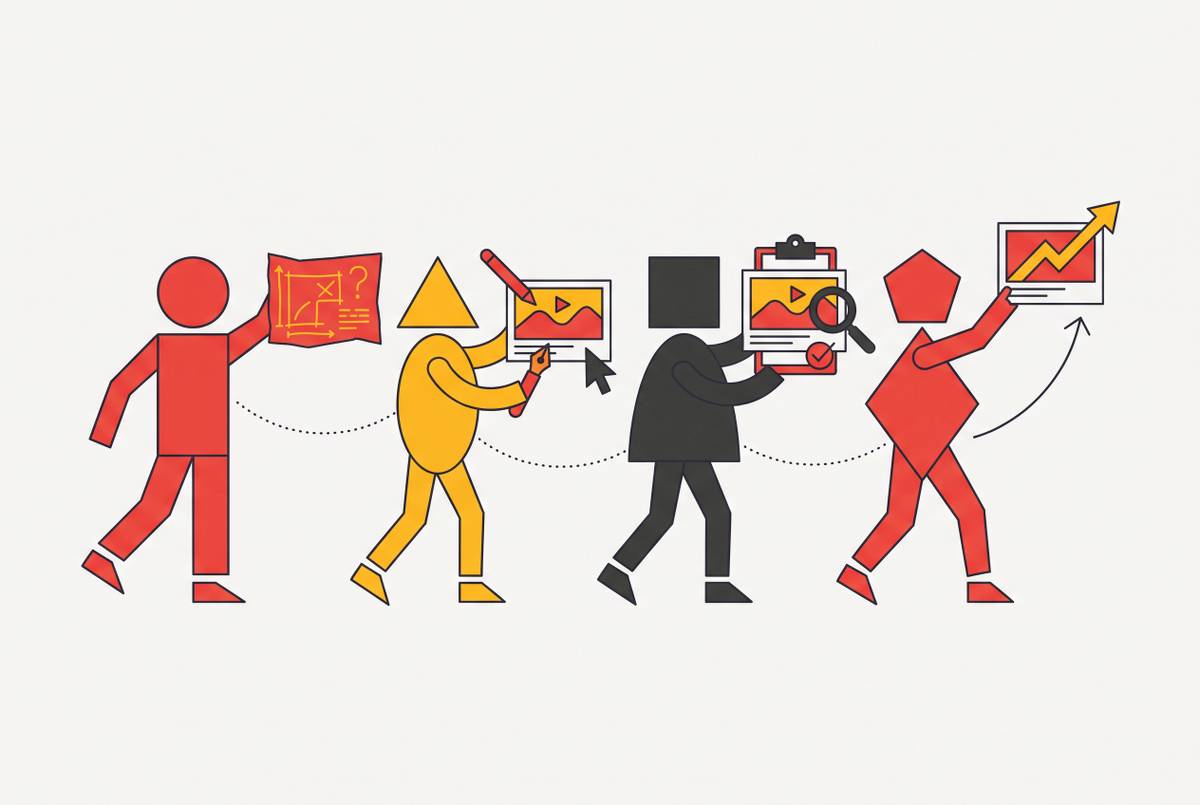
When brand context is shared across a connected system of agents rather than rebuilt at every prompt, the production workflow itself changes shape.
Specific agent roles handle distinct parts of that system. Creative copywriting agents connect audience behavior, performance data, and brand voice to produce adaptive copy, and they adjust headlines and calls-to-action by segment based on what actually drives engagement for each audience.
The efficiency gain from this structure is measurable where it has been built into the generation layer directly. Roughly 60 to 70% of AI-generated assets clear automated brand compliance checks without any human involved, and designer review time on the remainder drops from around 15 minutes per asset to about 2, because the agent has already resolved brand compliance before the asset reaches a human reviewer.
Localization shows the clearest version of this advantage. If you strip that shared context out, the same agentic system that can localize across 15 markets at once instead produces 15 separate interpretations of the brand, scaling inconsistency at exactly the speed it was meant to scale output.
Moving from ad-hoc prompt stuffing to a brand-context-first production system
The gap between teams shipping consistent AI-generated ad creative at real volume and teams that are not does not come down to which tool either one has chosen. It comes down to whether brand context is built into the workflow as infrastructure or assembled by hand at every single generation step.
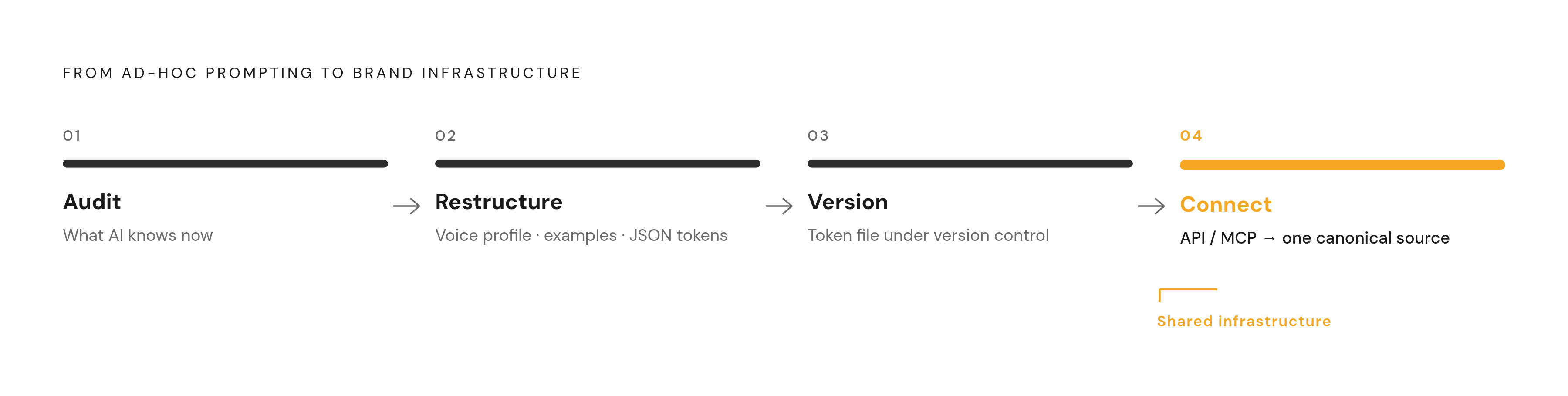
The first move is an honest audit of what a brand's AI tools actually know right now. If a prompt is the only mechanism carrying brand information into a generation, the brand has a habit, not infrastructure, however often that habit gets repeated. The second move is to restructure brand knowledge into the machine-consumable formats described earlier: a plain-text voice profile, a curated set of body-of-work examples, and a design token file written in structured JSON, so that any agent or tool in use can retrieve and apply the brand's rules instead of approximating them from a loose prompt description.
The third move is to version that token file the way a software team versions code. The fourth move is to connect that brand context to the generation workflow through API or MCP, so every generation, whether it runs through a standalone tool, a platform-native feature like Advantage+ or Performance Max, or a full agentic pipeline, pulls from the same canonical source rather than a siloed copy someone made for one specific project.
If a team manages more than one brand, it needs the same four-step infrastructure applied separately to each brand, with enforced separation built in at the context layer itself, so Brand A's design tokens can never inform a generation running under Brand B's name, no matter which tool or agent is doing the work.
Rainbrand is built for exactly this transition. It ingests a brand's existing assets and converts them into a versioned Brand Skill that any connected agent can retrieve through API or MCP, functioning as the infrastructure layer between a brand's guidelines and the AI tools generating creative at scale on top of them.