Ad Creative Ops Roles and Handoffs in Growth Teams
Brand context must flow through agents as structured data, not scattered documents.
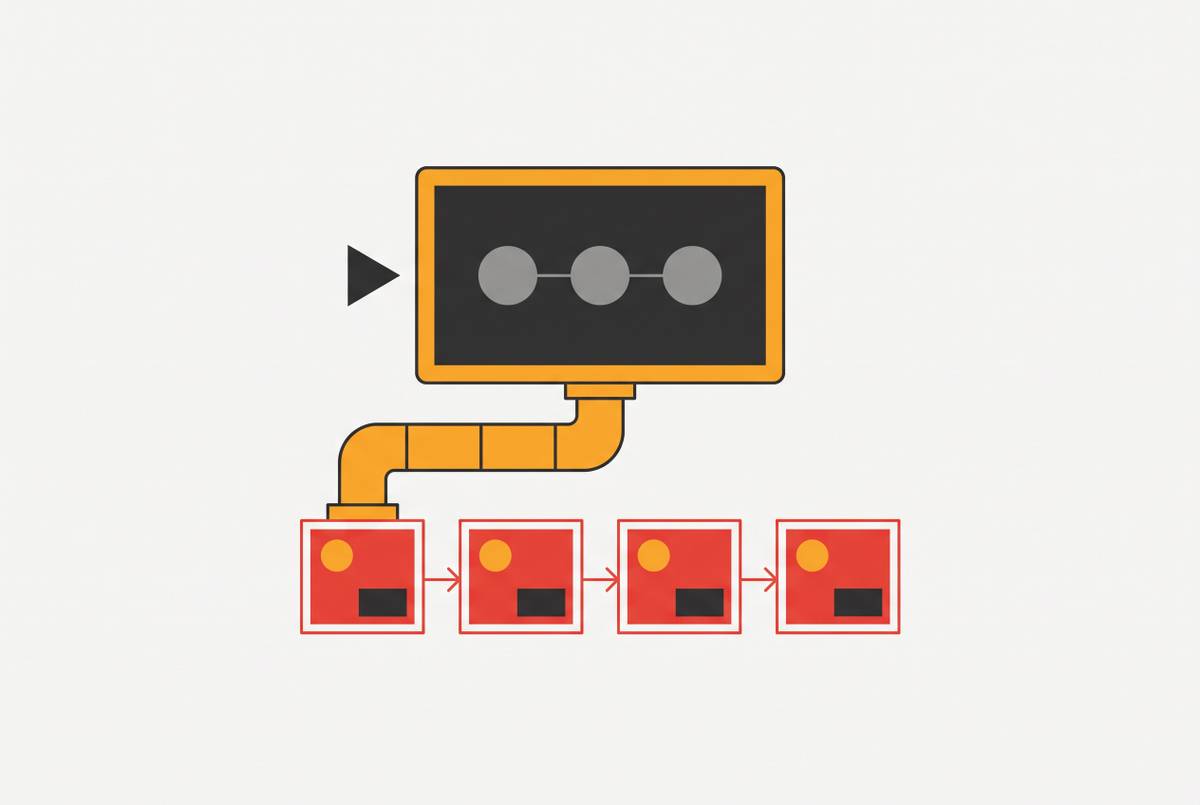
The problem growth teams face in 2026 is not that AI produces too little: brand context breaks apart as execution shifts to agents, and nobody has rebuilt the pipeline to carry that context across the seams. The distinction that matters here is simple but easy to miss: a tool resets with every prompt, while an agent carries context across tasks, holding onto the brief, the brand guidelines, and the last round of revisions as it moves from one job to the next. That difference changes what creative ops has to manage. Once execution runs on agents that remember, the question changes from which tool a team buys to who owns what and how brand context actually moves between them. As agents take on more decisions themselves, they surface fewer routine approvals to humans, and the shape of the human job changes along with the workload.
How the execution layer has shifted to agents
Asset generation, format resizing, variant production, and reporting have largely moved to agents, and what's left for people is strategy, governance, and the quality of what agents are given to work with. The old hierarchy, with layers of review stacked on top of line-by-line execution, is giving way to something flatter: planning is handled by a human working alongside an agent, execution and optimization and reporting run largely on agents, and governance, far from shrinking, has become the layer teams need most. One CPG company reported production speeds 50 times faster after it adopted intelligent agents, so directing execution line by line no longer makes sense at that scale.
Practitioner teams describe this shift in tiers. At tier 2 to 3, where most teams currently sit, a human writes a brief, the system generates full creative concepts across formats and aspect ratios, and the human reviews and approves each asset. At tier 4, still emerging, the human describes an outcome instead, naming an audience, a platform, a cost target, and the agent decides what to test, generates the assets, ships them against a test budget, reads the results, and iterates on its own. Moving up these tiers does not remove the human from the loop. It moves the human's leverage point: the quality of the brief and the brand context built into the system becomes the thing that decides whether the output is any good.
Why the Creative Operations Manager role becomes load-bearing
As agents take over execution, the Creative Operations Manager, the person responsible for the systems, processes, and tools that let a creative team function at scale, turns into the role the rest of the pipeline depends on. That role asks a different question than the one the creative strategist asks ("what should we make?") or the one the creative manager asks ("is this good enough?"). The COM asks how production can happen the same way every time, without losing context at each handoff. In a pipeline built on agents, that question gets sharper: how is brand context structured so an agent can act on it without a human explaining it over again at every step?
Many creative teams still run without anyone in this role, and the ones that have filled it tend to outperform the ones that haven't. Brand Brain, built by Superside, shows what the job is actually managing: a living system that holds brand guidelines, tone, messaging, approved creative decisions, past feedback, and performance learnings, so each new project starts from accumulated context. The tool is one example of a category the COM now has to build and maintain: a system that keeps brand knowledge current and available, rather than scattered across whoever happens to remember it.
Where handoffs break
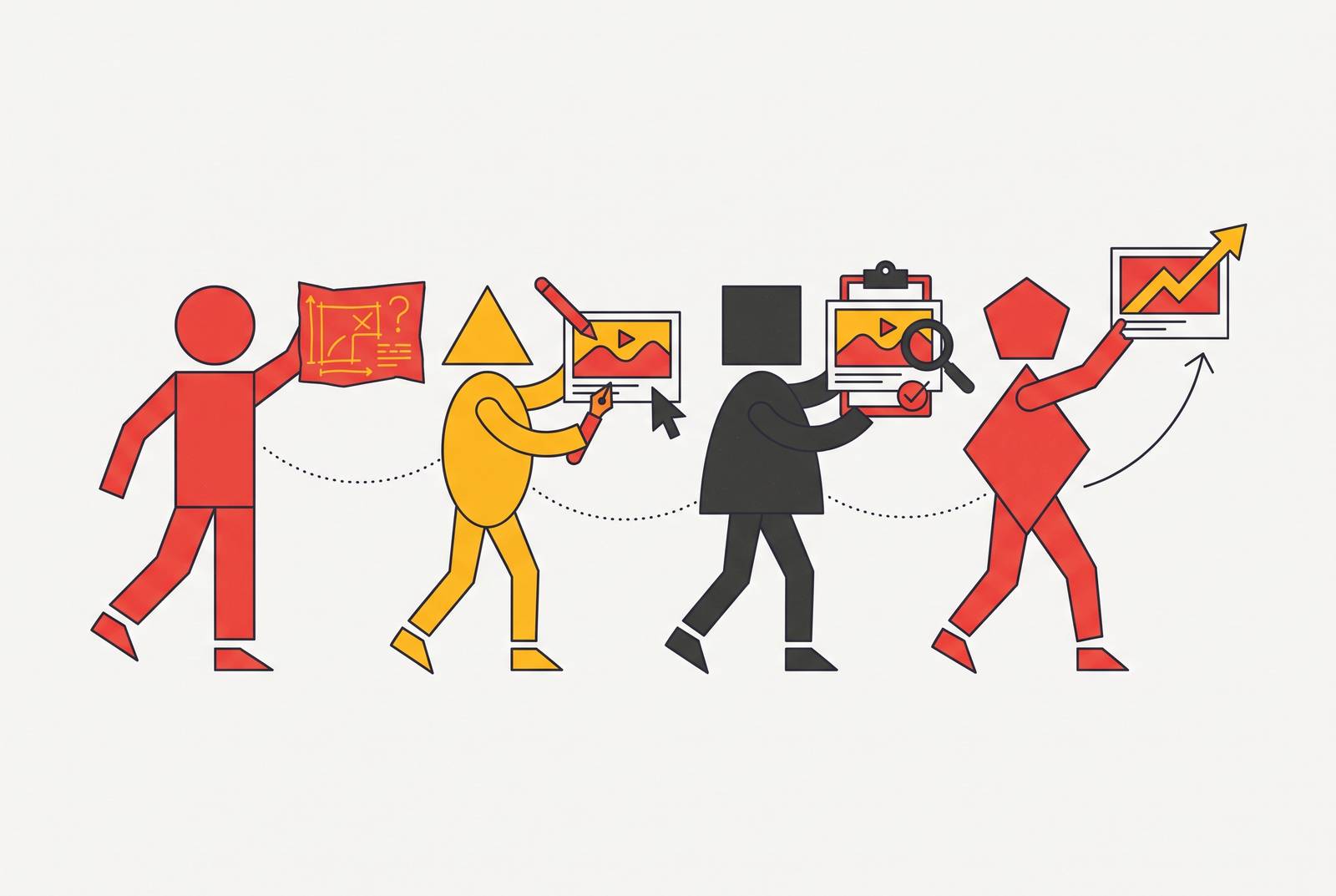
A production pipeline built around agents has clear lines of ownership: the strategist owns the brief, the operator owns the generation inputs, the reviewer owns approval, the media buyer owns launch conditions. When those lines blur, quality decays quietly, and it decays fast, often before anyone notices. The brief carries the most weight of any document in the pipeline. It needs to state positioning, offer, audience tension, approved proof points, prohibited claims, funnel stage, and placements, because the agent treats that document as its only source of brand truth for the run it's about to execute.
A common weekly cadence among practitioner teams runs like this: on Monday, the media buyer and strategist review the prior week's creative together, deciding what to stop, what to extend, and which audience objections remain unanswered. The brief for the next cycle gets written out of that conversation, with the COM making sure the brand constraints are stated outright rather than assumed. By Friday, variants launch in controlled waves, and performance data feeds back into the next brief.
The failure mode here has nothing to do with tool quality. It is brand context that lives outside the workflow entirely, sitting in a PDF nobody has updated, in a Slack thread no agent can read, in the memory of one person on the team. If teams chase speed without fixing this, they produce volume, not value, and that gap is most visible in localization. When brand context isn't structured and queryable, a localized ad can read as more fluent in the local language while sounding less like the brand that made it, and that drift is hard to catch in review because each individual asset still looks fine on its own.
Structuring brand identity for agents
Most brand guidelines are written for a person to read: prose describing aesthetics, voice, and values that an agent cannot search, retrieve from, or reason about unless someone tells it precisely what to look for. Making brand identity usable by agents calls for three layers that most style guides skip.
The first is a base identity signal an agent can actually parse. Schema markup written in JSON-LD states a brand's canonical name, logo, description, and social profiles in a form machines read directly, and this functions as the primary signal of brand identity for AI systems, not merely as a search optimization trick.
The second is a brand knowledge base an agent can query. Before generating anything, an agent needs to check the style guide, pull from past campaigns, and reference the approved asset library, not after the fact. If you skip this step, every generation run starts from zero, and brand drift compounds over the course of a campaign.
The third is a set of behavioral decision rules, not just tone notes. Left without guidance on how a brand actually reasons, agents default to safety and neutrality, and the result is copy that is polite and efficient but forgettable. Real brand intelligence states how a brand ranks its values, handles trade-offs, and responds when there's no scripted answer for the situation in front of it.
McKinsey's reporting on a large consumer brand shows how far this can scale. Within one content-generation archetype, the company identified nearly 100 individual modular agents that could be inserted across multiple workflows, among them a short-form text-generation agent usable across creative-content development, sales-collateral development, e-commerce optimization, and co-marketing, all drawing from the same underlying brand context. Rainbrand's Brand Skill answers this same problem directly: a versioned, retrievable representation of a brand's identity, guidance, and assets that any connected agent or product can pull from through an API or through MCP. Brand context stops being a document someone has to find and becomes a layer any agent can query on demand.
How MCP moves brand context across the pipeline
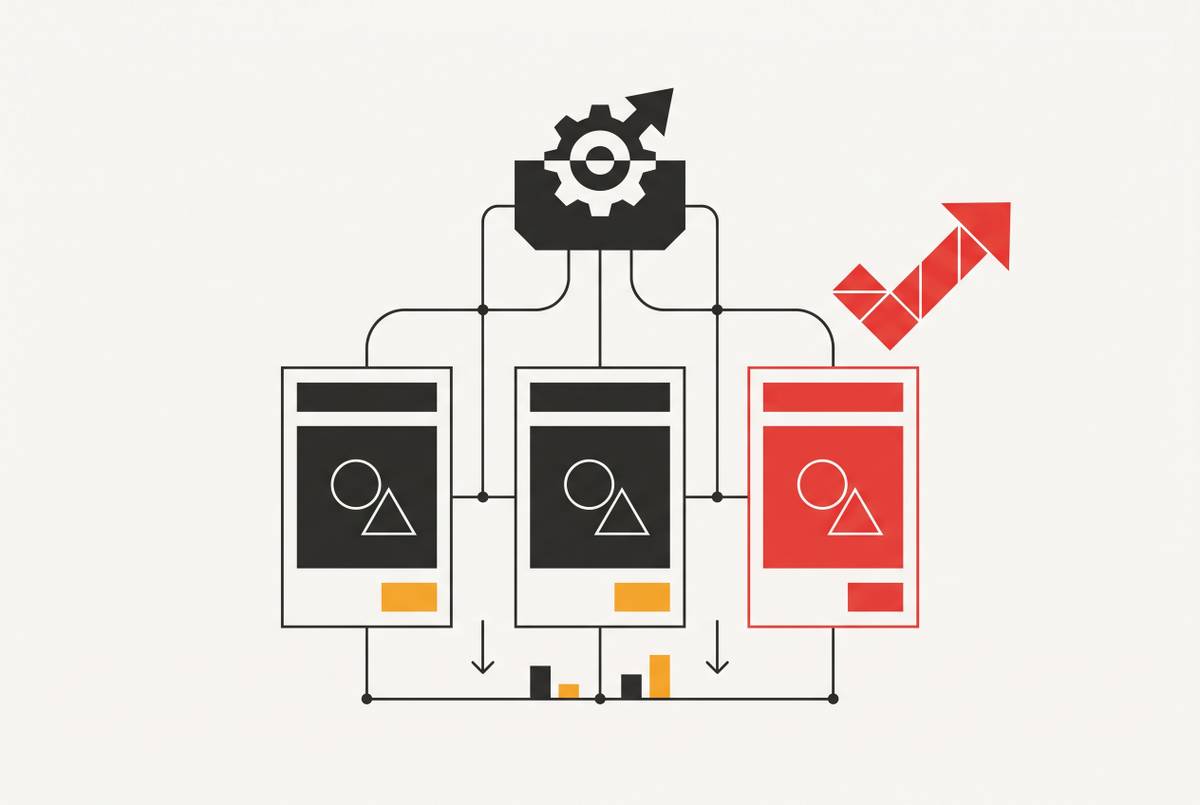
MCP, the Model Context Protocol, is the open standard that lets AI tools pull data from connected systems, ad platforms, analytics accounts, brand knowledge bases, through a single authenticated connection. It removes both the export step and the re-explanation step that currently let brand drift creep into the pipeline. For creative ops, this means an agent can check the brand knowledge base before it generates anything, instead of waiting for a human reviewer to catch an error after the fact.
A full content loop without switching between tabs already runs this way in practice: MCP lets an agent pull research from a search server, generate visuals, retrieve brand documents from a knowledge base, and post status updates to Slack, all without the marketer leaving the conversation. Production-ready MCP servers confirmed for 2026 include Google Ads, Amazon Ads, and Meta Ads, and each one has both official and community-built options available. AdSkate is another: it lets advertisers test campaign creatives against hundreds of synthetic audiences through conversational AI, simulating how audiences respond. Rainbrand's MCP compatibility means a team's Brand Skill can be retrieved from Claude, Cursor, ChatGPT, or any other MCP-compatible environment, so brand context travels directly with the agent doing the work.
This connective layer raises its own governance questions: teams still need to decide who can authorize a new MCP connection and what data an agent is allowed to pull once connected. That's a real design decision, but it's a manageable one, and the basic shift MCP makes possible still stands: brand context stays current and available everywhere it's needed.
Managing brand context across multi-brand and agency teams
For agencies and teams running multiple brands, brand context fragments across every client they manage. Each client needs its own brand kit, its own asset library, and its own accountability lines, and if a system blends them together, it recreates the exact drift the pipeline was built to prevent. The practical payoff of a pipeline built this way is that it repeats cleanly: once a workflow works for one client, the brief structure, the generation inputs, the review gates, the approved brand context, it can be cloned, the brand inputs swapped out, and run again for the next client without rebuilding from scratch.
Kimberly-Clark's work with Aprimo stands as the clearest enterprise example on record. The company replaced fragmented DAM and PIM tools, along with workflows run through email and spreadsheets, with a single content operations hub, and this centralized planning and removed the coordination overhead that had been eating into team capacity.
Teams managing multiple brands need an architecture built around three requirements. Brand context for each client stays separate and versioned on its own, so updating one brand's guidelines never bleeds into another's. The pipeline infrastructure itself, the workflow, the review gates, the agent configuration, stays shared across every client, so none of it has to be rebuilt per account. Billing and access stay separated as well, so client data and assets never mix. Rainbrand's workspace architecture answers this requirement directly: multiple brands inside a single workspace, each with its own Brand Skill, all managed through one interface. The infrastructure stays shared, the brand context stays separate, and neither one compromises the other.
A well-designed handoff structure for brand context as infrastructure
Once brand context is treated as infrastructure rather than a document someone maintains on the side, handoffs themselves change. Humans stop re-explaining brand guidelines to every new tool and start designing the context layer that every agent in the pipeline draws from. Accountability at each stage stays just as clear as before, but the real shift is that brand context now moves with the work itself instead of getting re-injected by a human at every single handoff.
The strategist writes the brief once, against a brand knowledge base the agents can query directly rather than one locked away in a document only a person can read. The COM owns the brand context layer itself, keeping it versioned, accurate, and in place before any generation run starts, rather than catching drift after output has already gone out. The operator configures the generation inputs and the review gates, and never has to paste brand guidelines into every single prompt by hand. That is the shape of a creative pipeline built for agents: context that travels on its own, carried by the system rather than by whoever happens to remember it that week.